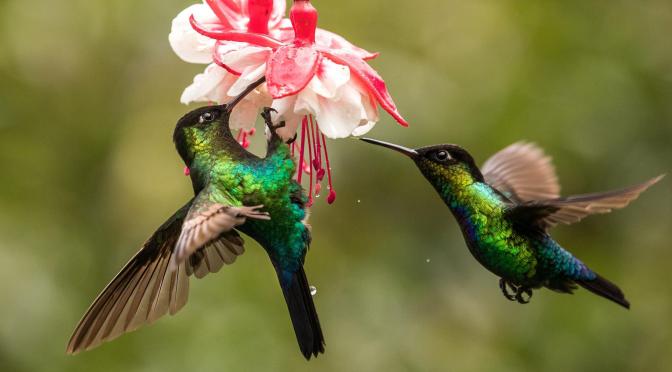
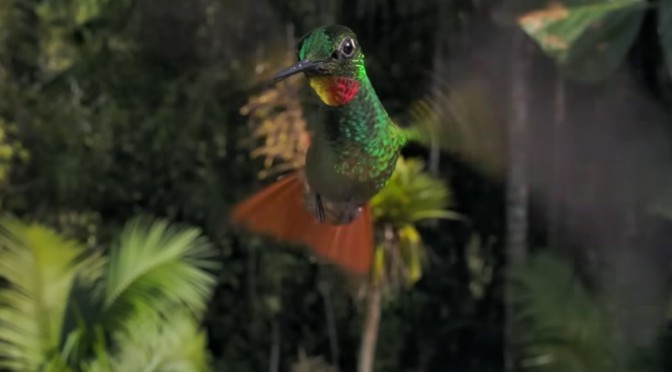
Nature on PBS (April 12, 2023) – Discover how tiny hummingbirds influence their many flowering kingdoms and their ripple effects on macaws, quetzals, monkeys, tapirs and more. Set in the exotic landscapes of Costa Rica.
Costa Rica’s motto is Pura Vida – Pure Life – and this deceptively small country is bursting with some of the most spectacular wildlife and pristine ecosystems in the world. All this diversity thrives, in part, thanks to one surprising little creature: hummingbirds.
Venture across Costa Rica’s wild and rugged landscapes, from volcanic peaks to coastal jungle to misty cloud forests, and discover the nation’s dazzling diversity of hummingbirds. There are more than 50 species of hummingbirds here, and they play an outsize role in maintaining some of the richest and wildest environments on Earth.
The Hummingbird Effect premiered on April 12, 2023.
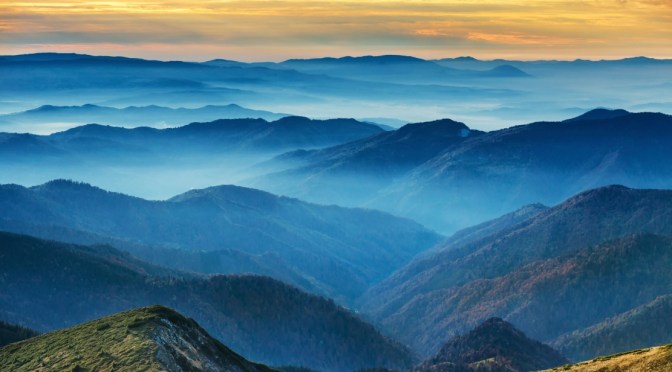
Into the Wild Films (April 11, 2023) – Just 50km west of Sydney Australia, is the spectacular natural wonderland of the Greater Blue Mountains. Known best for the Three Sisters, Echo Point, Scenic World and Wentworth Falls, this documentary explores the natural wonders hidden beyond these grand panoramas.
From the incredible display of the Superb Lyrebird to the underwater world of the Sydney Spiny Crayfish. Descend into its deep dark slot canyons before flying like a bird over the Blue Gum Forest. Discover its rare and ancient Wollemi Pines and explore its mysterious sandstone pagoda landscapes. Witness temperature inversions creating seas of clouds before marveling at the carnivorous plants that inhabit the sheer cliff faces. This is the Blue Mountains as you’ve never seen it before.
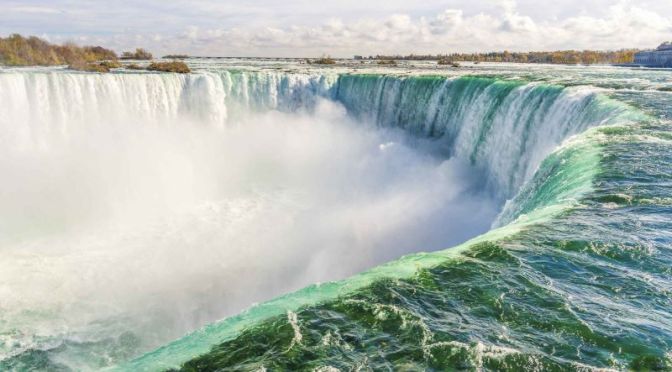
Nature on PBS (April 6, 2023) – From fall to winter, watch as Niagara Falls transforms with the seasons. “Niagara Falls“ premieres April 19, 2023, at 8|7c on PBS.
America’s oldest state park, open 365 days a year, 24 hours a day, brings you closer than you ever thought possible to the grandeur of the Falls. Niagara Falls State Park is always the trip of a lifetime — any time of the year — making it “a park for all seasons.”
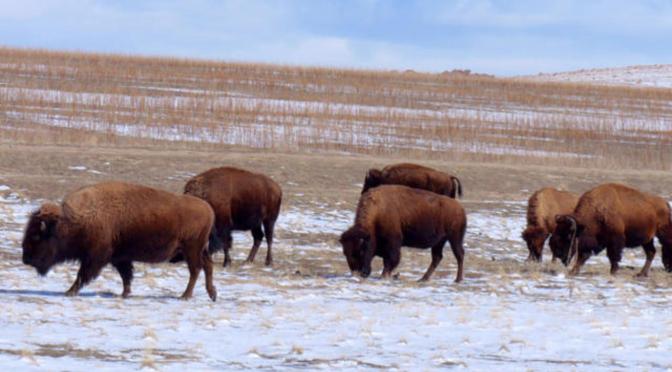
CBS Sunday Morning (April 2, 2023) – We leave you this Sunday morning with Bison still enjoying the snow at Utah’s Antelope Island. Videographer: Lee McEachern.
Antelope Island State Park in Utah is home to free-ranging bison, mule deer, bighorn sheep, pronghorn (antelope), and many other desert animals. Millions of birds congregate along the shores surrounding the island, offering unparalleled opportunities for birding. Year-round Interpretive opportunities round out the Antelope Island experience.
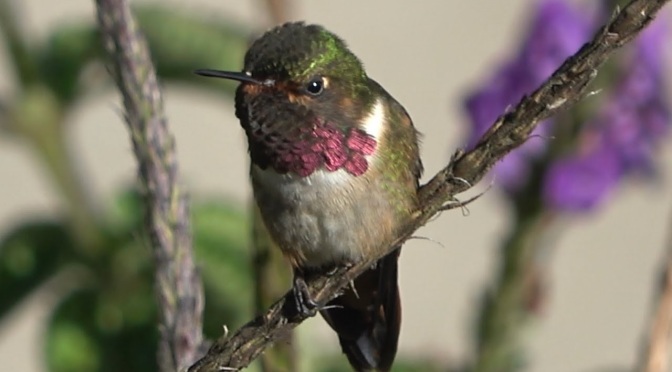
Nature on PBS (March 27, 2023) – No bigger than a human thumb, the volcano hummingbird exists only in the Talamancas.
The volcano hummingbird (Selasphorus flammula ) is a very small hummingbird, native to the Talamancan montane forests of Costa Rica and western Panama.
This tiny endemic bird inhabits open brushy areas, paramo, and edges of elfin forest at altitudes from 1850 m to the highest peaks. It is only 7.5 cm long. The male weighs 2.5 g and the female 2.8 g. The black bill is short and straight.
The adult male volcano hummingbird has bronze-green upperparts and rufous-edged black outer tail feathers. The throat is grey-purple in the Talamanca range, red in the Poas-Barva mountains and pink-purple in the Irazú-Turrialba area, the rest of the underparts being white. The female is similar, but her throat is white with dusky spots. Young birds resemble the female but have buff fringes to the upperpart plumage.
The female volcano hummingbird is entirely responsible for nest building and incubation. She lays two white eggs in her tiny plant-down cup nest 1–5 m high in a scrub or on a root below a south or east facing bank. Incubation takes 15–19 days, and fledging another 20–26.
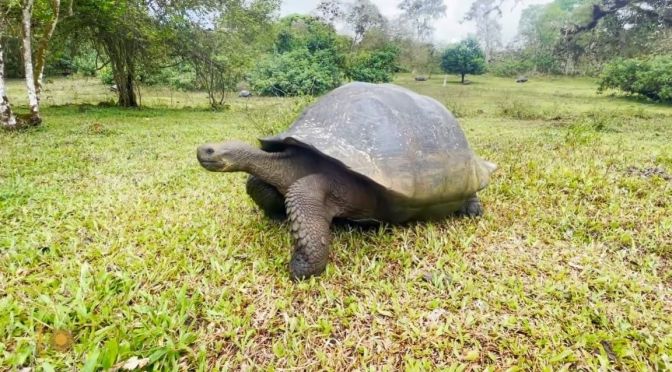
CBS Sunday Morning (March 19, 2023) – We leave you this Sunday with giant tortoises on Santa Cruz Island, in Ecuador’s Galápagos National Park. Videographer: Alan Golds.
There are 13 living species of Galápagos tortoises, which are also sometimes called giant tortoises. These reptiles are among the longest-lived of all land vertebrates, averaging more than a hundred years. The oldest on record lived to be 175. They are also the world’s largest tortoises, with some specimens exceeding five feet in length and reaching more than 500 pounds.
Giant tortoises were once so abundant on the Galápagos archipelago off Ecuador that the Spanish sailors who explored the region in 1535 named the string of islands for them. (The Spanish word for tortoise is galápago.) Although the islands were once thought to be home to at least 250,000 tortoises, only about 15,000 remain in the wild today.
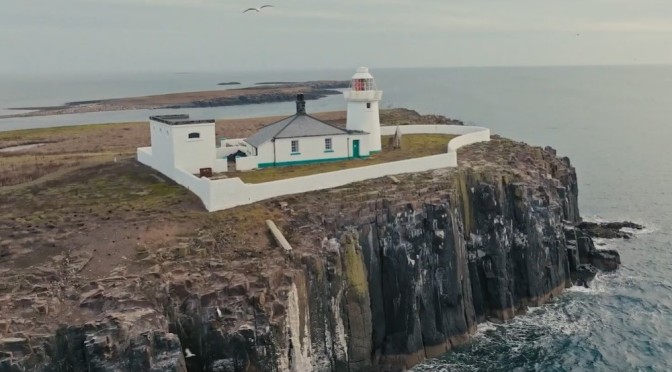
National Trust (March 13, 2023) – In the first episode of The Wild Life, a new series of nature films from the National Trust, presenter Levison Wood explores one of England’s most important seabird colonies. The Farne Islands, off the Northumberland coast, have been cared for by the National Trust since 1925 and are a breeding site for 23 species of seabird, including 43,000 puffin pairs.
The islands are also home to grey seals with around 2,000 pups born every autumn. With an introduction from presenter Julia Bradbury, this film explores the Inner Farne, where you’ll see dive-bombing terns, a medieval chapel and a Victorian lighthouse. Levison finds out what life is like for the rangers who had to deal with the devastating impact of bird flu. He also learns more about the work being done to maintain and protect the area’s fragile ecosystem, address the impact of climate change, protect bird nests and monitor species.
Parts of the Farne Islands may be closed to the public and landing on the islands may not be possible due to bird flu. If closures are in place, you can still experience the islands on a boat tour. Please check the website before you visit: Farne Islands | Northumberland | National Trust With your support we can continue to care for coastal places like The Farne Islands.
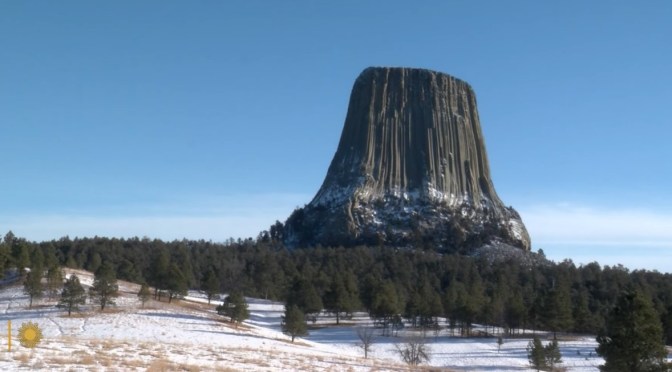
CBS Sunday Morning (February 19, 2023): We leave you this Sunday morning at Devil’s Tower in Wyoming, our first National Monument, so designated by President Theodore Roosevelt in 1906. Videographer: Kevin Kjergaard.
Devils Tower is a butte, possibly laccolithic, composed of igneous rock in the Bear Lodge Ranger District of the Black Hills, near Hulett and Sundance in Crook County, northeastern Wyoming, above the Belle Fourche River. It rises 1,267 feet above the Belle Fourche River, standing 867 feet from summit to base.
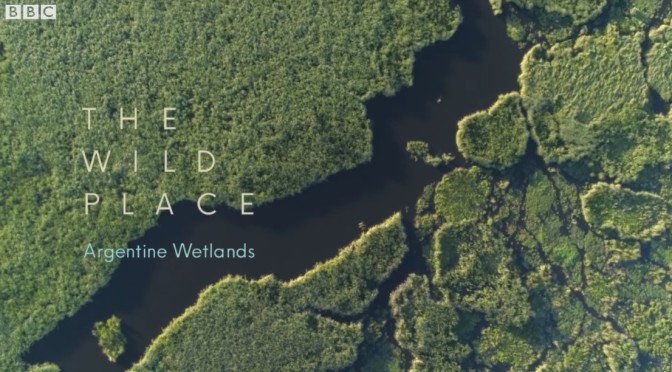
BBC Earth – It is one of the largest freshwater reservoirs on the South American continent. It is the largest protected area in Argentina, with 1.3 million hectares of pristine wilderness. Also referred to as Esteros del Iberá, the Iberá Wetlands stays true to its name with a spectacular offering of streams, marshes, lagoons and swamps that cover approximately 14 % of the Corrientes Province.
The wetlands are home to a staggering 4,000 plant and animal species, which make up 30 % of Argentina’s biodiversity. The indigenous communities of the wetlands inhabited the area as early as in the 9th century.
News, Views and Reviews For The Intellectually Curious





 Boomers Daily