Tag Archives: Mariupol

Previews: The Guardian Weekly – March 10, 2023

Methane leaks: inside the 10 March Guardian Weekly | Climate crisis | The  Guardian

The Guardian Weekly (March 10, 2023)

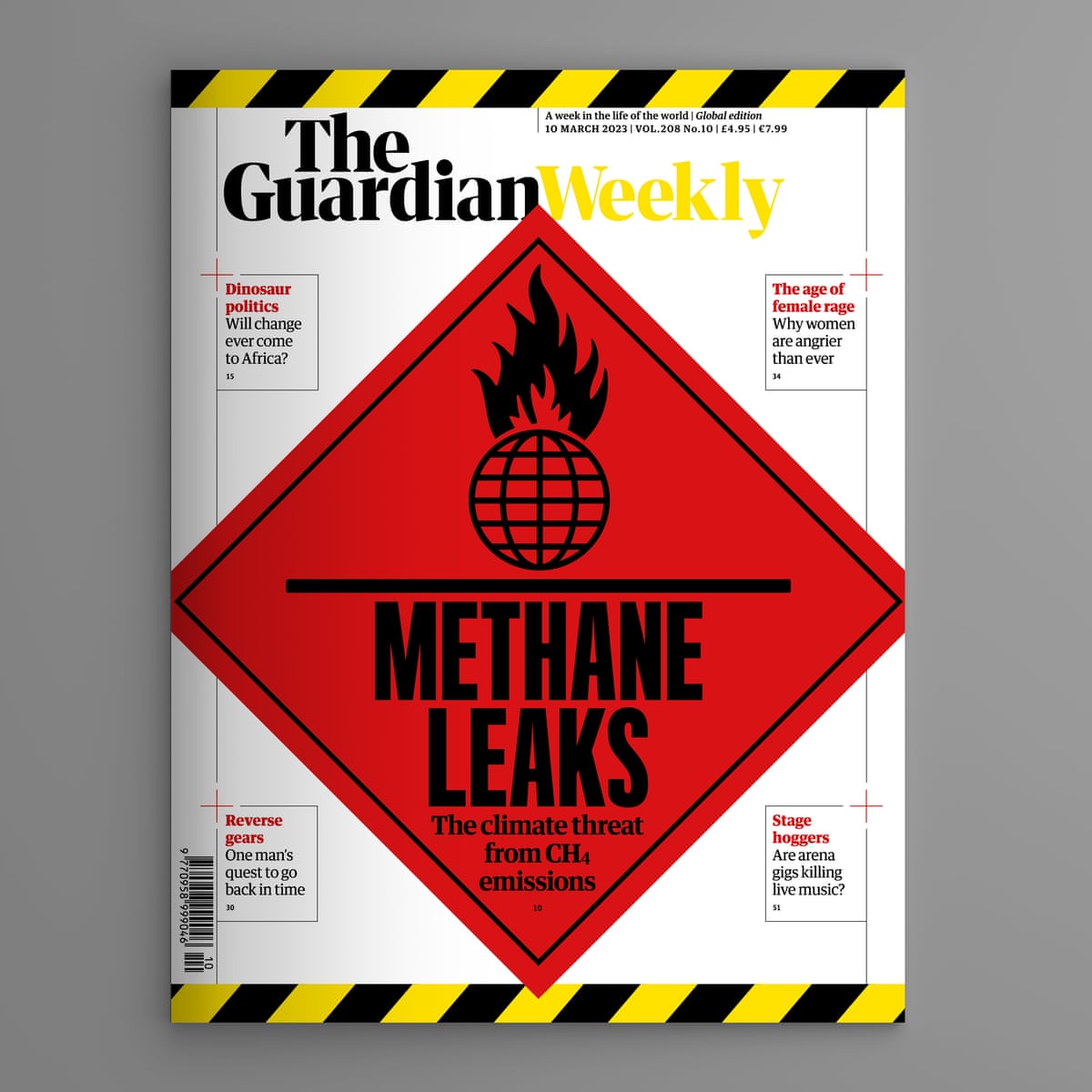
It’s no secret that methane is one of the most potent greenhouse gases, with scientists attributing 25% of global heating to its atmospheric release. A new Guardian analysis by environment editor Damian Carrington lays bare the extent of the problem, identifying more than 1,000 of the world’s worst emitters.

But methane is also a double-edged sword: while it traps 80 times more heat than carbon dioxide, it fades from the atmosphere in about a decade, far faster than the century or more taken by CO2, which is why urgent action to tackle leaks would be so effective in the push to limit global heating. Find out more in Damian’s Big Story report for us this week.
Previews: The Guardian Weekly – March 3, 2023

The ruin of Mariupol: inside the 3 March Guardian Weekly | Ukraine | The  Guardian

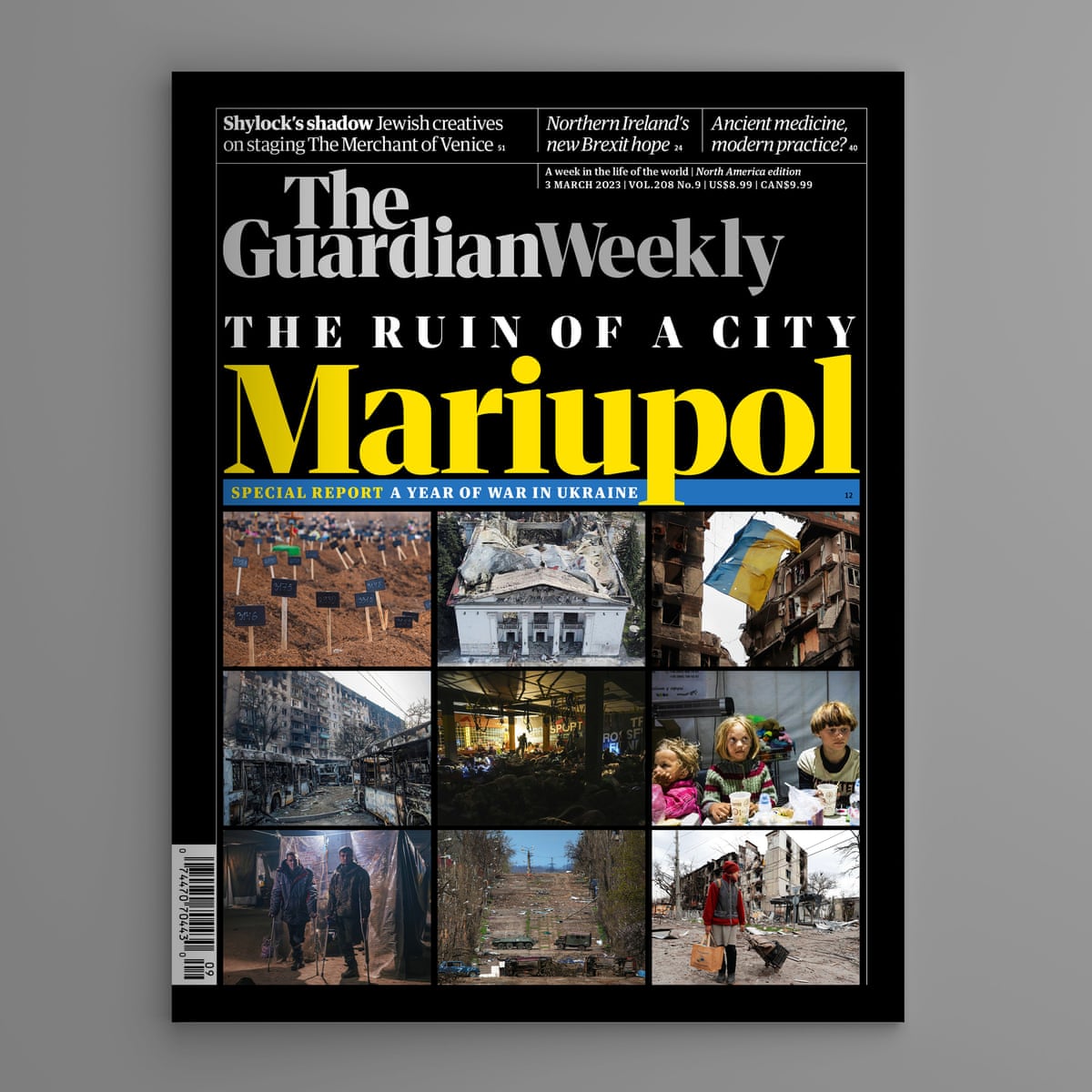
The Guardian Weekly (March 3, 2023) – A year on from the invasion of Ukraine and there seems little end in sight to a conflict that has, unquestionably, changed the world. The Guardian Weekly’s big story this week outlines five possible routes to peace (some more hopeful than others), but the main focus is a stunning collaboration from Guardian reporters detailing the fate of the port of Mariupol, the battle for which has perhaps been the bloodiest and most shocking chapter of the war to date.

It’s an extraordinary account of the devastation, partial reconstruction, and Russification of a thriving city. “You learn to only voice your opinions with those you know you can trust,” says Darya, a student opposed to the occupation. “Otherwise, you keep your thoughts to yourself.”

On Monday the UK government finally agreed a deal with the EU to end a long-running Brexit dispute over customs arrangements and legal oversight in Northern Ireland. Our Brexit correspondent Lisa O’Carroll unpicks the key points of the new agreement and what it means for the region.

In 2003, when the US army occupied Iraq after the fall of Saddam Hussein, the Guardian writer Ghaith Abdul-Ahad was aged 28 and living in Baghdad. He recounts his front-row view of the fall of the regime, the arrival of the so-called liberators and the unfolding of a sectarian war.