

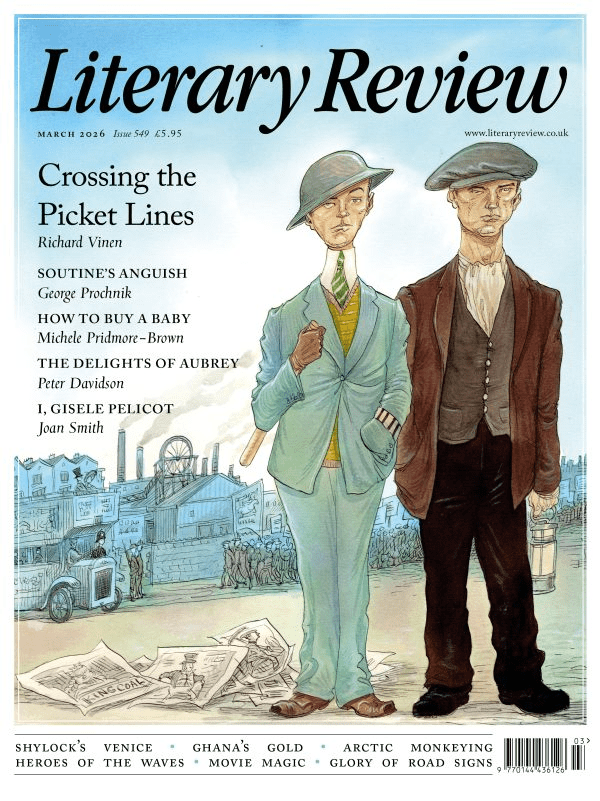
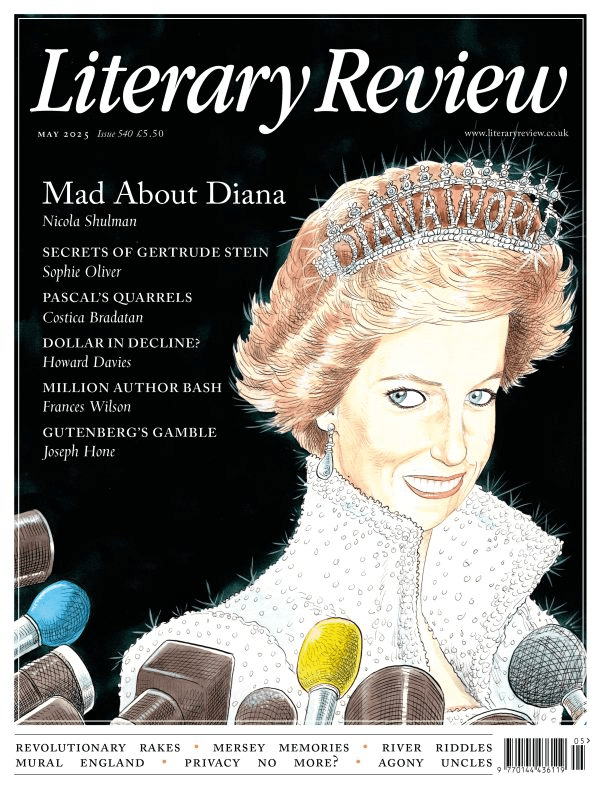
LITERARY REVIEW : The latest issue features Richard Vinen on the General Strike * George Prochnik on Chaim Soutine * Michele Pridmore-Brown on the fertility industry * Peter Davidson on John Aubrey * Joan Smith on Gisèle Pelicot * Piers Brendon on Kathleen Harriman * Jonathan Keates on the Venetian Ghetto * Erik Linstrum on Asante gold * Zoe Guttenplan on road signs * Holly E J Black on illustration * Michael Burleigh on the Arctic * Frances Cairncross on corporate scandals * Andrew Seaton on wind power
Not Funny, Not Forgotten
The historian A J P Taylor was at Oxford during the general strike of 1926. After it, he later recalled, relations between the minority of undergraduates, such as himself, who had gone to help the strikers and those who had signed on as special constables or volunteer strike-breakers were cordial. Only those sensible men who had stuck to their books and essays were disdained. The whole episode seemed funny in a stereotypically English way – like a Punch cartoon brought to life.





 Boomers Daily