Tag Archives: Landfills

Analysis: The Business Of Waste Management (CNBC)


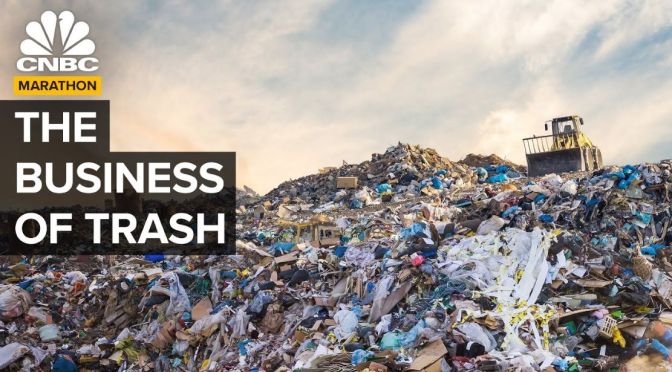
CNBC (January 8, 2024) CNBC Marathon explores the economics of waste management and how the United States is solving its trash problem. In 2019, the North American waste management market reached $208 billion.

Chapters: 00:00 Introduction 00:48 How Trash Makes Money In The U.S. (Published July 2021) 15:59 How Amazon, American Airlines And Subaru Burn Waste To Make Energy (Published May 2022) 32:24 How To Clean Up The World’s Most Polluted Rivers (Published August 2022) 46:16 Where Do EV Batteries Go When They Die? (Published March 2023)

Thanks to advancements in modern chemistry and support from municipal governments, landfills have seen astonishing financial success in recent years. Burning waste to make energy is a $10 billion industry in the U.S., and the fastest growing part of the business is waste from big companies like Amazon, Subaru, Quest Diagnostics and American Airlines.

They’re part of a growing corporate movement toward “zero landfill” as pressure mounts to reach sustainability requirements. It’s estimated that every year, millions of tons of plastic enter the ocean through rivers, and as global waste generation increases, the problem is poised to worsen.

But a host of companies from Baltimore, Maryland to Bengaluru, India are working on the issue, developing novel methods to capture trash from rivers before it reaches the ocean. Dozens of electric vehicles are scheduled to debut in the next few years and over 300 million electric vehicles are expected to be on the world’s roads by 2030.

The lifetime for an EV battery is estimated to be 12 to 15 years in moderate climates, but that doesn’t mean the batteries end up in landfills when they die.


World Economic Forum: Top Stories – Oct 7, 2023

World Economic Forum (October 7, 2023) – This week’s top stories of the week include:


0:15 Start-up turns trees destined for landfills into products – Every year, US cities lose 36 million trees. They succumb to old age or disease or are felled to make space for development Much of this wood could be made into useful products but instead it’s turned into woodchips or used as firewood and 12 million tonnes end up in US landfills each year. To prevent this, Cambium Carbon partners with sawmills, arborists, and manufacturers to build local, circular supply chains. Wood destined for landfill is diverted and upcycled into siding, flooring, furniture and more. Cambium calls its product ‘Carbon Smart Wood’.

1:55 These solar panels work even on snowy days – A new coating causes snow to slide off panels ensuring they can generate power all year round. The coating was developed by a team at the University of Toledo. It can be easily retrofitted to existing equipment.

3:28 US women pay billions more for healthcare than men – Researchers at Deloitte analyzed data on 16 million workers with health coverage. They found women spend $15.4 billion more every year on healthcare than men,. That works out to a premium of $266 for the average womanor around 18% more than men. This discrepancy exists for all women of working age.

4:57 French supermarket launches packaging return scheme – Customers in 100 Carrefour stores can buy products in reusable packaging. They pay a small deposit which is refunded when they drop the empty packaging back at the store. This system is called Loop. It’s the brainchild of waste management firm TerraCycle

_____________________________________________

The World Economic Forum is the International Organization for Public-Private Cooperation. The Forum engages the foremost political, business, cultural and other leaders of society to shape global, regional and industry agendas. We believe that progress happens by bringing together people from all walks of life who have the drive and the influence to make positive change.