Tag Archives: Knowledge

PHILOSOPHY NOW MAGAZINE FEBRUARY/MARCH 2026

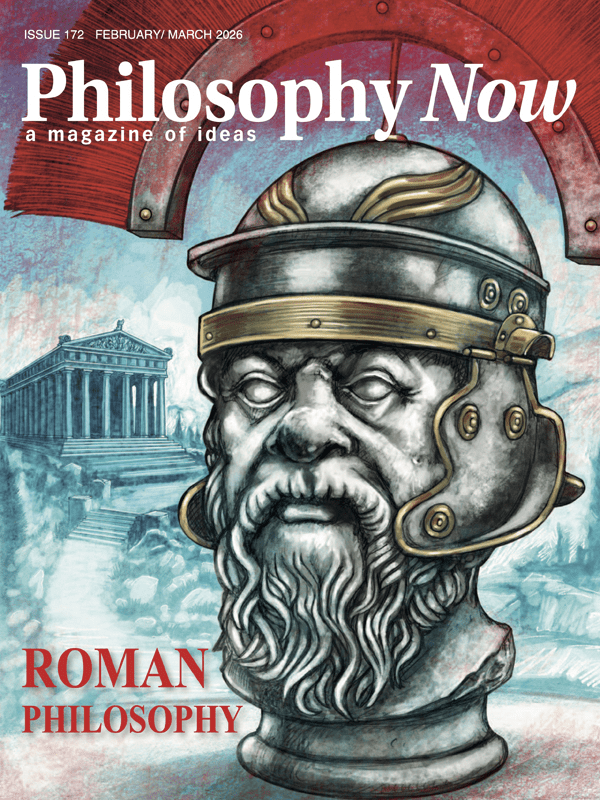
PHILOSOPHY NOW MAGAZINE: The latest issue features ‘Roman Philosophy’….

What Have the Romans Ever Done For Us?

by Rick Lewis

News: February/March 2026

Texas Prof Banned from Teaching Plato • Chatbots Have Favourite Philosophers • Singer Fears AI Doesn’t ‘Get’ Animal Rights — News reports by Anja Steinbauer

ROMAN PHILOSOPHY

Machiavelli’s Roman Empire

Sam Spound explains why the author of The Prince thought about Rome so much.

Cicero & the Ideal of Virtue

Abdullah Shaikh explores Cicero’s ideas about the core Roman principle of virtus.

The Educational Philosophy of Quintilian

Philip Vassallo learns from a classic of Classical education.

Ancient Synergy

Yolanda De Iuliis looks at how Roman Mithraism incorporated Stoic philosophy.

The Post Paralysis Peace Paradox

Cassandra Brandt offers the reflections of a sedentary Stoic.
PHILOSOPHY NOW MAGAZINE DECEMBER ’25/JANUARY 2026

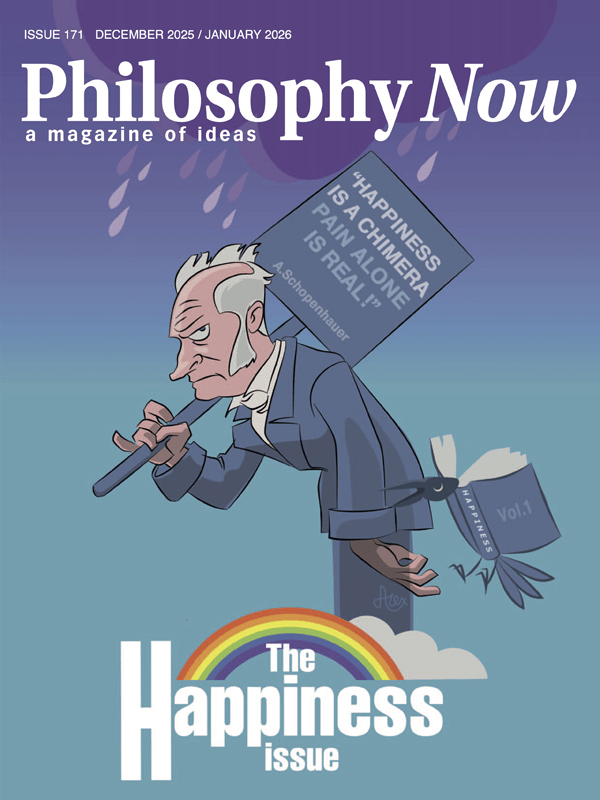
PHILOSOPHY NOW MAGAZINE: The latest issue features ‘The Happiness Issue’

Hedonic Treadmills in the Vale of Tears

Michael Gracey looks at how philosophers have pursued happiness.

Arthur Schopenhauer: Philosophy’s Dr Feelgood

Arthur Schopenhauer (1788-1860), the author of The World as Will and Representation, was a profound metaphysician who also advocated basing ethics upon compassion. He was a great philosopher, but notoriously pessimistic, as the following quotations might suggest.

The Good Life Paradox

Matthew Hammerton points out that a meaningful life and a life that goes well for you might not be the same thing.

Deconstructing Happiness

Abdullah Rayhan breaks down ‘happiness’ with Boethius, Kierkegaard & Montaigne.

Ancient Indian Wisdom for a Restless Age

Jahnvi Borgohain looks at a variety of approaches to happiness.

The Necessary Ache

Tara Daneshmand on regret and the courage to choose.

PHILOSOPHY NOW MAGAZINE – OCTOBER/NOVEMBER 2025

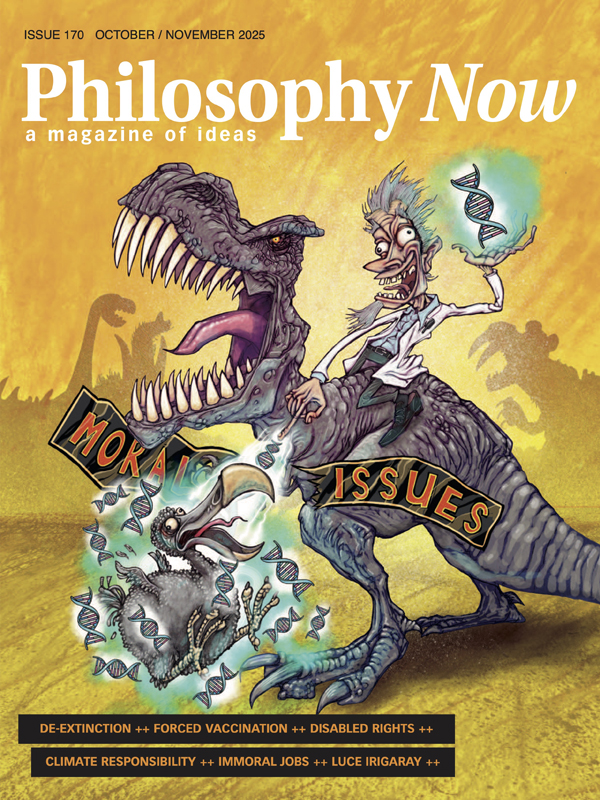
PHILOSOPHY NOW MAGAZINE: The latest issue features ‘Moral Issues

Challenging Times & Moral Issues

De-Extinction: Bringing Back Beasts or Playing God?

John Kennedy Philip revives the ethical debate around resurrecting species.

Forced Vaccination

Naina Krishnamurthy asks if it’s ethical or egregious.

Moral Decision-Making for a Job Search

Norman Schultz wonders when working is wrong.

What My Sister Taught Me About Humanity

Lee Clarke argues that we need a more inclusive view of moral personhood.

Collective Action & Climate Change

Nevin Chellappah says we can’t dodge responsibility by our effects being small.

The Mediation of Touch

A conversation between Emma Jones and Luce Irigaray.

Macmurray on Relationship

Jeanne Warren presents aspects of John Macmurray’s philosophy of the personal.

Quantum Physics & Indian Philosophy

Punit Kumar and Sanjeev Kumar Varshney look into entangled worlds.

Alchemy, Mining, Speculation & Experimentation

Okan Nurettin Okur investigates the philosophy of chemistry.

Can AI Teach Our Grandmothers To Suck Eggs?

Louis Tempany wonders whether the problem is with the machines or with us.

Edward Gibbon (1737-1794)

John P. Irish considers some principles of history through the history of a historian.

PHILOSOPHY NOW MAGAZINE – AUGUST/SEPTEMBER 2025

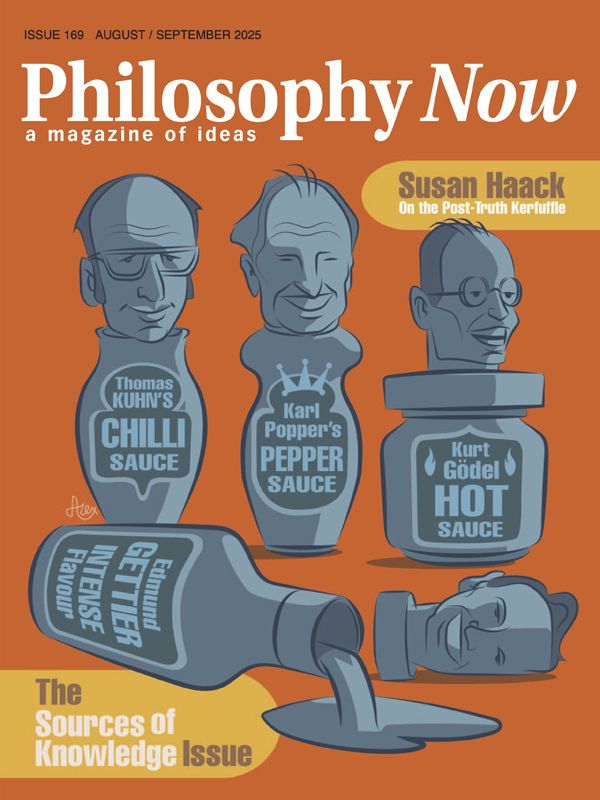
PHILOSOPHY NOW MAGAZINE (August 5, 2025): The latest issue features ‘The Sources of Knowledge Issue’

Xuanzang & the Gettier Problem

Maya Koka journeys through the desert to seek knowledge about knowledge.

The Philosophical Method of Exception

Peter Keeble spotlights and critiques a common philosophical technique.

Popper, Science & Democracy

Brian King follows Popper’s idea of the evolution of knowledge, life and society.

Challenging the Objectivity of Science

Sina Mirzaye Shirkoohi observes science to get the facts straight about it.

Gödel, Wittgenstein, & the Limits of Knowledge

Michael D. McGranahan takes us to the edge of language, mathematics and science.

Research: New Scientist Magazine- January 14, 2023

ISSUE 3421 | MAGAZINE COVER DATE: 14 January 2023 | New Scientist

New Scientist – January 14, 2023 issue:

How can we understand quantum reality if it is impossible to measure?

If we can’t measure something, we can’t know its true nature. This fundamental limitation hampers our understanding of the quantum world – but it doesn’t preclude scientific thinking

How AI is shifting the limits of knowledge imposed by complexity

From weather to the structure of proteins, some things are predictable in theory, but too complex to figure out in practice. But the rise of artificial intelligence is changing that fast

Why some aspects of physical reality must be experienced to be known

We will never fully know what pain, colour and love are really like for other people – never mind other animals. That means we may never know if we have created sentient AI