
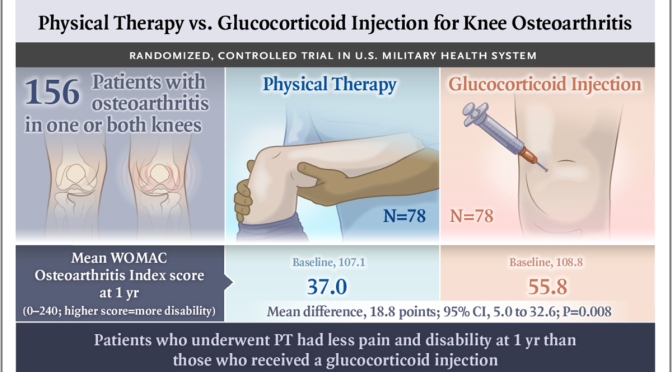
Patients with osteoarthritis of the knee who underwent physical therapy had less pain and functional disability at 1 year than patients who received an intraarticular glucocorticoid injection.
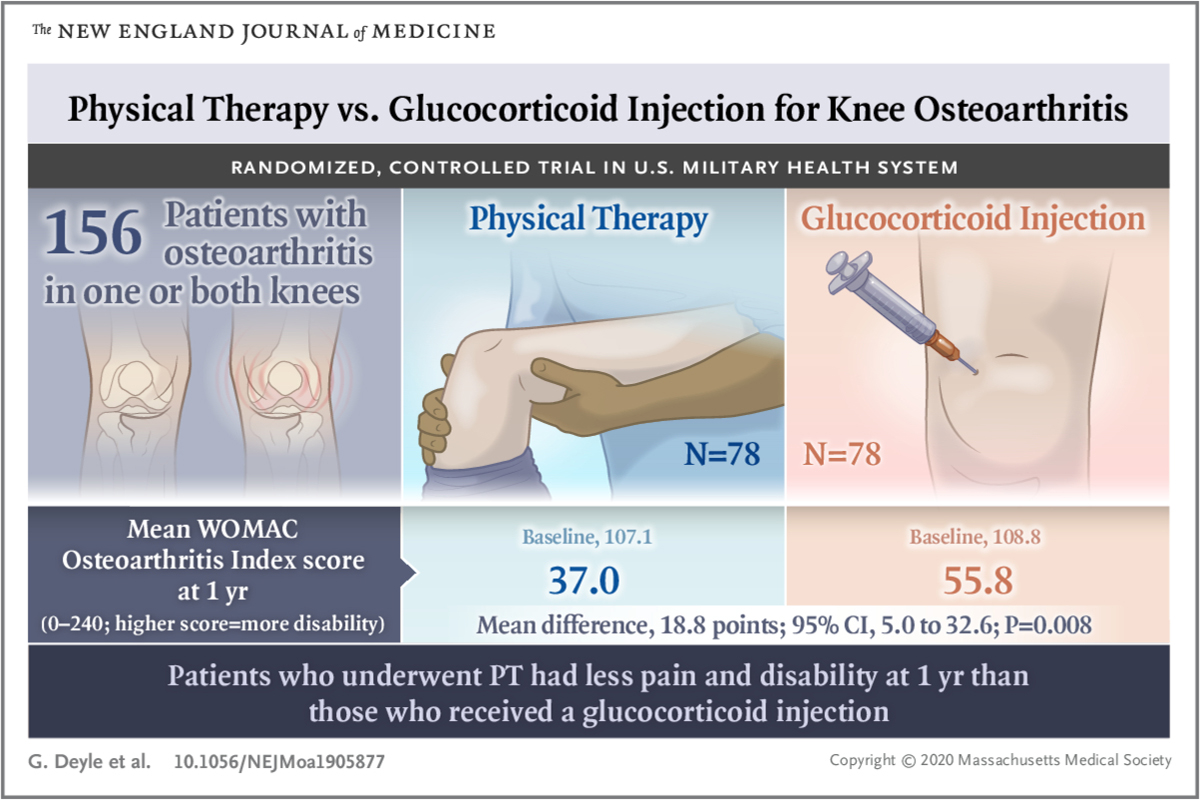
Osteoarthritis of the knee is a leading cause of disability.1 Current management is typically limited to the treatment of symptoms until late stages of arthritis lead to knee replacement.2 Intraarticular glucocorticoid injections are commonly used as a primary treatment for osteoarthritis of the knee,3 but there are conflicting reports regarding the extent and duration of the relief of symptoms with this therapy.4-6 Complications from these injections occur infrequently but include joint infection,7 accelerated degradation of articular cartilage,8 and subchondral insufficiency fractures.9
PHYSICAL THERAPY
The physical therapy intervention, which is described in the protocol,26 included instructions and images for exercises, joint mobilizations, and the clinical reasoning underlying the priorities, dosing, and progression of treatment. During a typical clinical session, the physical therapist would implement hands-on, manual techniques immediately before the patient performed reinforcing exercises to help the patient perform the movements with little or no pain. For example, if a patient could not fully extend or flex the knee, or those movements were painful, the physical therapist would use a hands-on, passive mobilizing technique to repeatedly move the knee to reduce stiffness while altering the mechanics of the technique to avoid pain. The patient would then perform repeated active knee movements in the same direction.
Read full study


 Boomers Daily