
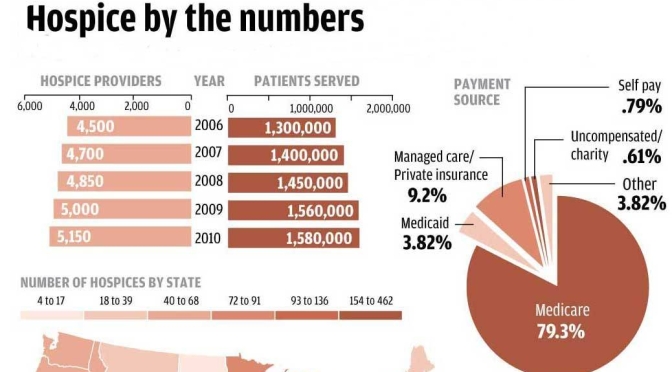
 According to a recent Kaiser Family Foundation poll, seven in 10 Americans say they would prefer to die at home. And that’s the direction the health care system is moving, too, hoping to avoid unnecessary and expensive treatment at the end of life.
Hospice allows a patient deemed to have fewer than six months to live to change the focus of their medical care — from the goal of curing disease to a new goal of using treatments and medicines to maintain comfort and quality of life. It is a form of palliative care, which also focuses on pain management, but can be provided while a patient continues to seek a cure or receive treatments to prolong life.

 Health spending in the U.S. grew to $3.6 trillion in 2018, according to a new report from the federal government. The rate of growth — 4.6% — was up slightly from 2017’s 4.2%, despite the fact that nearly a million more Americans lacked insurance.
 Leaving nothing to chance, the Cavners are making a number of modifications they might never need. For instance, neither uses a wheelchair, but contractors are making all doorways 3 feet wide for accessibility throughout — just in case. The master bath roll-in shower, flat and rimless, will provide room to maneuver and the master bath vanity is also at wheelchair-accessible height. Kitchen drawers, rather than cabinets, will allow easy access in a wheelchair. The Cavners are closely watching details of the renovation, but it wasn’t a hard decision.


 Boomers Daily