
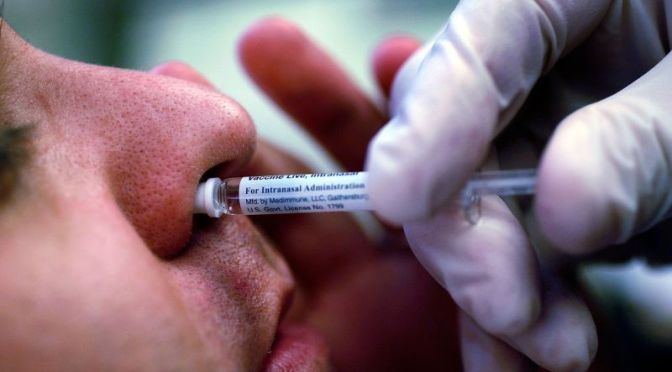

From Scientific American (March 1, 2021):
Enter the intranasal vaccine, which abandons the needle and syringe for a spray container that looks more like a nasal decongestant. With a quick spritz up the nose, intranasal vaccines are designed to bolster immune defenses in the mucosa, triggering production of an antibody known as immunoglobulin A, which can block infection. This overwhelming response, called sterilizing immunity, reduces the chance that people will pass on the virus.
The development of highly effective COVID vaccines in less than a year is an extraordinary triumph of science. But several coronavirus variants have emerged that could at least partly evade the immune response induced by the vaccines. These variants should serve as a warning against complacency—and encourage us to explore a different type of vaccination, delivered as a spray in the nose. Intranasal vaccines could provide an additional degree of protection, and help reduce the spread of the virus.

 The prototype revealed that using artificial intelligence and machine learning to examine certain combinations of vital signs and other biomarkers could strongly
  Boomers Daily