
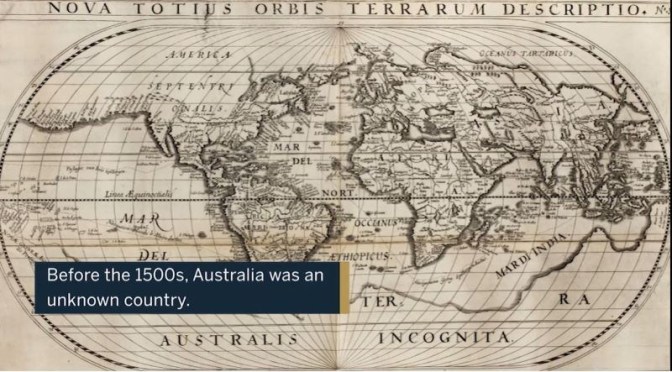
The quest to discover the unchartered globe began in earnest In the 1500s. In this episode of Sotheby’s Stories, discover how European explorers took to the seas founding new lands and new species, revealing the true shape of the world. Curated by global explorer Jean-Paul Morin, this unique collection of century-old treasures takes us back to when the world and its inhabitants were being revealed for the first time. Offered in Sotheby’s upcoming auction Jamais Perdu en Mer (Paris | 14 October 2020).
Tag Archives: Explorers
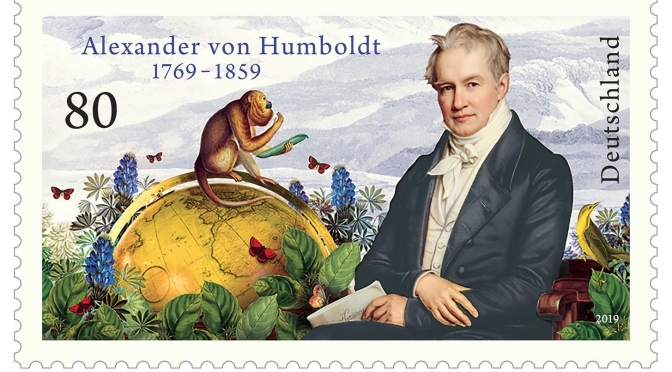
Top Podcasts: Alexander Von Humboldt – “The Last Man Who Knew It All”
 Alexander von Humboldt might not be a name you know, but you can bet you know his ideas. Back when the United States were a wee collection of colonies huddled on the eastern seaboard, colonists found the wilderness surrounding them scary.
It took a zealous Prussian explorer with a thing for barometers to show the colonists what they couldn’t see: a global ecosystem, and their own place in nature. In this  episode, we learn how Humboldt—through science and art—inspired a key part of America’s national identity.
More fascinating Humboldt facts:
- He strongly opposed slavery in the early 19th century, calling it the “greatest of all the evils which have afflicted mankind.”
- He was the first to theorize human caused climate change by changing how water flows through a landscape, on a local level, and warned about deforestation.
- He invented isotherms, the lines on a weather map that we still use today. He used them to show which parts of the world were experiencing similar temperatures.
- He made the world’s most detailed map of Mexico and the American west.
- He nearly summited what was then thought to be the world’s tallest mountain (while wearing 18th century wools, no less.).
- Another thing Humboldt and Jefferson bonded over? Mastodons. Humboldt was the first to discover remains of a species now known as Cuvieronius hyodon in Ecuador, which were similar to the “giant elephants” being found in Ohio. The teeth Humboldt found were the clue that these weren’t modern elephants; they looked pretty different. And because these teeth looked sharp, Jefferson and some American scientists thought they were for meat eating! Eventually Georges Cuvier, a French scientist who was friends with Humboldt, proved that these were different from Indian and African elephants, and even woolly mammoths—and the species eventually ended up renamed after him. One of the few eponymous misses for our friend Humboldt!
If you’re interested in learning more about the life and times of Alexander von Humboldt, I’d recommend reading Andrea Wulf’s book The Invention of Nature: Alexander von Humboldt’s New World.
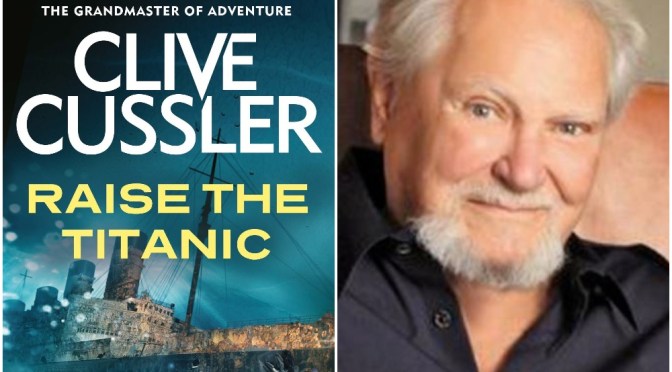
Tributes: CBS Interview From 1998 With Author Clive Cussler (1931-2020)
Novelist Clive Cussler, the man whose maritime alter-ego, adventurer Dirk Pitt, raised the Titanic and explored countless shipwrecks, has himself located more than 60 sunken ships and submarines. Cussler (who died on February 24, 2020, at age 88) talked to correspondent Anthony Mason in this interview that originally aired on “Sunday Morning” on January 25, 1998, in which he discussed his passion for vintage cars, and for going beneath the ocean’s surface to find the answers to naval history’s perplexing questions.
 Boomers Daily