The department of European and American Art Before 1900 oversees a collection that includes more than 3,000 artworks and is composed of painting, sculpture, and works on paper, with significant strengths in early Italian Renaissance, 19th century French painting, and British art from 1400 to 1900.
The Denver Art Museum began acquiring notable examples of European art as early as the 1930s, with donations from Samuel H. Kress, Mr. and Mrs. Simon Guggenheim, and the Havemeyers, to name a few. Their generosity helped initiate a collection that grew in time through gifts and purchases.
In Montparnasse begins on the eve of the First World War and ends with the 1936 unveiling of Dalí’s Lobster Telephone. As those extraordinary years unfolded, the Surrealists found ever more innovative ways of exploring the interior life, and asking new questions about how to define art. In Montparnasse recounts how this artistic revolution came to be amidst the salons and cafés of that vibrant neighborhood.
Sue Roe is both an incisive art critic of these pieces and a beguiling biographer with a fingertip feel for this compelling world. Beginning with Duchamp, Roe then takes us through the rise of the Dada movement, the birth of Surrealist photography with Man Ray, the creation of key works by Ernst, Cocteau, and others, through the arrival of Dalí. On canvas and in their readymades and other works these artists juxtaposed objects never before seen together to make the viewer marvel at the ordinary—and at the workings of the subconscious. We see both how this art came to be and how the artists of Montparnasse lived.


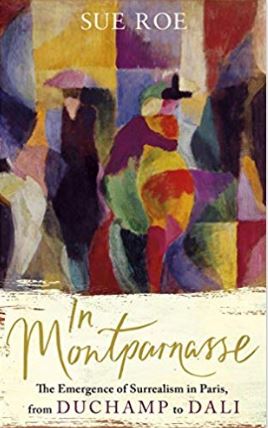 In Montparnasse begins on the eve of the First World War and ends with the 1936 unveiling of Dalí’s Lobster Telephone. As those extraordinary years unfolded, the Surrealists found ever more innovative ways of exploring the interior life, and asking new questions about how to define art. In Montparnasse recounts how this artistic revolution came to be amidst the salons and cafés of that vibrant neighborhood.
 Boomers Daily