The Red Sea Project is being created as a unique, luxury tourism destination that will embrace nature, culture and adventure, setting new standards in sustainable development and positioning Saudi Arabia on the global tourism map.
The 90-plus pristine islands are a haven of natural beauty. 75 percent of the islands will remain undeveloped and nine have been designated as areas of special conservation interest.
With its own dedicated airport under development, the Red Sea Project will be easily accessible to visitors from around the world. At the crossroads of Europe, Asia and Africa, 250 million people will be within three hours flying time. With an average summer temperature of 32 degrees and 360 days of sunshine, the Red Sea Project will be a truly year-round destination.
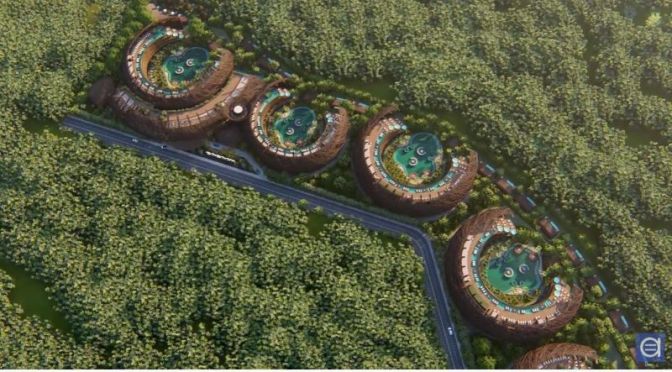
The “Cocoon Hotel & resort”, Tulum, Mexico– a new concept of eco-tourism, and a great opportunity of connection with Nature, Community, Ourselves, inspired by the sea and the exotic forest. The project consists of 46.181 m2 offering 3 residential and 2 hotel buildings “COCOON” with 204 apartments and 167 rooms as well as 16 private villas.Every feature serves to give a unique experience and create a magical place for the guest, at the same time making him identify what is Mexico.
The complex offers luxury community spaces integrated into nature such as jungle gardens, magical outdoor living spaces-villas, multipurpose pavilion, indoor community spaces, leisure areas, restaurant, and a panoramic Nest with unrestricted and breath-taking views. All to achieve a wide vocabulary of visual elements to mutate into designing language, in materials and shapes, for a bio-mimicry architecture.
The idea was to create “Cenotes”- natural freshwater ponds, to which the Mayans gave a sacred use, thus allowing to experience the real Mayan´s rituals. The project makes an emphasis on sustainability concept respecting ecosystem and biodiversity, contributing to the usage of natural materials that minimizes the impact of building and generation of waste. The water collection concept is also respected and represents a recovery of rainwater for sewage treatment. The solar panels are implemented to achieve sustainable electricity.
Finally, the “dry” construction system is used, meaning no wet binders, shorter execution time, and increased safety and sustainability. Source by dna Barcelona.


 Boomers Daily