

From a CalTech Matters online article:

“Observation is observation. Looking, listening, thinking, conjecturing … all original ideas begin with a kind of scrutiny that is at once framed by discipline and open to discovery. Because I have always taught students in a university, not in an art school, I think I have a baseline understanding of what it means to approach the visual world from a different place. Teaching non-artists is always a little bit like being a foreign exchange student. Therein lies the challenge—and, I suspect, the fun.”
January 7, 2020 – This month, artist, designer, and writer Jessica Helfand joins Caltech as the Winter 2020 artist-in-residence in the Division of the Humanities and Social Sciences’ Caltech-Huntington Program in Visual Culture, which is administered jointly by the division and The Huntington Library, Art Museum, and Botanical Gardens. Helfand is a former contributing editor and columnist for Print, Eye and Communications Arts magazines, and founding editor of the website Design Observer. She taught at Yale for two decades and has held artist residencies at the American Academy in Rome and the Bogliasco Foundation, among others. Her most recent book, Face: A Visual Odyssey, was published by MIT Press last fall. On January 16, Helfand will take part in a noontime talk with Bren Professor of Psychology, Neuroscience, and Biology Ralph Adolphs on the theme of the “face.”

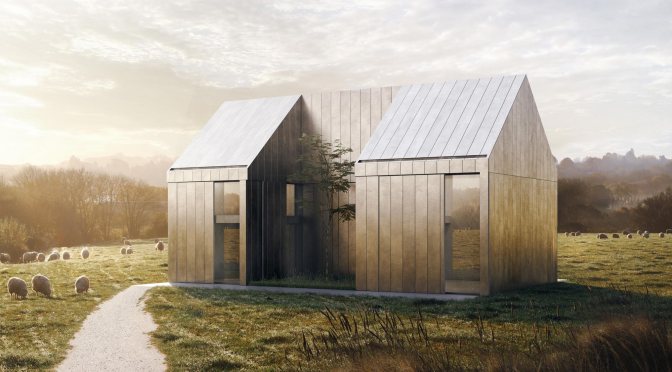
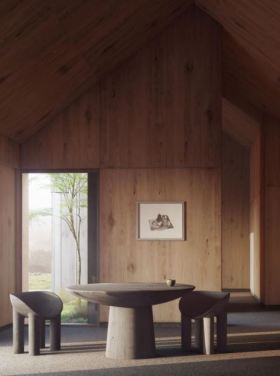 Most notable is Toogood’s sensitive approach to materials. She offers two different, equally alluring solutions to the exterior cladding and the internal finishes. Both external cladding options, raw galvanised steel and dark charred timber, are suggestive of industrial or agricultural structures, making it something of a thrill to see them in a domestic setting. The building clad in raw galvanised steel will have a refined, cream-coloured interior, whilst the structure clad in dark charred timber will have an exposed plywood interior finish.
 TRAVEL DRAWINGS
 This approach stems from my own formal education and the unique 10-year period in contemporary history in which I studied architecture. Occupying both “paper” and virtual / digital environments, I learned the fundamentals at Tulane University using purely traditional architectural methods of representation. By the time I earned my Masters from Columbia University, the pedagogy had radically changed, wherein the old, analog systems of production were abandoned for a purely paperless studio that solely engaged digital technologies such as Maya, Max and Photoshop. Working within both territories, I learned that each medium has a profound effect on the way in which we draw, design and understand architectural space and form.
 Boomers Daily