Tag Archives: Central Italy

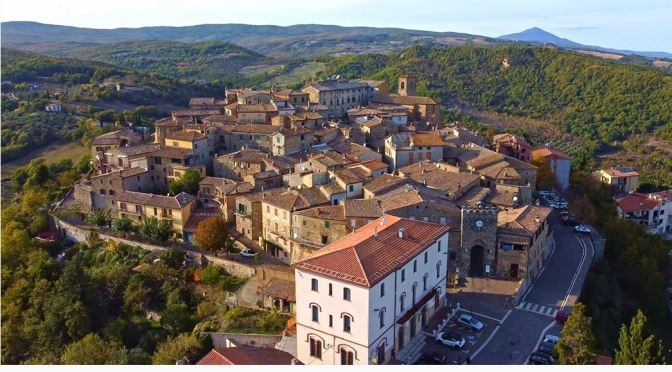
Village Walks: Allerona In Umbria, Central Italy (4K)

A walking tour in 𝗔𝗹𝗹𝗲𝗿𝗼𝗻𝗮, region 𝐔𝐦𝐛𝐫𝐢𝐚, central Italy, province of Terni, a small town of about 1.700 inhabitants a town included in “the most beautiful towns of Italy” official list.

Video timeline: 0:00 – [Drone intro] 2:05 – [Walking tour begins / Piazza Attilio Lupi] 3:20 – [Porta del Sole / “Sun” Gate] 4:20 – […walking in the narrow alleys…] 11:00 – [Panorama on the countryside⛺] 12:42 – [Brief History📋☀️] 18:30 – [Piazza S.Maria] 22:00 – [Church of St.Maria Assunta – *tour inside*⛪☀️] 27:00 – [Water cistern] 28:00 – […walking in the narrow alleys…] 30:00 – [Porta della Luna / “Moon” Gate] 32:30 – […walking in the narroa alleys…] 40:00 – [Piazza S.Maria] 41:20 – [Park⛺] 42:40 – [Beautiful engraved message☀️] 43:44 – [Museum of Geological Cicles] 45:00 – [Church of St.Micahel Archangel and exhibition of sacred art – *tour inside*⛪☀️] 49:00 – […walking…]

Village Walks: Colle Val d’Elsa, Central Italy (4K)

Colle di Val d’Elsa or Colle Val d’Elsa is a town and comune in the province of Siena, Tuscany, central Italy. It has a population of c. 21,600 As of June 2017. Its name means “Hill of Elsa Valley”, where Elsa is the name of the river which crosses it and Valdelsa the name of the valley.

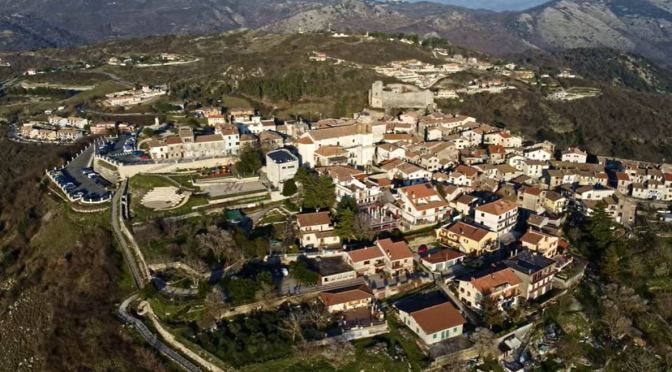
Village Walks: Villalago – Central Italy (4K Video)

Villalago, located 25 km south of Sulmona, in the Abruzzo region of L’Aquila, arose in the 11th century for Christian and Benedictine inspiration, finding in San Domenico Abate the founder of the monastery of San Pietro il Lago, in the upper Sagittario valley. At its foundation the monastery was endowed by the Lords of those lands, the counts of Valva, with goods and privileges and attracted settlers from all over, who settled, under the monks, in several villas in the Valle de Lacu, so called for the its five lakes. Over time, to ensure a valid defense, they perched on Mount Argoneta, where some Lombard towers already stood, and the new village took the name of Villalago. In 1479 the monastery was abandoned by the Benedictines and the Villalaghesi “no longer colonists, they became a body of the University, with independent possessions” (Antinori, chorography of Villalago). And under the motto of “Universitas contra omnes”, they fought victoriously against the Belprato Counts of Antwerp and against others who aimed to take over the entire Valle de Lacu.

Video timeline: 0:00 – [Drone intro] 2:00 – [Walking tour begins / Piazza Celestino Lupi] 3:28 – [St.Mary of Loreto church☀️] 5:09 – […walking in the old town…] 10:36 – [Via Buccini] 16:44 – [Church of St.Michael – closed☀️] 18:00 – [Brief history of the town☀️] 24:00 – [Via Iafolla] 33:25 – [Old Castle of Villalago] 38:42 – [Church of the Madonna Addolorata – tour inside☀️] 41:00 – […descending…] 48:00 – [Via Ernesto Grossi] 50:30 – [Piazza Celestino Lupi]

Walking Tours: Village Of Nepi – Central Italy (4K)

Nepi is a town and comune in the province of Viterbo, Lazio, central Italy. The town lies 30 kilometres southeast of the city of Viterbo and about 13 kilometres southwest from Civita Castellana. The town is known for its mineral springs, sold and bottled under the Acqua di Nepi brand throughout Italy.

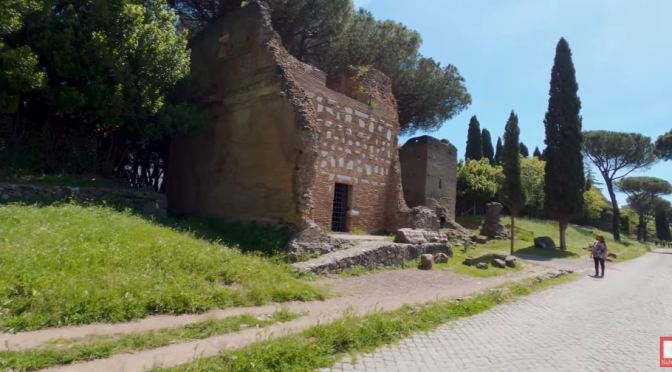
Bike Tours: The Appian Way – Rome In Central Italy (4K)

Filmed on Saturday May 8th, 2021

The Appian Way is one of the earliest and strategically most important Roman roads of the ancient republic. It connected  Rome  to Brindisi, in southeast Italy. Its importance is indicated by its common name, recorded by Statius:

Appia longarum… regina viarum

“the Appian Way the queen of the long roads”

The road is named after Appius Claudius Caecus, the Roman censor who began and completed the first section as a military road to the south in 312 BC during the Samnite Wars.

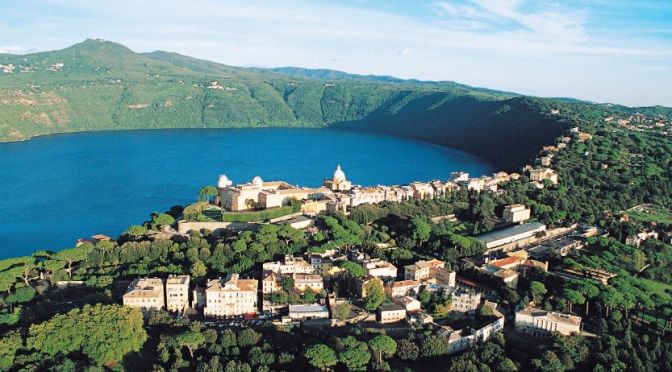
Bike Tour: Lake Albano & Castel Gandolfo, Italy (4K)

Castel Gandolfo, colloquially just Castello in the Castelli Romani dialects, is a town located 25 kilometres southeast of Rome in the Lazio region of Italy. 

Lake Albano is a small volcanic crater lake in the Alban Hills of Lazio, at the foot of Monte Cavo, 20 km southeast of Rome. Castel Gandolfo, overlooking the lake, is the site of the Papal Palace of Castel Gandolfo. It hosted the canoeing and rowing events of the 1960 Summer Olympic Games that were held in Rome.

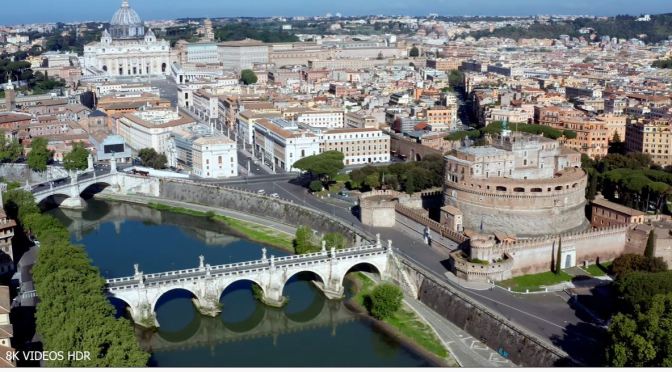
Aerial City Views: Rome – Capital Of Italy (8K Video)

Rome, Italian Roma, historic city and capital of Roma  provincia  (province), of Lazio regione (region), and of the country of Italy. Rome is located in the central portion of the Italian peninsula, on the Tiber River about 15 miles (24 km) inland from the Tyrrhenian Sea. Once the capital of an ancient republic and empire whose armies and polity defined the Western world in antiquity and left seemingly indelible imprints thereafter, the spiritual and physical seat of the Roman Catholic Church, and the site of major pinnacles of artistic and intellectual achievement, Rome is the Eternal City, remaining today a political capital, a religious centre, and a memorial to the creative imagination of the past. Area city, 496 square miles (1,285 square km); province, 2,066 square miles (5,352 square km). Pop. (2011) city, 2,617,175; province, 3,997,465; (2007 est.) urban agglom., 3,339,000; (2016 est.) city, 2,873,494; province, 4,353,738.

Aerial Views: ‘Lazio Region – Central Italy’ (4K Video)

Lazio is a central Italian region bordering the Tyrrhenian Sea. Its principal city, Rome, is Italy’s capital and was at the heart of the ancient Roman Empire. Its iconic ruins include the Coliseum, an amphitheater that seated thousands. On the coast, the ancient port of Ostia still retains detailed mosaics and a theater. Inland are the forested Apennine Mountains, with nature reserves, lakes and stone-built villages.