
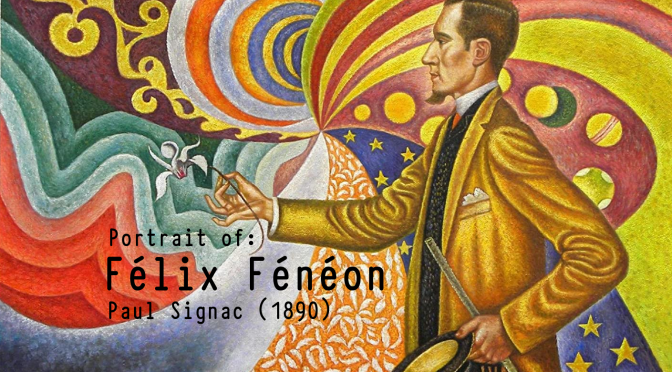
“It would not be a commonplace portrait at all, but a carefully composed picture, with very carefully arranged colors and lines. A rhythmic and angular pose. A decorative Félix, entering with his hat or a flower in his hand.”
With these words, in 1890, Paul Signac described to Félix Fénéon the extraordinary portrait he was dedicating to him. In it, Signac paid homage to Fénéon’s distinctive appearance, his generous but enigmatic personality, and his innovative approach to modernism.
This painting, a masterpiece in the Museum’s collection, will be the centerpiece of Félix Fénéon, the first exhibition dedicated to Fénéon (1861–1944). An art critic, editor, publisher, dealer, collector, and anarchist, Fénéon had a wide-ranging influence on the development of modernism in the late 19th and early 20th centuries.
In the late 1880s, he played a key role in defining the new movement known as Neo-Impressionism, a term he coined himself, whose artists, including Signac, used tiny dabs of color that would mix in the eye of the viewer. Over the next five decades, he championed the careers of artists from Georges-Pierre Seurat and Signac to Pierre Bonnard, Henri Matisse, and Amedeo Modigliani.
He amassed a renowned collection of paintings by these artists and many others, and he was also a pioneering collector of art from Africa and Oceania. The exhibition will feature some 130 objects, including major works that Fénéon admired, championed, and collected, as well as contemporary photographs, letters, and publications that trace key chapters in his biography. Together these works reveal the profound and lasting legacy of Fénéon’s keen eye and bold, forward-looking vision.
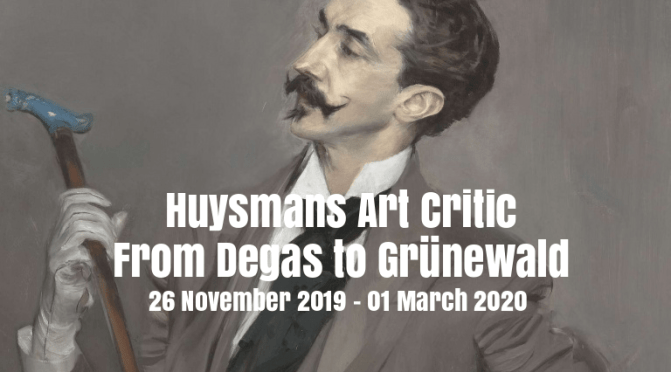
 A key writer of the late 19th century, Joris-Karl Huysmans (1848-1907) was an art critic who is still little known or little understood by the general public. However, his contribution to the artistic press and the aesthetic debate was as decisive as the impact of his novel
 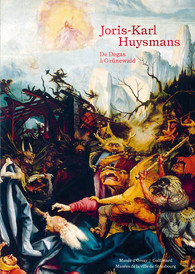 More passionate about Hals and Rembrandt until his discovery of Degas in 1876-1879, Huysmans admitted that this was a defining moment. And yet, his art criticism immediately accepted the possibility of a double modernity. The modernity of the painters of modern life and that of the explorers of dreams were not mutually exclusive. Here, Manet coexists with Rops and Redon. The desire Huysmans showed very early on to escape from the logic of church doctrine no doubt blurred the perception of his aesthetic choices.
 Boomers Daily