Tag Archives: Arabia

Science: Geology’s Billion Year Gap, End Of Leaded Gas & Lush Ancient Arabia

A new theory to explain missing geological time, the end of leaded petrol, and the ancient humans of Arabia.

In this episode:

00:29 Unpicking the Great Unconformity

For more than 150 years, geologists have been aware of ‘missing’ layers of rock from the Earth’s geological record. Up to one billion years appear to have been erased in what’s known as the Great Unconformity. Many theories to explain this have been proposed, and now a new one suggests that the Great Unconformity may have in fact been a series of smaller events.

BBC Future: The strange race to track down a missing billion years

05:23 The era of leaded petrol is over

In July, Algeria became the final country to ban the sale of leaded petrol, meaning that the fuel is unavailable to buy legally anywhere on Earth. However despite this milestone, the toxic effects of lead petrol pollution will linger for many years to come.

Chemistry World: Leaded petrol is finally phased out worldwide

08:26 The ancient humans who lived in a wetter Arabia

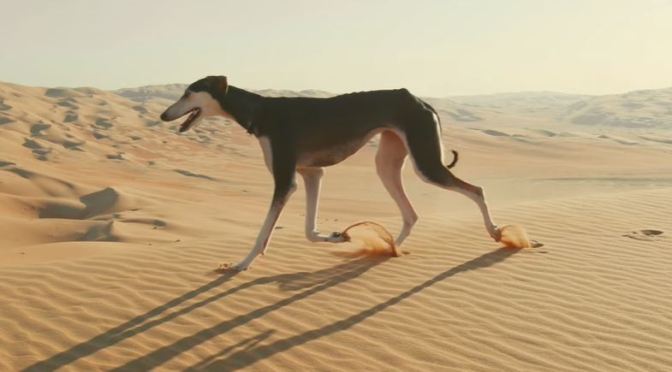
While much of modern day Arabia is covered by deserts, new research suggests that hundreds of thousands of years ago conditions were much wetter for periods on the peninsula. These lusher periods may have made the area a key migratory crossroads for ancient humans.

Research Article: Groucutt et al.

News and Views: Traces of a series of human dispersals through Arabia
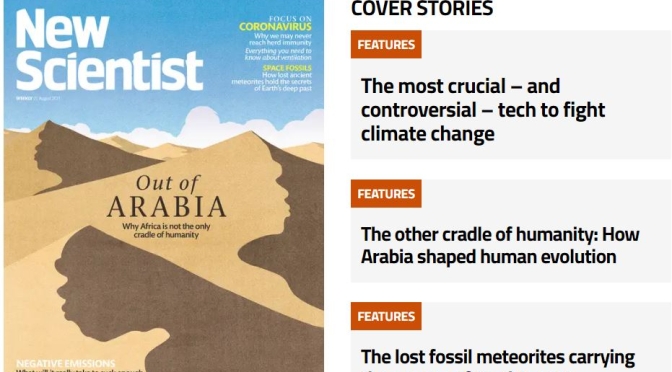
Views: Arabian Saluki – The Fastest Dog In The World

Saluki are a breed of desert dog famed for their speed. In the old days, Bedouins of the Arabian Peninsula relied on them to hunt for gazelle. Today, they are more likely to race for sport.

The Saluki is a standardised breed developed from sighthounds – dogs that hunt primarily by sight rather than scent – that was once used by nomadic tribes to run down game animals.[2] The dog was originally bred in the Fertile Crescent.[1] The modern breed is typically deep-chested and long-legged,[2] and similar dogs appear in medieval and ancient art. The breed is most closely related to the Afghan hound, a basal breed that predates the emergence of modern breeds in the 19th century,[3] and the Saluki has been purebred both in the Middle East, including by royalty, since at least that era, and in the West (especially in Britain and Germany) since the 1840s (with breed standards established in the West and the Middle East around the 1920s–1930s), though as a free-breeding landrace, similar dogs are common as feral animals in the Middle East. A related standardised breed is the north African Sloughi.

Top Science Podcasts: 120,000 Year-Old Human Footprints, Neanderthal DNA ‘Y Chromosomes’

Contributing Correspondent Ann Gibbons talks with host Sarah Crespi about a series of 120,000-year-old human footprints found alongside prints from animals like asses, elephants, and camels in a dried-up lake on the Arabian Peninsula. These are the earliest human footprints found so far in Arabia and may help researchers better understand the history of early hominin migrations out of Africa. 

Continuing on the history of humanity theme, Sarah talks with Janet Kelso of the Max Planck Institute for Evolutionary Anthropology, about her team’s efforts to fish the elusive Y chromosome out of Neanderthal and Denisovan DNA. It turns out Y chromosomes tell a different story about our past interbreeding with Neanderthals than previous tales told by the rest of the genome. 

Travel Videos: “Welcome To Arabia” In Jeddah, Saudi Arabia Directed By Caspar Daniël Diederik (2019)

Director: Caspar Daniël Diederik
Producing Production Coordinator: Michael Essey
Lead Producer: Ivan Sebastian
Creative: Miriam Patience
Editor: Hani Fayed
Agency Producer: Jatinder Mahli
DOP/Camera: Ziryab Al Gabri

Welcome To Arabia Travel Video Directed by Caspar Daniël Diederik 2019

New film out of Saudi Arabia.. the city of Jeddah.

Saudi Arabia is changing rapidly and it is inviting the world to come and explore. By making tourist visa now widely available, the country is truly opening its doors to the travellers. It’s definitely positive development for the people as the arrival of travellers will bring more change the country for the good.

Website: https://storytravelers.com/