
Tag Archives: Ants

Research Preview: Nature Magazine – June 15, 2023

Image

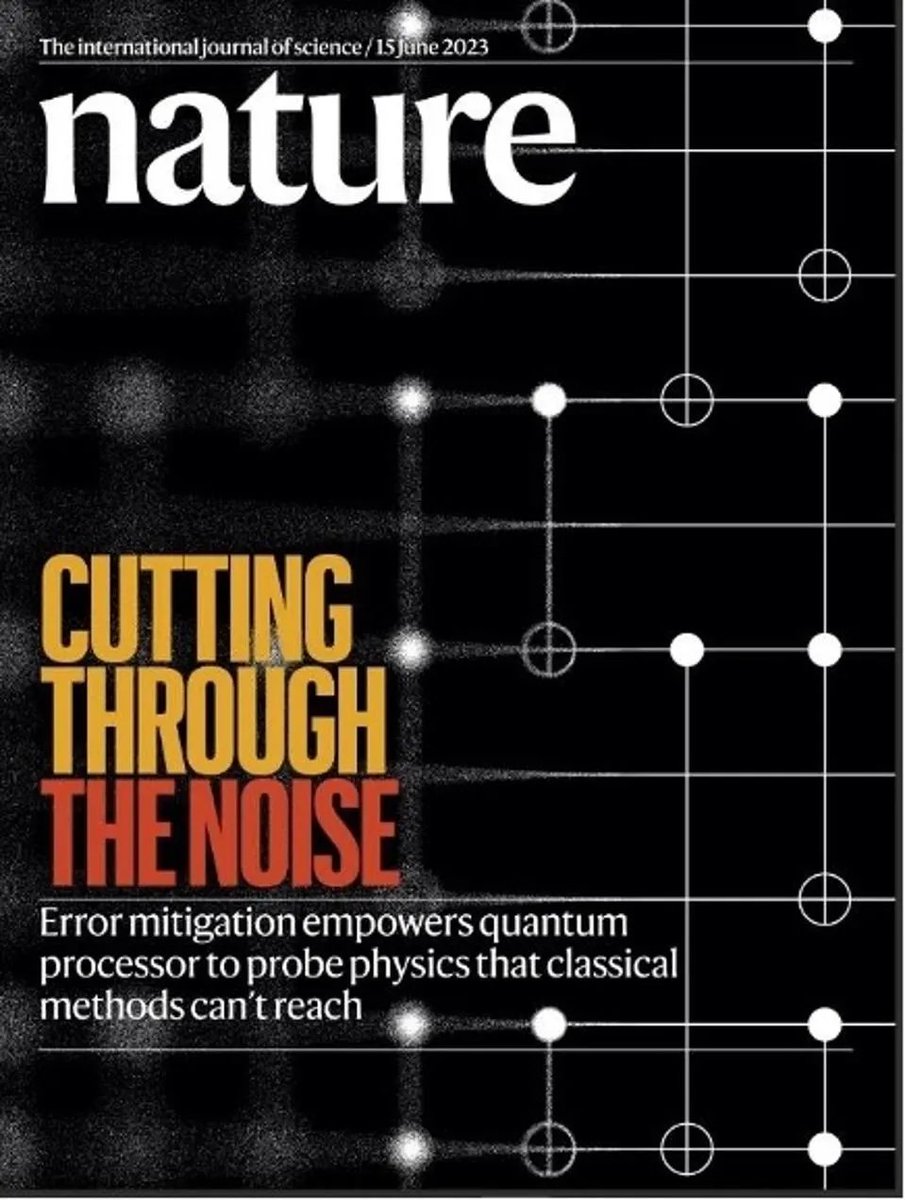
nature Magazine – June 15, 2023 issue: In this week’s issue, Abhinav Kandala and his colleagues show that it is still possible for a quantum computer to outperform a classical computer, by mitigating, rather  than correcting, the errors. 

DeepMind AI creates algorithms that sort data faster than those built by people
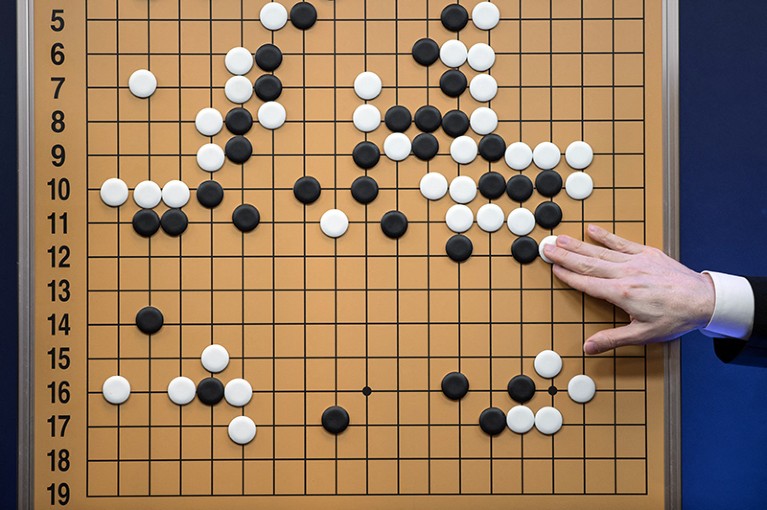
A replica of a game between 'Go' player Lee Se-Dol and a Google-developed super-computer, in Seoul, Korea, 2016.

The technology developed by DeepMind that plays Go and chess can also help to write code.

An artificial intelligence (AI) system based on Google DeepMind’s AlphaZero AI created algorithms that, when translated into the standard programming language C++, can sort data up to three times as fast as human-generated versions.

“We were a bit shocked,” said Daniel Mankowitz, a computer scientist at DeepMind who led the work. “We didn’t believe it at first.”

Ukraine dam collapse: what scientists are watching
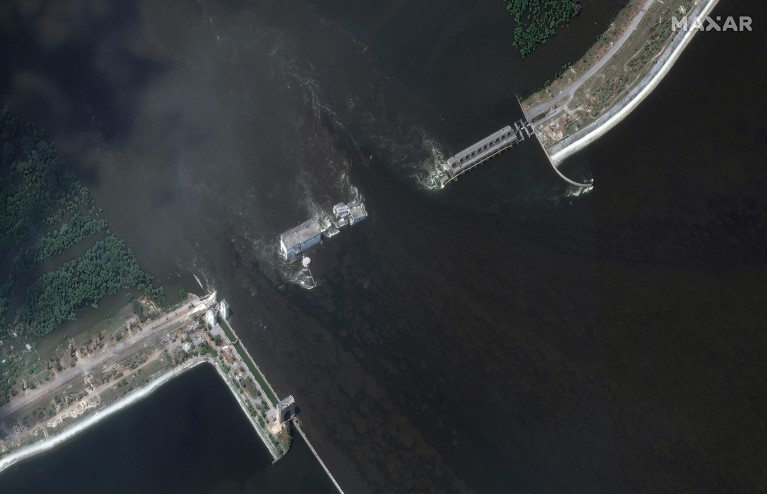
Maxar satellite imagery of the destruction of the Nova Kakhovka dam and hydroelectric power facility.
Large sections of the Kakhovka dam have collapsed, unleashing catastrophic floods. Credit: Satellite image (c) 2023 Maxar Technologies via Getty

Extensive flooding could have severe consequences for farming, health and the environment.

The 66-year-old Kakhovka dam on the Dnieper River in south Ukraine collapsed on the morning of 6 June after a suspected explosion, triggering a catastrophic humanitarian and environmental crisis.
Research Preview: Nature Magazine – June 8, 2023

Image

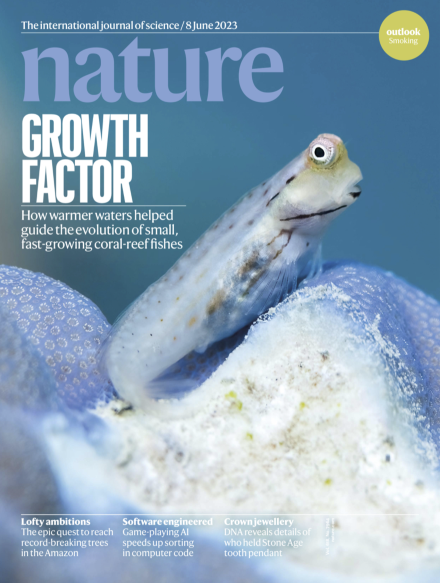
nature Magazine – June 8, 2023 issue:  Coral reef fishes, such as the blenny Ecsenius stictus pictured on the cover, are diverse, abundant and grow quickly. In this week’s issue, Alexandre Siqueira and his colleagues investigate the evolutionary history of these fishes to find out how growth has shaped life on coral reefs. 

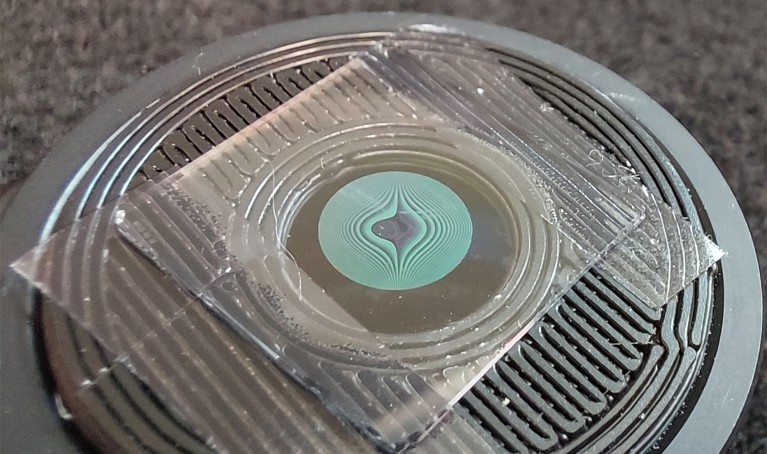
Camera that could fit on a penny captures vivid colour photos

Optimized phase mask of five-millimetre diameter fabricated using a nanofabrication approach.

A ‘meta-lens’ and corrective algorithms allow a tiny device to produce high-resolution images.

A computational-imaging technique paves the way for ultra-small cameras that could be used in various portable devices.

These hardy ants build their own landmarks in the desert

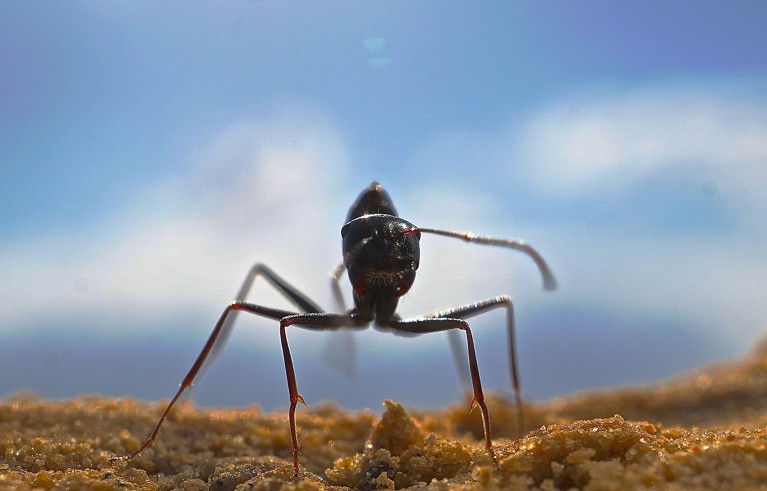
Tunisian desert ant Cataglyphis fortis.

Ants living on the sprawling salt pans of Tunisia use DIY markers to find their way home.

The desert ant Cataglyphis fortis lives in Tunisia’s arid salt flats, and can travel more than a kilometre from its underground nest in search of food. Now scientists have found that these ants build tall hills on top of their nests that help the insects to find their way home across the vast, featureless landscape1.

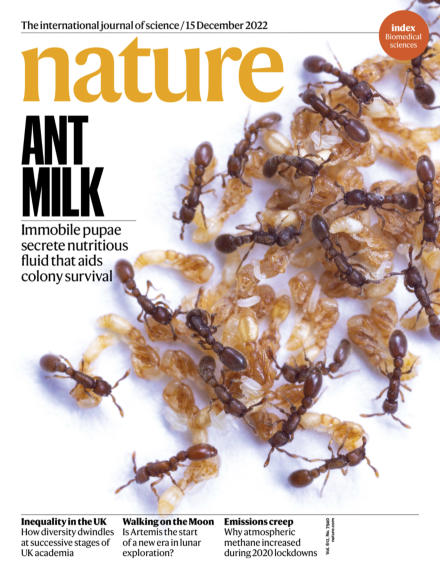
Research Preview: Nature Magazine – Dec 15, 2022

Volume 612 Issue 7940
Cover image: Daniel Kronauer

nature – December 15, 2022 issue:

Sharp laser beam reveals internal organs in stunning 3D

Scientists refine a technology that peers through bone to image sub-surface body parts.

Prehistoric carvings are oldest known story sequence

Two carved panels discovered in what is now Turkey illustrate a tale involving leopards and a bull.

Deadly skin cancer can shrink or vanish after T cells join the fray

Immune-cell-based therapy quashed tumour growth in some people with treatment-resistant melanoma.

A city’s sprawl triggers ominous changes underground

Rapid growth in a city in Central Africa is causing a landslide to speed up.

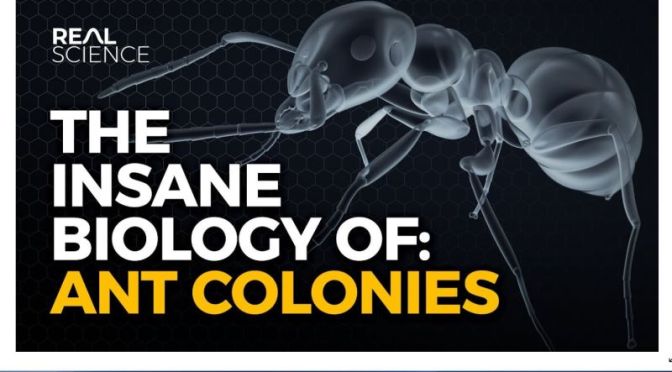
Science: ‘Insane Biology Of Ant Colonies’ (4K Video)

Ants are social insects which form small to large colonies. A typical colony contains an egg-laying queen and many adult workers together with their brood (eggs, larvae and pupae). Workers are by far the most numerous individuals in the nest. They are responsible for nest construction and maintenance, foraging, tending the brood and queen, and nest defence.

While all workers are female, they are sterile and do not lay eggs. Winged queens and males are present in the nest for only a short period. Soon after emerging they leave the nest to mate and establish new nests. Queens are generally similar to the workers, differing primarily in having larger bodies. In some species, fully winged queens are lacking and egg-laying is undertaken either by typical workers or by individuals which are morphologically intermediate between typical queens and workers (these are called ergatoid queens). Males are generally about the same size as the workers or smaller, and have smaller heads with large ocelli, very short scapes and small mandibles. In many cases males look more like wasps than ants.