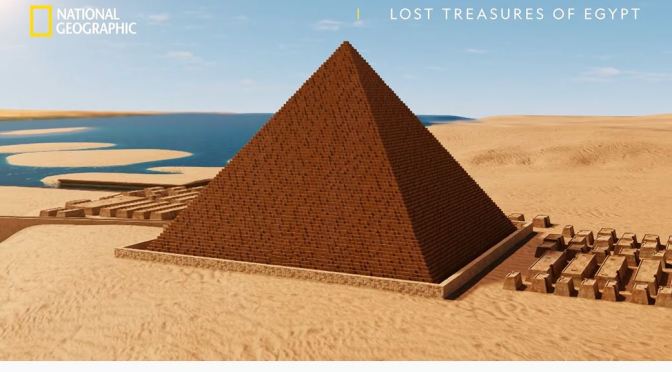
The Great Pyramid of Giza is the largest pyramid ever built and is a staple of Egyptian pyramid architecture. It was built to protect the tomb of King Khufu and was the first-ever true pyramid, due to its perfect shape and extraordinary features.
The entrance of the tomb is located 24 feet off centre and even if trespassers found it, a pulley system of ropes 130 feet above the passage dropped 3 enormous granite slabs to seal the burial chamber entrance. Topped with a layer of white limestone, The Great Pyramid was and is a symbol of the Pharaoh’s reputation and respect. Now, explorers are eagerly searching the pyramid for clues about the life and death of the great King Khufu.
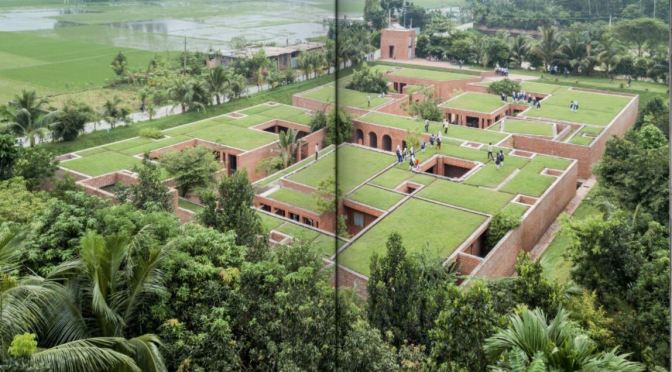
Dig deep into the origins of building. The ground, now often used as a passive foundation for going higher, is rife with possibilities. Bjarne Mastenbroek investigates the relationship architecture has, had, and will have, with site and nature. Through the photography of Iwan Baan and more than 500 analytical drawings by SeARCH, Dig it! dissects structures from the past millennia—some well-known, some previously overlooked. This global survey of nearly 1,400 pages, designed by Mevis & Van Deursen, brings architecture back in harmony with the Earth’s surface. Discover the book: https://www.taschen.com/04697yt
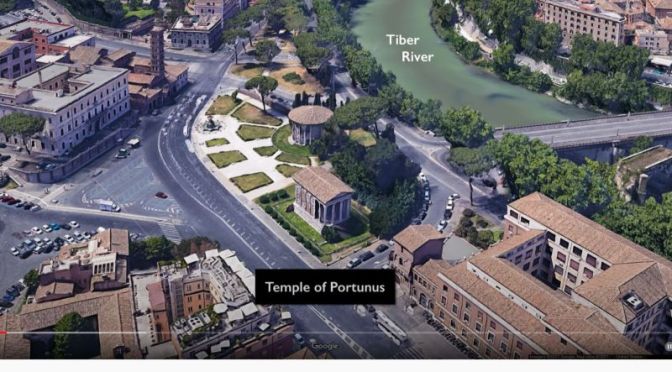
The Temple of Portunus or Temple of Fortuna Virilis is a Roman temple in Rome, Italy, one of the best preserved of all Roman temples. Its dedication remains unclear, as ancient sources mention several temples in this area of Rome, without saying enough to make it clear which this is.
News, Views and Reviews For The Intellectually Curious

 Boomers Daily