

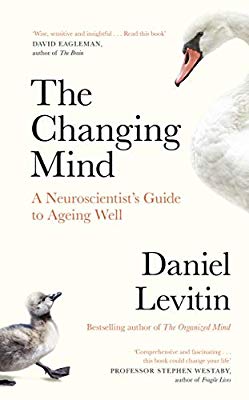
 Challenging widely held assumptions about the diminishing abilities of an ageing brain, leading neuroscientist Daniel Levitin argues that we should view getting older as a beneficial experience rather than a form of cognitive entropy. Persuasively argued and consistently surprising, The Changing Mind will alter your perception of the relationship between age and intellect.
We have long been encouraged to think of old age as synonymous with deterioration. Yet, recent studies show that our decision-making skills improve as we age and our happiness levels peak in our eighties. What really happens to our brains as we get older?
More of us are living into our eighties than ever before. In The Changing Mind, neuroscientist, psychologist and internationally-bestselling author Daniel Levitin invites us to dramatically shift our understanding of growing older, demonstrating its many cognitive benefits. He draws on cutting-edge research to challenge common and flawed beliefs, including assumptions around memory loss and the focus on lifespan instead of ‘healthspan’.
Levitin reveals the evolving power of the human brain from infancy to late adulthood. Distilling the findings from over 4000 papers, he explains the importance of personality traits, lifestyle, memory and community on ageing, offering actionable tips that we can all start now, at any age.
Featuring compelling insights from individuals who have thrived far beyond the conventional age of retirement, this book offers realistic guidelines and practical cognition-enhancing tricks for everyone to follow during every decade of their life. This is a radical exploration of what we all can learn from those who age joyously.
 Six factors measured by age 50 were excellent predictors of those who would be in the “happy-well” group–the top quartile of the Harvard men–at age 80: a stable marriage, a mature adaptive style, no smoking, little use of alcohol, regular exercise, and maintenance of normal weight. At age 50, 106 of the men had five or six of these factors going for them, and at 80, half of this group were among the happy-well. Only eight fell into the “sad-sick” category, the bottom quarter of life outcomes. In contrast, of 66 men who had only one to three factors at age 50, not a single one was rated happy-well at 80. In addition, men with three or fewer factors, though still in good physical health at 50, were three times as likely to be dead 30 years later as those with four or more.
 Boomers Daily