Tag Archives: 4K Videos

Aerial Views: Milan, Italy

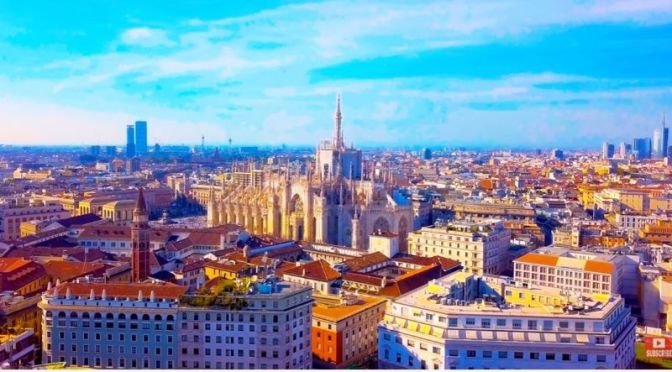
Milan is Italy’s city of the future, a fast-paced metropolis where money talks, creativity is big business and looking good is an art form.

Ruled by the Caesars, Napoléon, the Austro-Hungarians and Mussolini, Milan has an ancient and fascinating history. After the unification of Italy in 1861, it also became an important industrial and cultural centre – a title it still holds today. While it may not have the historic attractions of other Italian cities, it holds its own with art collections old and new, which mark the genius of old masters and provoke new conversations about where the world is headed. Prestigious nights at La Scala, an illustrious literary heritage and a vibrant music scene also do much to debunk the city’s workaholic image.
Cinematic Travel: The Island Of Corfu, Greece

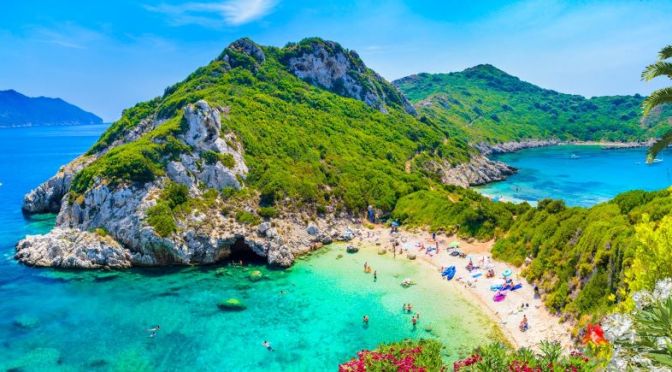
With the passage of time the island may have changed, but we can still feel the spirit of a distant glorious past. Its rich multi-cultural heritage, its historic monuments, its stunning natural landscape, its crystal clear seas, and its excellent weather all year round explain why Corfu is one of the most cosmopolitan Mediterranean destinations weaving a powerful spell on its visitors.

Corfu (Kerkyra in Greek), unlike the rest of Greece, never fell under the Ottoman oppression. Due to the successive dominations of the Venetians, the French and the British over the centuries, the island has primarily become part of the Western rather the Levantine world. Their culture wielded strong influence in the city: it was here that the first Greek University (the Ionian Academy), the first Philharmonic Orchestra and the First School of Fine Arts were founded.

Walking Tour: Tønsberg In Southeastern Norway (4K)

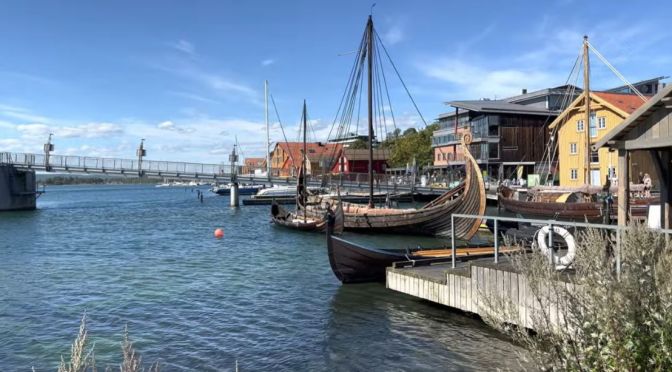
Tønsberg, town, southeastern Norway, at the head of Tønsbergfjorden. Considered to be the oldest town in Norway, Tønsberg was founded c. AD 871 and became an important trading centre. In the 13th century King Håkon Håkonsson built his castle, Tønsberghus, there.

The town was destroyed by fire in 1536 and only in the 18th and 19th centuries did it become a major port and one of Norway’s major shipping and whaling centres. Until the late 1960s it was Norway’s third largest maritime town. Tønsberg remains an industrial and shipping centre, with such diverse concerns as metal shops, shipyards, paper mills, leather processing, and breweries; it is noted especially for its silverware.

Tourist sites include ruins of the Tønsberghus, St. Michael’s Church (c. 1150), the ruins of the Royal Castle (1276), Sem Church (c. 1100), and the Vestfold Museum.

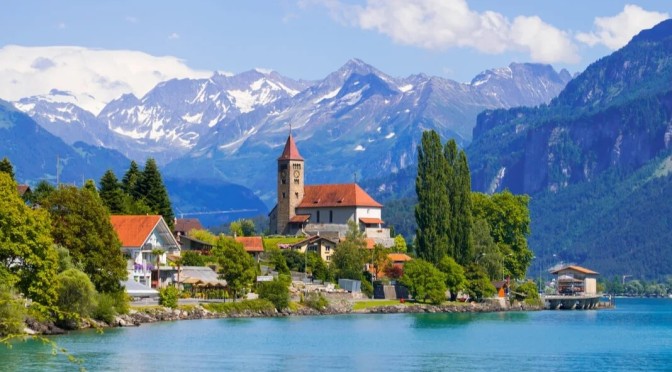
Village Walks: Brienz In Western Switzerland (4K)

Brienz is a village on the northeast shore of Lake Brienz, in Switzerland’s Bernese Oberland region. The village’s 18th-century wooden chalets and the sculptures dotted throughout the village are testimonials to a woodcarving tradition. North, a steam train runs up Brienzer Rothorn Mountain, with views of the lake and surrounding Alps. East of Brienz, the Ballenberg Open Air Museum offers glimpses of rural life.

The most romantic part of Brienz is the Brunngasse which, having once been awarded the title «most beautiful street in Europe», is well-known abroad. Most of the houses in the street date from the 18th century and are decorated with wood carvings. Brienz, which is well-known as the “village of carving” has a long tradition in wood processing and to this day has a school for carving and violin-making.

Filmed and edited by: Jeka Kiriloff

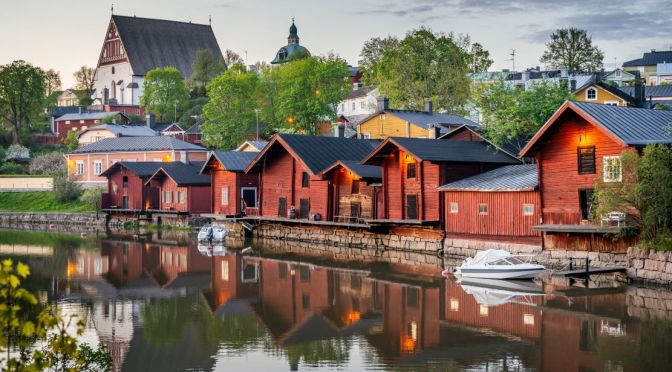
Finland Views: The Streets & Cafes Of Old Porvoo (4K)

With medieval roots, Old Porvoo is known for its quaint, traditional red-painted wooden houses set along the Porvoonjoki River. Winding cobblestone streets are lined with shops and antique stores, along with charming cafes serving up slices of Runeberg torte. Walking and cycling are popular ways to get around, and tourist sites include the Porvoo Museum and the 13th-century Porvoo Cathedral.

Old Porvoo, with its red-ochre painted riverside warehouses, is one of the most photographed national landscapes in Finland and a steady favorite among travelers. Here you can admire the colorful wooden houses and stroll the winding cobbled streets – as if in a children’s story book.

Old Porvoos numerous award-winning restaurants, romantic hotels and B&B’s, cute cafes, quirky shops, chocolateries and boutiques invite you to stay for longer than just a day. Old Porvoo is also surrounded by a beautiful National Urban Park that stretches over the whole river valley. Porvoo is easy to reach from Helsinki by bus or by boat in the summer. 

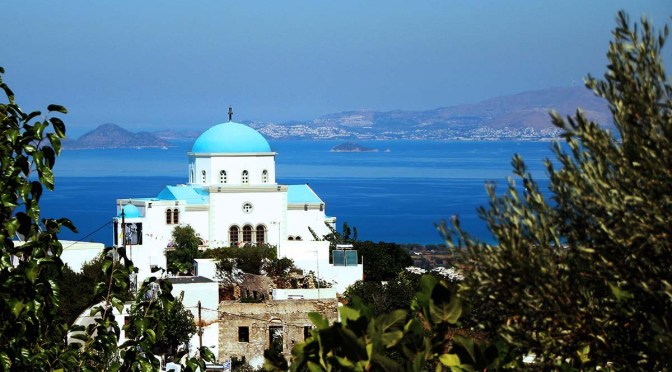
Greek Island Views: A Walk In Kos Old Town (4K)

With long sandy beaches, a balmy climate and monuments from various historical eras, Kos was among the first Aegean islands to attract visitors –during the 1930s, under Italian rule. Despite its touristic role, Kos is in fact one of the most fertile Greek islands, with rich volcanic soil and an adequate water supply from its single mountain range.

Local melons have long been famous – old-timers as far away as the Cyclades remember the melon-peddlers from Kos – and they’re still sold at the roadside. Agriculture continues to co-exist with tourism, baled hay and grazing cattle (there are said to be almost as many cows as people – 18,000 – on Kos) found just behind beachfront hotel complexes.

As a strategic border island with Turkey, a military presence is inevitable if usually not intrusive – though it’s quite possible to catch a glimpse of exercising tanks, cattle and hotel wings all at once.

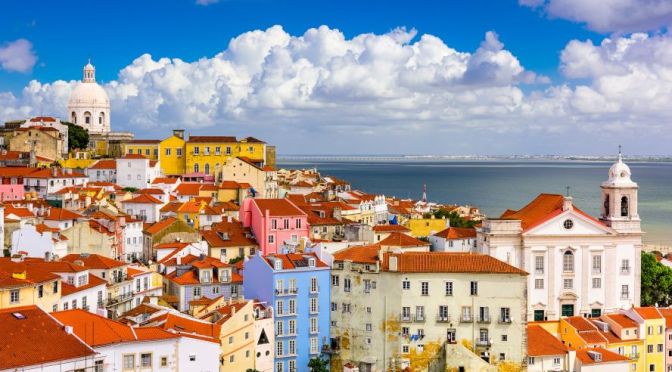
Portugal: A Biking Tour Of Lisbon’s Waterfront (4K)

The bike tour is 12 miles (19km) long and takes you along the Lisbon waterfront past the Ponte 25 de Abril, Belem Tower, Padrão dos Descobrimentos and much more.

Video timeline: 0:00 Praca do Comercio 01:42 Avenida Ribeira das Naus 04:24 Jardim de Roque Gameiro 06:25 Cais Gás 16:13 Santo Amaro Dock 19:54 Ponte 25 de Abril 20:40 Tejo Promenade 25:02 MAAT 29:03 Doca de Belém 31:09 Padrão dos Descobrimentos 34:18 Belem Lighthouse 35:03 Bom Sucesso Marina 38:50 Belém Tower 42:28 Monument to the Overseas Combatants 43:33 Doca Pesca 49:05 Belém Tower 50:43 Bom Sucesso Marina 54:29 Padrão dos Descobrimentos 55:08 Doca de Belém 58:27 Tejo Promenade 59:08 MAAT 1:02:24 Ponte 25 de Abril 1:03:53 Doca de Santo Amaro 1:08:40 Doca de Alcântara 1:12:30 Doca de Santos 1:14:16 Doca de Santos 1:16:00 Cais das Pombas 1:16:46 Avenida Ribeira das Naus 1:18:02 Praça do Comércio

This biking tour of Lisbon, Portugal was filmed on Sunday July 17th, 2022 starting at 1:13 pm at the Commerce Square.

South America Views: Santiago, Chile (4K)

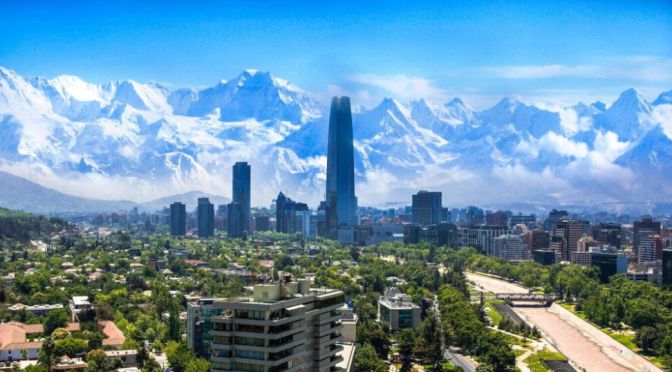
Santiago, capital of Chile. It lies on the canalized Mapocho River, with views of high Andean peaks to the east.

The city was founded as Santiago del Nuevo Extremo (“Santiago of the New Frontier”) in 1541 by the Spanish conquistador Pedro de Valdivia. The area was inhabited by the Picunche Indians, who were placed under the rule of the Spanish settlers. The original city site was limited by the two surrounding arms of the Mapocho River and by Huelén (renamed Santa Lucía) Hill to the east, which served as a lookout.

Germany Views: Boat Tour Of Lübbenau In Spreewald Biosphere Reserve (4K)

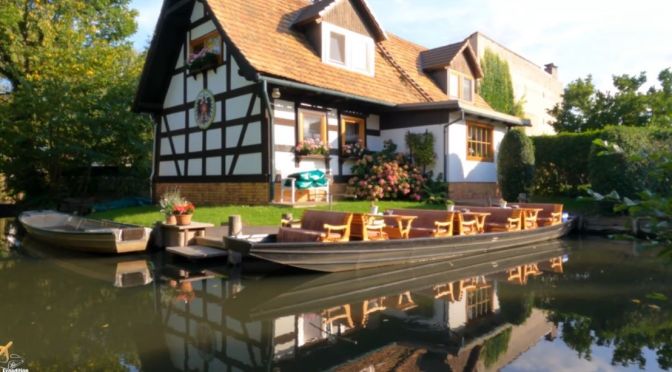
Lübbenau lies nestling in the UNESCO Spreewald Biosphere Reserve and it makes an immediate impression with its charming Old Town and a bustling port quarter for boat trips into the Spreewald.

Lübbenau is part of the Upper Spreewald-Lausitz district in southern Brandenburg, about one hour’s drive from Berlin. The town was first mentioned in records in 1315 and in 2015 it celebrates its 700th anniversary. Traces of its medieval beginnings can still be found in the historical town centre. The lively port quarter of Lübbenau is a popular starting point for boat trips into the Spreewald. 

Aerial Views: Yucatán In Southeastern Mexico (4K)

Yucatánestado (state), southeastern Mexico. Occupying part of the northern Yucatán Peninsula, it is bounded to the north by the Gulf of Mexico, to the east and southeast by the state of Quintana Roo, and to the southwest and west by the state of Campeche. The state capital and chief commercial centre is Mérida.

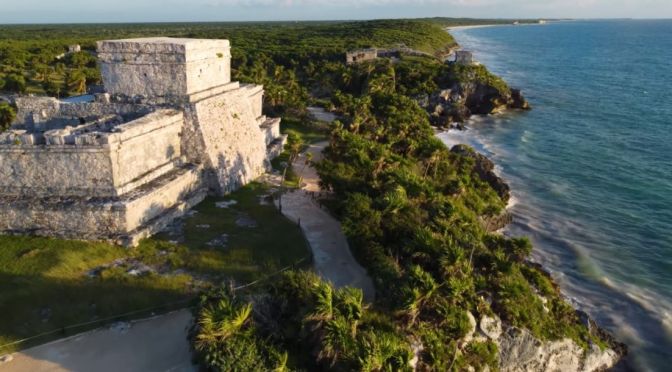
The state’s relief includes coastal wetlands, semiarid hills and plains, and limestone lowlands dotted with cenotes (water-filled sinkholes). In pre-Hispanic times the peninsula was an Olmec and Maya cultural hearth, as evidenced by the monumental ruins of Chichén Itzá and Uxmal; each has been designated a UNESCO World Heritage site, in 1988 and 1996, respectively. Among the other numerous ruined cities are Chumul, Ek Balam, and Sayil. Strong resistance to the Spanish conquest lasted in the area from 1527 until the 1540s. Yucatán occupied the entire peninsula when it became a state in 1824, but following a series of insurrections, its territory was reduced with the loss of Campeche in 1857 (ratified in 1858) and Quintana Roo in 1902. Later boundary changes reduced the state to its present size.