

Category Archives: Science

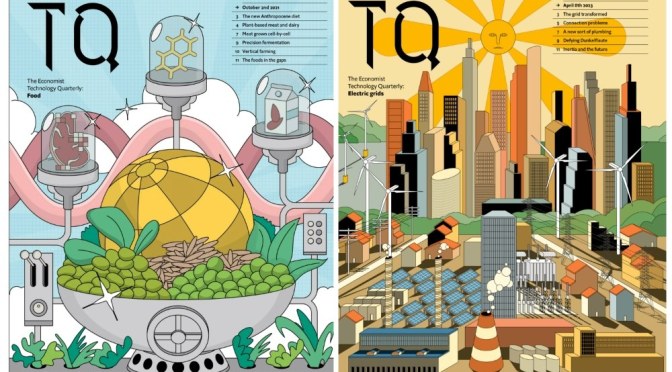
Technology Quarterly – The Economist (Oct 2023)

Image

TECHNOLOGY QUARTERLY (SEPTEMBER 27, 2023) – The new issue features ‘In search of forever’ – Slowing, let alone reversing, the process of ageing was once alchemical fantasy. Now it is a subject of serious research and investment, Geoffrey Carr reports.

Slowing human ageing is now the subject of serious research

A horizontal sand timer with an elderly woman and a girl on each side looking at each other

And some of it is making progress, writes Geoffrey Carr

“All my possessions for a moment of time.” Those, supposedly, were the last words of Elizabeth I, who as queen of England had enough possessions to be one of the richest women of her era. Given her patronage of alchemists—who searched, among other things, for an elixir of life—she may have meant it literally. But to no avail. She had her last moment of time in March 1603, a few months short of the three score years and ten asserted by the Bible to be “the days of our years”.

Eating fewer calories can ward off ageing

A hand holding a fork with tiny vegetables on it

And various existing medicines may offer similar benefits

In 1991 eight volunteers sealed themselves into a huge greenhouse in the desert near Tucson, Arizona. They were part of an experiment seeking to discover whether a carefully curated selection of plants and animals could develop into a self-sustaining ecosystem: a “Biosphere 2” independent of “Biosphere 1”, aka the outside world.
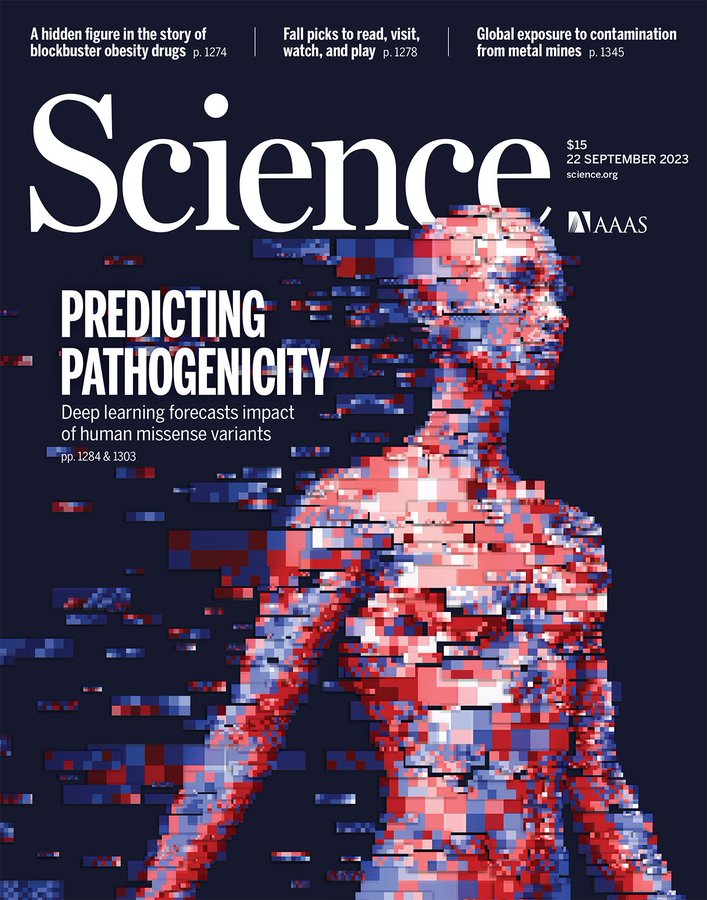
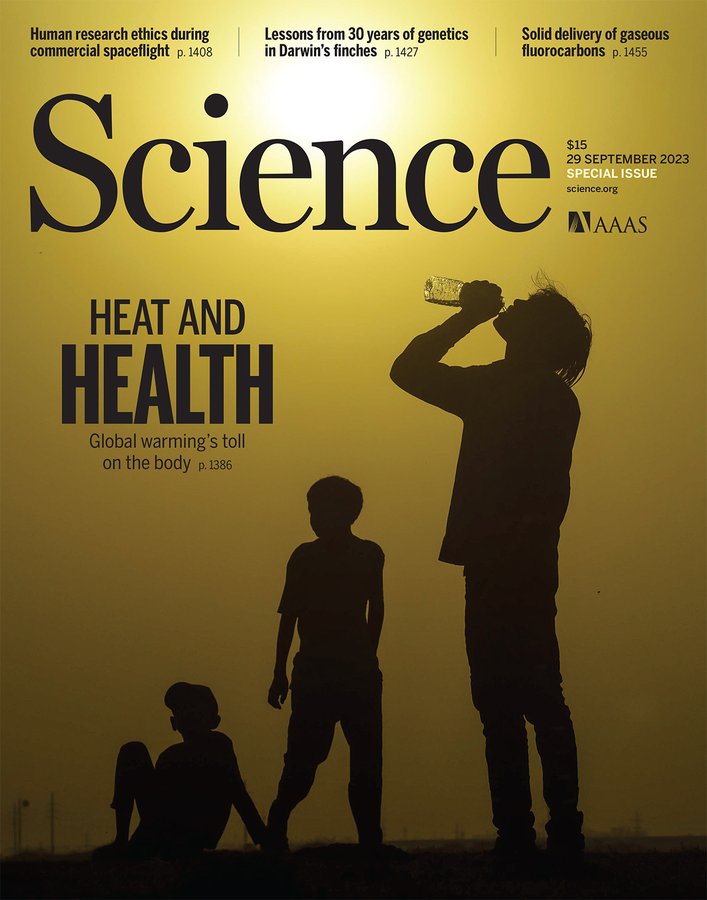
Research Preview: Science Magazine – Sept 22, 2023

Image

Science Magazine – September 22, 2023: This illustration depicts a human form out of a collage of heatmaps (red and blue squares).

Peak solar activity is arriving sooner than expected, reaching levels not seen in 20 years

The Sun’s flare-ups can threaten satellites and electric grids, highlighting need for better forecasts

Quantum algorithm offers faster way to hack internet encryption

Scheme to factor giant numbers could be more efficient than 30-year-old Shor’s algorithm
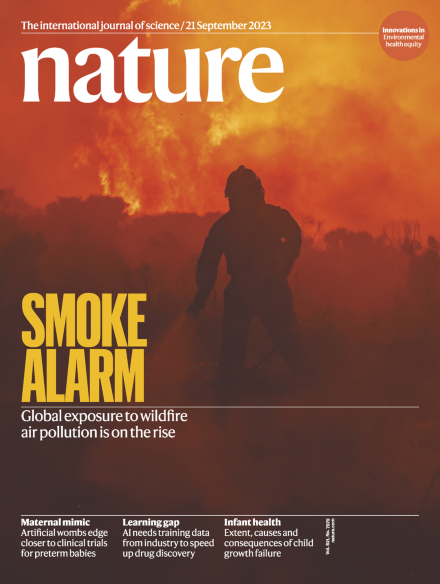
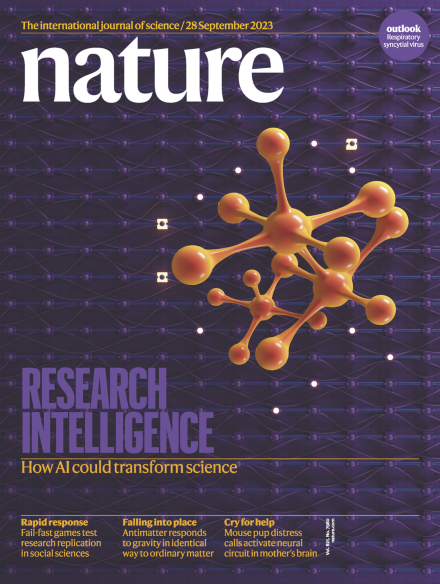
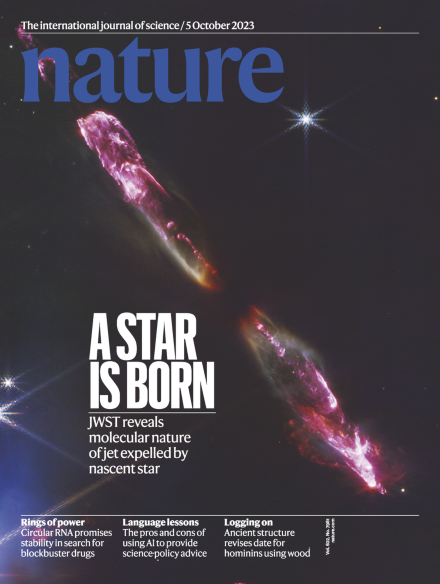
Research Preview: Nature Magazine – Sept 21, 2023

Volume 621 Issue 7979

nature Magazine – September 21, 2023:  In this week’s issue, an estimate of global human exposure to air pollution from landscape fires (dominated by wildfires, but also including planned or controlled open land fires) between 2000 and 2019.

COVID boosters are back: what scientists say about whether to get one

As many countries head into autumn, they are targeting vaccinations at people in high-risk categories, leaving those at lower risk uncertain about what to do.

Libya floods: how climate change intensified the death and devastation

Climate change, civil war and international sanctions all contributed to the devastation caused by some of Libya’s worst flooding ever, researchers say.
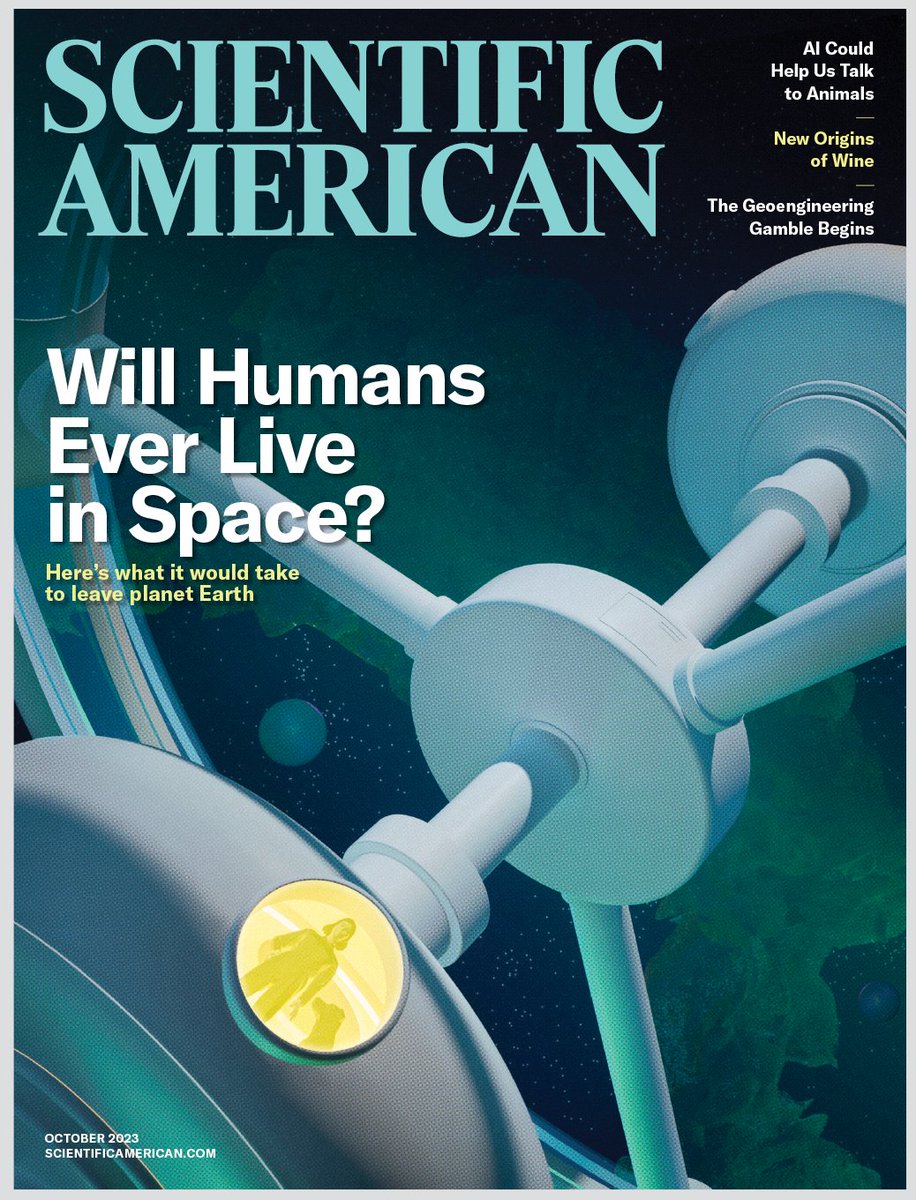

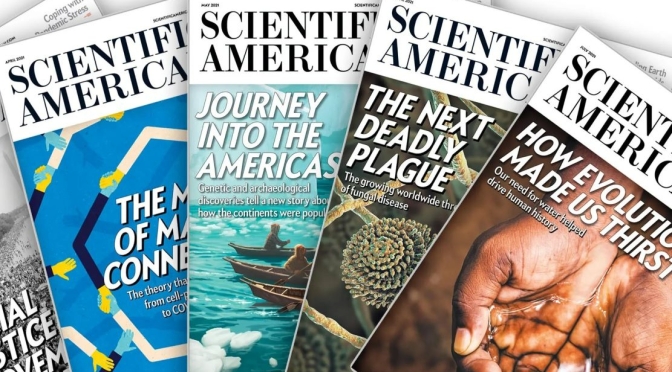
Science Review: Scientific American – October 2023

Image

Scientific American – October 2023: The issue features ‘Will Humans ever Live in Space – Here’s what it will take to leave planet Earth’; AI could help us to talk to animals; New origins of wine, and more…

Why We’ll Never Live in Space

Why We'll Never Live in Space

Medical, financial and ethical hurdles stand in the way of the dream to settle in space

By Sarah Scoles

It’s Time to Engineer the Sky

It's Time to Engineer the Sky

Global warming is so rampant that some scientists say we should begin altering the stratosphere to block incoming sunlight, even if it jeopardizes rain and crops

By Douglas Fox
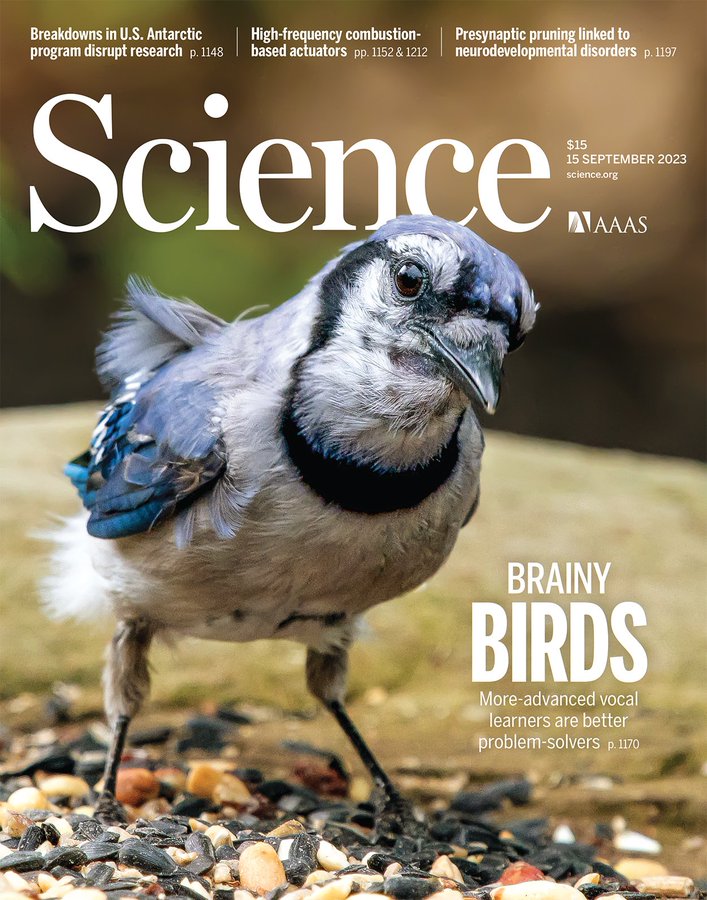
Research Preview: Science Magazine – Sept 15, 2023

Image

Science Magazine – September 15, 2023: Blue jays, similar to other corvid songbirds, are known for their impressive cognitive abilities, presumably due to their relatively large brains. 

Mars Sample Return risks consuming NASA science

Forthcoming cost estimate for budget-busting mission could lead to strict caps from Congress

Iran prepares to erect a digital wall

Researchers feel increasingly isolated as government moves to restrict internet access
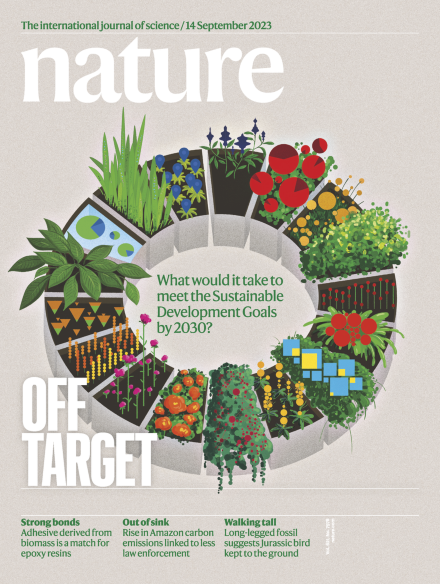
Research Preview: Nature Magazine – Sept 14, 2023

Volume 621 Issue 7978

nature Magazine – September 14, 2023:  In this week’s issue, 193 countries agreed to work towards 17 goals aimed at improving the lives of people around the world. From eliminating poverty and reducing hunger to tackling global warming and taking care of biodiversity, the Sustainable Development Goals have since taken their place in corporate plans and government policy.

An ‘alien meteorite’ probably didn’t slam into Earth — how will we know if one does?

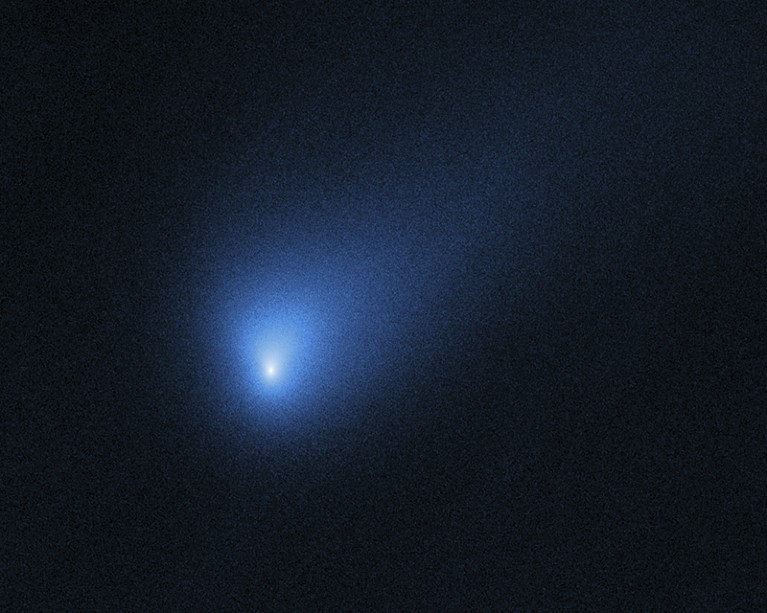
NASA's Hubble Space Telescope captured comet 2I/Borisov as a blue glow in dark space.

Nature looks at the detective work required to confirm a controversial claim of finding interstellar debris.

A research team made headlines last week when it claimed to have scooped up from the sea floor fragments of a meteorite that came from beyond our Solar System1. Finding such an interstellar sample on Earth would be exciting because it might shed light on how planets and stars beyond our own form. But a number of scientists say that the evidence that the material came from another planetary system is not convincing so far.

AI detects eye disease and risk of Parkinson’s from retinal images
Researchers have developed a model trained similarly to ChatGPT that can be adapted to evaluate multiple health conditions.
Mariana Lenharo
Ancient-human fossils sent to space: scientists slam ‘publicity stunt’
The decision to send hominin bones on a commercial spaceflight has raised eyebrows among human-evolution researchers.
Ewen Callaway

Research Preview: Science Magazine – Sept 8, 2023

Image

Science Magazine – September 8, 2023: Reducing single-use cutlery with green nudges: Evidence from China’s food-delivery industry; Anatomy of a volcanic eruption undersea, and more…

Anatomy of a volcanic eruption undersea

Submarine flows from the Hunga Tonga–Hunga Ha‘apai eruption decimated seafloor cables

In December 2021, an undersea volcano in the southern Pacific Ocean, the Hunga Tonga–Hunga Ha‘apai (hereafter called the Hunga volcano) began erupting. In January 2022 the eruption reached a powerful climax, triggering atmospheric waves that traveled around the globe and a tsunami that swept across the Pacific Ocean. An estimated 75% of Earth’s volcanoes are underwater, and 20% of all fatalities caused by volcanic eruptions since 1600 CE have been associated with underwater volcanism (3).

Reducing single-use cutlery with green nudges: Evidence from China’s food-delivery industry

China’s high demand for online food delivery resulted in an increase in the use of disposable, single-use cutlery. Disposable cutlery increases plastic pollution, and paper napkins and wooden chopsticks contribute to environmental degradation that endangers wildlife and marine species and compromises human health. Informed by the literature on “green nudges, ” which are prompts to promote environmentally friendly behaviors, He et al. collaborated with Alibaba to use its mobile food delivery platform, Eleme, in a longitudinal field study across China.

Research Preview: Nature Magazine – Sept 7, 2023

Volume 621 Issue 7977

nature Magazine – September 7, 2023 issue:  In this week’s issue, Christopher Doughty and his colleagues reveal that a small percentage of leaves in tropical forest tree canopies might be approaching a critical temperature of 46.7 °C, above which photosynthesis begins to fail.

How would room-temperature superconductors change science?

A large-bore, full-scale high-temperature superconducting magnet built by Commonwealth Fusion Systems and MIT’s PSFC.

The prized materials could be transformative for research — but only if they have other essential qualities.

The wave of excitement caused by LK-99 — the purple crystal that was going to change the world — has now died down after studies showed it wasn’t a superconductor. But a question remains: would a true room-temperature superconductor be revolutionary?

With the arrival of El Niño, prepare for stronger marine heatwaves

A wide view of a snorkeler floating above major bleaching on a coral reef in French Polynesia

Record-high ocean temperatures, combined with a confluence of extreme climate and weather patterns, are pushing the world into uncharted waters. Researchers must help communities to plan how best to reduce the risks.

Oceans are warming up, and dangerously so. Since April this year, the average global sea surface temperature has been unusually high and rising; by August, oceans in the Northern Hemisphere had reached record-high temperatures, even surpassing 38 °C in one area around Florida.

Research Preview: Science Magazine – Sept 1, 2023

Image

Science Magazine – September 1, 2023: The cover features a drone photograph, taken near the town of Kahramanmaraş, of the surface rupture produced by the first mainshock of the 2023 Turkey earthquake sequence shows agricultural fields offset by the fault slip.

The future of ocean health

Human and environmental health are inextricably linked. Yet ocean ecosystem health is declining because of anthropogenic pollution, overexploitation, and the effects of global climate change. These problems affect billions of people dependent on oceans for their lives, livelihoods, and cultural practices. The importance of ocean health is recognized by scientists, managers, policy-makers, nongovernmental organizations, and stakeholders including fishers, recreationalists, and cultural practitioners. So why are the oceans still degrading?

Research Preview: Nature Magazine – August 31, 2023

Volume 620 Issue 7976

nature Magazine – August 31, 2023 issue: In this week’s issue, AI pilot beats human champions in aerial contest – Artificial intelligence has taken on and beaten human competitors in many games, including chess, StarCraft and Gran Turismo. 

India’s Moon landing is a stellar achievement — and a win for science

A mother along with her daughter arrives to watch landing of Chandrayaan-3's Vikram lander on Moon.

When Chandrayaan-3 touched down, India pulled off a huge win for its own space programme and for international efforts to understand the Moon.

It’s hard to land on the Moon and keep your spacecraft intact. Just days ago, Russia’s Luna-25 mission crashed, dashing hopes for the country’s first trip to the Moon since 1976, when it was part of the Soviet Union. In April, a private Japanese effort also crash-landed on the lunar surface. That is one of the reasons the successful landing of the Chandrayaan-3 mission by the Indian Space Research Organisation (ISRO) is so special.

The causes of wildfires are clear. How they burn through communities is not

Events in Hawaii show how much we have to learn about wildfire spread — but simple research steps can help to build resilience.

An aerial photo from August 10 shows destroyed buildings burned to the ground due to wildfires in western Maui, Hawaii.

Driven by drought, high winds and extreme heat, fires in recent years have caused destruction and losses on a scale bigger than anyone is used to. The average annual global cost of wildfires is around US$50 billion, the World Economic Forum said in January. And by the end of the century, climate change might make catastrophic conflagrations 50% more common, according to the United Nations Environment Programme. Given the surge in urban development in and near forested areas, something has to be done to protect communities. As Maui’s experience shows, little is in place.