Category Archives: Astronomy

Science: Optical Atomic Clocks Redefine Time, Astronomer Vera Rubin

A web of three optical atomic clocks show incredibly accurate measurements of time, and the trailblazing astronomer who found hints of dark matter.

In this episode:

00:44 Optical clock network

Optical atomic clocks have the potential to reach new levels of accuracy and redefine how scientists measure time. However, this would require a worldwide system of connected clocks. Now researchers have shown that a network of three optical clocks is possible and confirm high levels of accuracy.

Research Article: BACON collaboration

News and Views: Atomic clocks compared with astounding accuracy

08:55 Research Highlights

The possible downside of high-intensity workouts, and the robot with adaptable legs for rough terrain.

Research Highlight: Can people get too much exercise? Mitochondria hint that the answer is yes

Research Highlight: A motorized leg up: this robot changes its limb length to suit the terrain

11:26 Vera Rubin

Vera Rubin was an astronomer whose observations were among the first to show evidence of dark matter. At the time, female astronomers were a rarity, but Vera blazed the trial for future women in science.

Books Review: Vera Rubin, astronomer extraordinaire — a new biography

18:35 Briefing Chat

We discuss some highlights from the Nature Briefing. This time, carbon cost of bottom trawling, and the fictional French researcher confounding metrics.

The Guardian: Bottom trawling releases as much carbon as air travel, landmark study finds

Science: Who is Camille Noûs, the fictitious French researcher with nearly 200 papers?
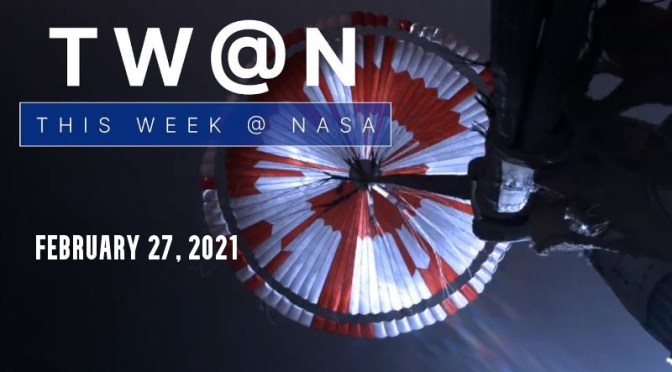
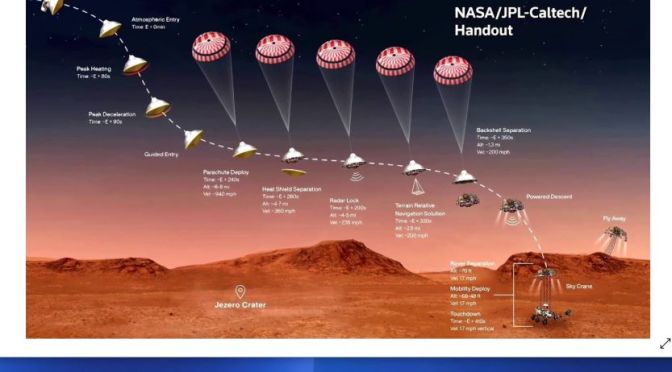
NASA: Landing On Mars, Spacewalks & Venus Views

How it looks to land on Mars, previewing space station spacewalks, and supplies and cargo delivered for the station crew … a few of the stories to tell you about – This Week at NASA!

Lunar Events: ‘Snow Moon Rises in Bolton, England’

This year’s snow moon is shown in incredible photos rising behind Rivington Pike in Bolton.

The full Moon names used by The Old Farmer’s Almanac come from a number of places, including Native American, Colonial American, and European sources. Traditionally, each full Moon name was applied to the entire lunar month in which it occurred, not just to the full Moon itself.

The explanation behind February’s full Moon name is a fairly straightforward one: it’s known as the Snow Moon due to the typically heavy snowfall that occurs in February. On average, February is the United States’ snowiest month, according to data from the National Weather Service. In the 1760s, Captain Jonathan Carver, who had visited with the Naudowessie (Dakota), wrote that the name used for this period was the Snow Moon, “because more snow commonly falls during this month than any other in the winter.” 

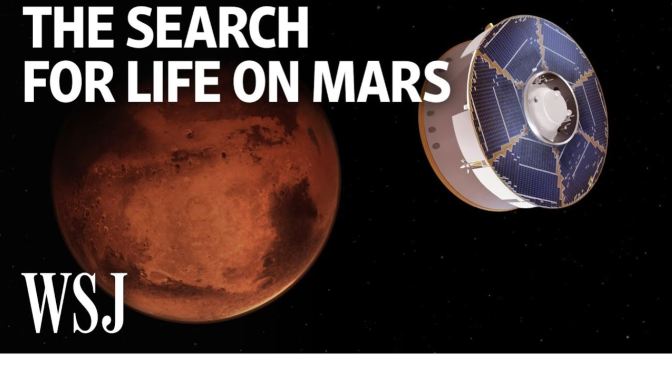
Space Programs: ‘The Search For Life On Mars’

China, the UAE and the U.S. all have spacecraft visiting Mars in February to study the Red Planet. WSJ explains how out-of-this-world technology is being used by NASA’s Perseverance and China’s Tianwen-1 in the search for evidence of life beyond our planet. Photo: NASA

Science Podcast: Aracibo Observatory Research, Environment & Behavior

Science Senior Correspondent Daniel Clery regales host Sarah Crespi with tales about the most important work to come from 57 years of research at the now-defunct Arecibo Observatory and plans for the future of the site. 

Sarah also talks with Toman Barsbai, an associate professor in the school of economics at the University of Bristol, about the influence of ecology on human behavior—can we figure out how many of our behaviors are related to the different environments where we live? Barsbai and colleagues took on this question by comparing behaviors around finding food, reproduction, and social hierarchy in three groups of animals living in the same places: foraging humans, nonhuman mammals, and birds. 

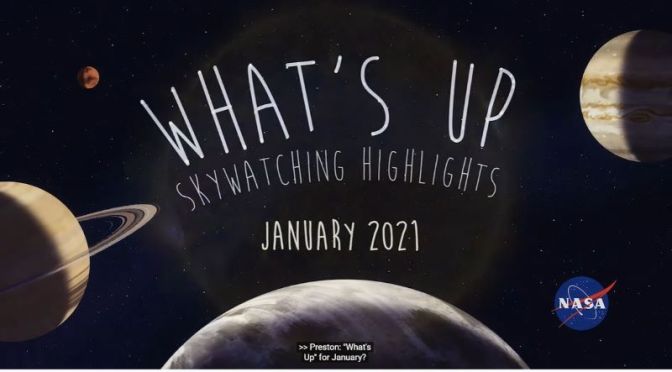
Astronomy: ‘Skywatching Tips – January 2021’ (Video)

What are some skywatching highlights in January 2021? Mark Earth’s closest approach to the Sun for the year, called perihelion, at the start of the month, then spot a couple of elusive planets: Uranus on Jan. 20th and Mercury throughout the second half of the month. Additional information about topics covered in this episode of What’s Up, along with still images from the video, and the video transcript, are available at https://solarsystem.nasa.gov/whats-up….

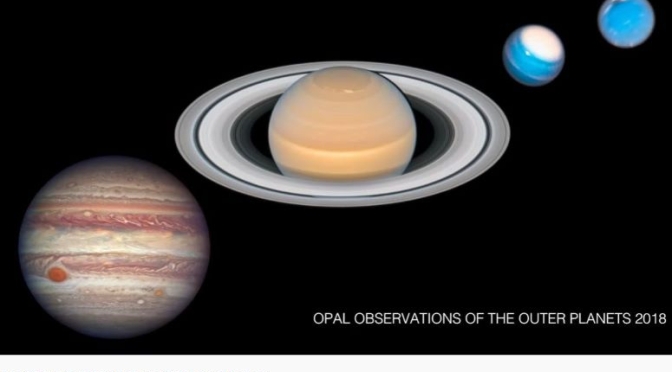
Astronomy: ‘The Outer Planets’ From Hubble Space Telescope (Video)

What is OPAL? OPAL (Outer Planet Atmospheres Legacy) is a project to obtain long time baseline observations of the outer planets in order to understand their atmospheric dynamics and evolution as gas giants. The yearly observations from OPAL throughout the remainder of Hubble’s operation will provide an important legacy of time-domain images for use by planetary scientists. Viewers might notice that some of the images of the same planets appear to be different colors. This is due to the fact that over the years, from Voyager to Hubble, many different instruments, and many different filters have been used.

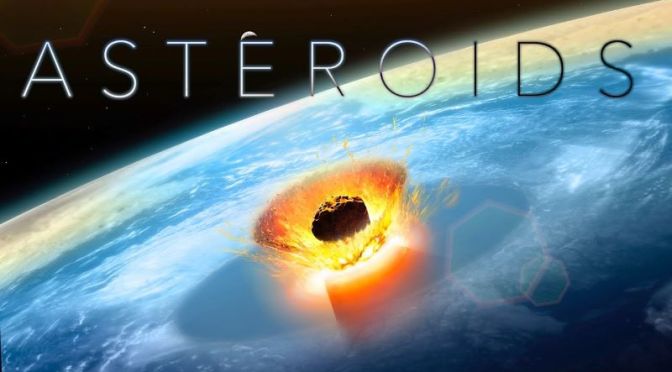
Space: The Struggle To Detect ‘Asteroid Impacts’

Stephen Hawking thought an asteroid impact posed the greatest threat to life on Earth.

Asteroids are small, rocky objects that orbit the Sun. Although  asteroids orbit the Sun like planets, they are much smaller than planets. Asteroids are small, rocky objects that orbit the sun. Although asteroids orbit the sun like planets, they are much smaller than planets.

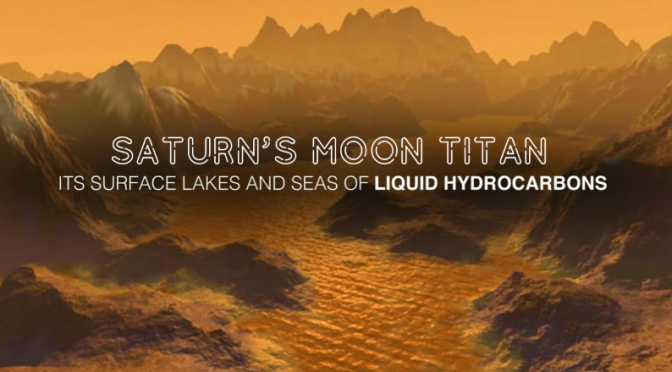
Astronomy: Saturn’s Moon ‘Titan’ (Nasa Video)

Earth is not the only place in the solar system with rain, rivers, lakes and seas. Saturn’s moon Titan has them, too — not of water, but of liquid methane and ethane. This Earth-like world even hides an ocean of liquid water deep beneath its surface! Find out what you need to know about Titan.