
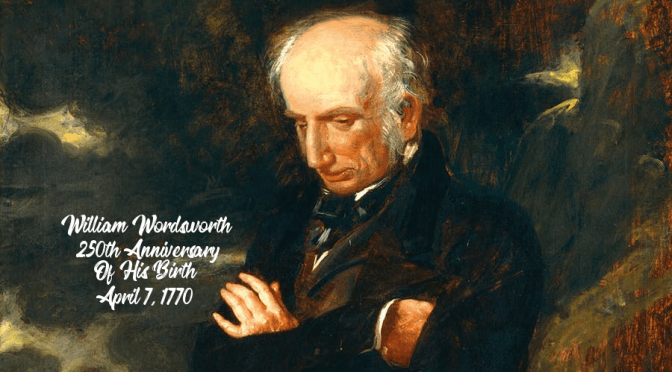
From an Apollo Magazine article (April 7. 2020):
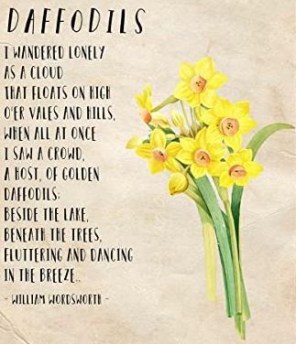
‘They flash upon that inward eye
Which is the bliss of solitude’
.
 ‘We are fond of tracing the resemblance between Poetry and Painting,’ wrote William Wordsworth (1770–1850) in the famous ‘Preface’ to Lyrical Ballads (1800), ‘and, accordingly, we call them Sisters.’ To speak of the ‘sister arts’ was indeed a critical platitude of the age, though as it happens Wordsworth’s attitude towards painting wasn’t normally very sisterly.
 When, in 1840 or so, a well-meaning houseguest called Margaret Gillies made a drawing of the 70-year old Mrs Wordsworth, everyone agreed that it was an excellent likeness; but her kind act was rewarded with a testy and somewhat ungracious sonnet from the sitter’s husband. He preferred to visualise Mary in her salad days: ‘’tis a fruitless task to paint for me, / Who, yielding not to changes Time has made, / By the habitual light of memory see / Eyes unbedimmed, see bloom that cannot fade, / And smiles that from their birth-place ne’er shall flee / Into the land where ghosts and phantoms be’.
.
All she possesses, as a painter, is the outward eye: ‘that inward eye’ is the poet’s hallmark, as of course Miss Gillies would have known from Wordsworth’s most famous poem, the one about the daffodils – ‘They flash upon that inward eye / Which is the bliss of solitude’. By chance we know (because Wordsworth left it on record, saying they were the best thing in the poem) that those two lines were actually contributed by Mary, so the uxoriousness of the thing is double: not only does she evade the merely visual but she also possesses the innate genius to be able to name the imaginative power that so transcends it.
.
 Boomers Daily