
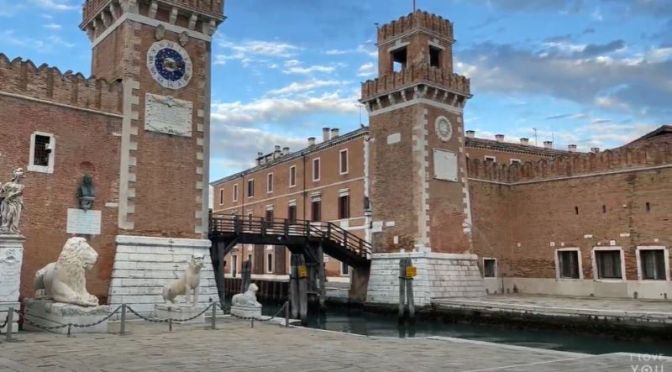
Castello covers a large vibrant area, with one section bordering St. Mark’s Square and dotted with luxury hotels. Farther from St. Mark’s, the neighborhood gets more laid-back, with casual bars where locals stop in for a glass of wine. Shops and eateries catering to all budgets line buzzing Via Garibaldi. In alternating years, the Giardini della Biennale park hosts the Biennale exhibition of contemporary art.
Tag Archives: Walks
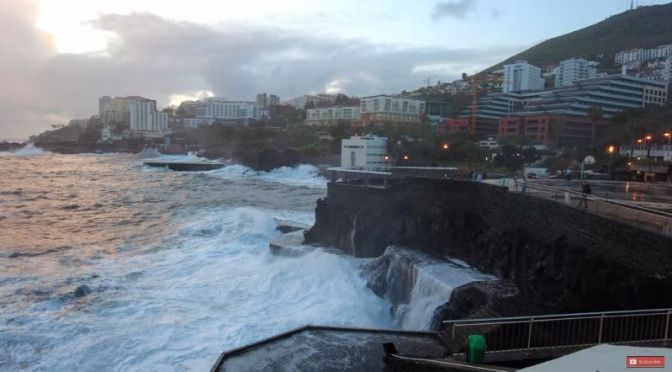
Walks: ‘Funchal Lido Promenade On Madeira, Portugal’ (4K Video)
The Lido Promenade is a seafront walkway that provides a pedestrian link between the Lido area and Formosa Beach. The entire path affords far-reaching views over the Atlantic.
Funchal is the capital city of Portugal’s Madeira archipelago. It’s backed by hills, and known for its harbor, gardens and Madeira wine cellars. The centuries-old Funchal Cathedral, which mixes Gothic and Romanesque styles, is notable for its carved wooden ceiling. Fronting the harbor is the São Tiago Fortress, built in the 1600s. It now houses the Contemporary Art Museum, with a large collection of Portuguese works.

Walks In Snow: ‘Haarlem – Netherlands’ (4K Video)
Haarlem is a city outside of Amsterdam in the northwest Netherlands. Once a major North Sea trading port surrounded by a defensive wall, it retains its medieval character of cobblestone streets and gabled houses. It’s the center of a major flower-bulb-growing district, and famous for its outlying tulip fields, art museums and hofjes (almshouses built around leafy courtyards).
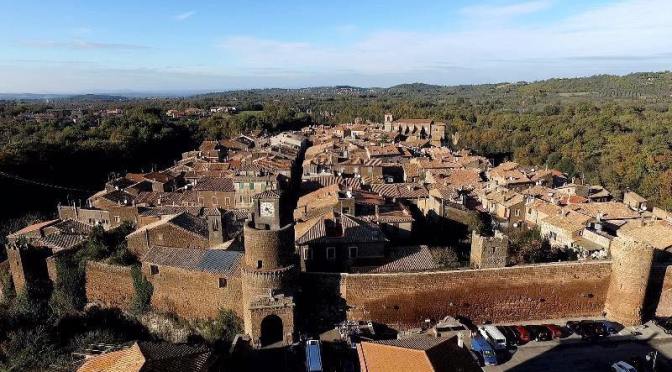
Village Walks: ‘Barbarano Romano – Italy’ (4K Video)
Barbarano Romano is a comune in the Province of Viterbo in the Italian region Latium, located about 50 kilometres northwest of Rome and about 20 kilometres south of Viterbo. Barbarano Romano borders the following municipalities: Blera, Capranica, Vejano, Vetralla, Villa San Giovanni in Tuscia.
Video timeline: 0:00 – [Brief Intro] 2:05 – [Tour begins] 2:28 – [*Roman Gate*] 7:50 – [*Church of St.Angel*] 12:44 – [Via Roma] 13:54 – [Largo di Porta Canale] 17:30 – [*Municipal Palace*] 18:28 – [*Church of St.Maria Assunta*] 26:00 – [Panormaa on the countryside] 26:30 – [Back into the town] 30:42 – [*Church of the Cross*] 33:00 – [Back into the town] 39:54 – [Via Garibaldi] 42:23 – [*City Walls*]
The town consists of a first nucleus probably dating back to the 10th century, to which are added various buildings, from the 13th to the 17th century. It constitutes an example of a medieval village, with a main central road flanked by two secondary parallels, stretched on the wedge between two gorges and closed by walls with quadrilateral open-gorge towers dating back to 14th century, further lined by a wall towards the end of the 15th century with the addition of circular towers. The volcanic hill on which the town stands was probably the seat of a village from the Ancient Bronze Age in prehistoric times, as attested by the numerous artefacts identified at the foot of the acrocoro. However, news of a permanent settlement only dates back to the Middle Ages. Almost at the end of the main street, Via Vittorio Emanuele, until 1930 stood a pentagonal tower that was left over from a Longobard fortress, known as Desiderio – the last Lombard King who around 771 fortified Viterbo and the nearby villages to counter the Franks of Charlemagne. An original marble plaque from 1280 – located at the entrance to the main church of S. Maria Assunta – indicates that it was built in 1280, during the vacant seat of the papacy following the death of Pope Nicholas III Orsini. Barbarano was therefore part of the Longobard Roman Duchy which, following the donation of Liutprando in 728, had then become a possession of the Church in the eighth century. Feud of the Anguillara family in the 14th century, then it passed to the Orsini and finally to the Borgias in the 15th century.
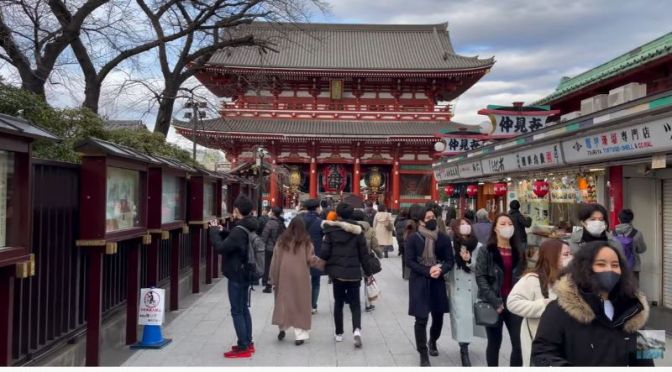
Walks: ‘Kaminarimon Gate Senso-ji, Tokyo’ (4K Video)
The Kaminarimon is the outer of two large entrance gates that ultimately leads to the Sensō-ji in Asakusa, Tokyo, Japan. The gate, with its lantern and statues, is popular with tourists. It stands 11.7 m tall, 11.4 m wide and covers an area of 69.3 m².
Video timeline: 【Locations】 00:00 Preview 00:24 Starting Point 00:32 Kaminarimon Gate / 雷門 00:56 Nakamise Shopping Street / 仲見世商店街 06:12 Five-Storied Pagoda / 五重塔 06:26 Hōzōmon Gate / 宝蔵門 16:38 Denpoin Street / 伝法院通 24:38 Shin Nakamise Shopping Street / 新仲見世商店街

Walking Tour: ‘Agropoli – Southwestern Italy’ (4K)
Agropoli is a town and comune located in the Cilento area of the province of Salerno, Campania, Italy. It is situated at the start of the Cilentan Coast, on the Tyrrhenian Sea.
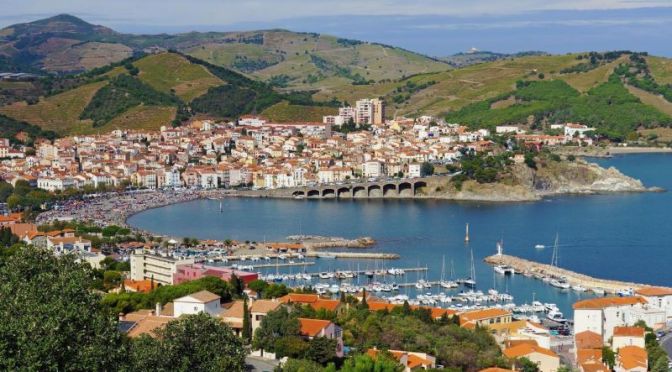
Coastal Walks: ‘Banyuls-sur-Mer’, France (Video)
Nestling At the heart of the Vermillion Coast, at the foot of the famous terraced vineyard, the delightful seaside town of Banyuls-sur-Mer, home town of the sculptor Aristide Maillol, offers its visitors and holidaymakers a marvellous range of things to explore. With its seafront esplanade, dotted with palm trees, the sandy and pebbly beaches, the marina, thalassotherapy institute, wine cellars, and also the aquarium of the Arago Laboratory, which displays Mediterranean fauna, the underwater path of the marine nature reserve of Cerbère-Banyuls, and the Mediterranean garden of Mas de la Serre, Banyuls-sur-Mer really provides a wide range of attractions!
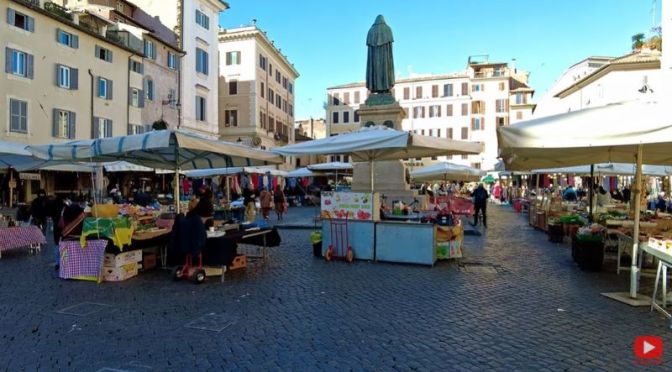
Walking Tours: Campo De’ Fiori In Rome (4K Video)
A Sunday walk during lunchtime in beautiful 𝗖𝗮𝗺𝗽𝗼 𝗱𝗲’ 𝗙𝗶𝗼𝗿𝗶 , 𝗱𝗼𝘄𝗻𝘁𝗼𝘄𝗻 𝗥𝗼𝗺𝗲, Italy.
Campo de’ Fiori is a rectangular square south of Piazza Navona in Rome, Italy, at the border between rione Parione and rione Regola. It is diagonally southeast of the Palazzo della Cancelleria and one block northeast of the Palazzo Farnese. Campo de’ Fiori, translated literally from Italian, means “field of flowers”.

Walks: ‘Fuzhou Treetop Walkway’, China (4K Video)
Covered in greenery thanks to a sub-tropical climate, Fujian’s capital of Fuzhou is one of China’s greenest cities and is famous for its numerous banyan trees that line the streets. Fuzhou Forest Walkway brings nature closer to the city with an elevated path that covers the full breadth of Jinniushan mountain and offers beautiful views of the canopy, the city, and mountains beyond.
The architects described the project as “a signature urban connector network that provides public accessibility to indigenous hinterland stretching north- east of Minjiang. Fudao signifies an awakened consciousness to improve lives of city dwellers by bringing nature within closer reach.”
The walkway can be accessed via 10 different entrances, each with unique and eye-catching features such as the grand 24-meter-wide spiral ramp at the entrance of the existing Jinniushan indoor sports hall. Built with a gentle gradient, the elevated walkway is punctuated with amenities that include rest shelters, viewing decks, observation towers, and teahouses with bathrooms.
The structure is also equipped with WIFI connectivity, touch-screen information boards, and visitor traffic monitors, giving the project the potential to set a new bar for China’s eco-routes. Singapore-based firm LOOK architects has completed an elevated pedestrian walkway that weaves its way through a forested area of southeastern china.
The ‘Fuzhou forest walkway’, commonly known as ‘Fudao’, is a steel pedestrian route that covers about 19 kilometers (12 miles) along its winding path. Conceived as an urban connector, ‘Fudao’ links two bodies of water, while providing public access to the hills outside of Fuzhou’s city center. the walkway can be accessed via ten different entrances, which embed the network within the wider region.

Winter Walks: ‘Narai – Central Japan’ (4K Video)
Narai is one of the post towns of the Nakasendo, the old golden route between Tokyo (Edo) and Kyoto. The Town remains unchanged as it was in Edo Period.
Narai-juku (奈良井宿, Narai-juku) was the thirty-fourth of the sixty-nine stations of the Nakasendō, as well as the second of eleven stations along the Kisoji.[1] It is located in the present-day city of Shiojiri, Nagano Prefecture, Japan.
 Boomers Daily