
Ryan Gosling and Margot Robbie in “Barbie.”Credit…Warner Bros. Pictures
Films, TV shows, albums, books, art and A.I.-generated SpongeBob performances that reporters, editors and visual journalists in Culture couldn’t stop thinking about this year.
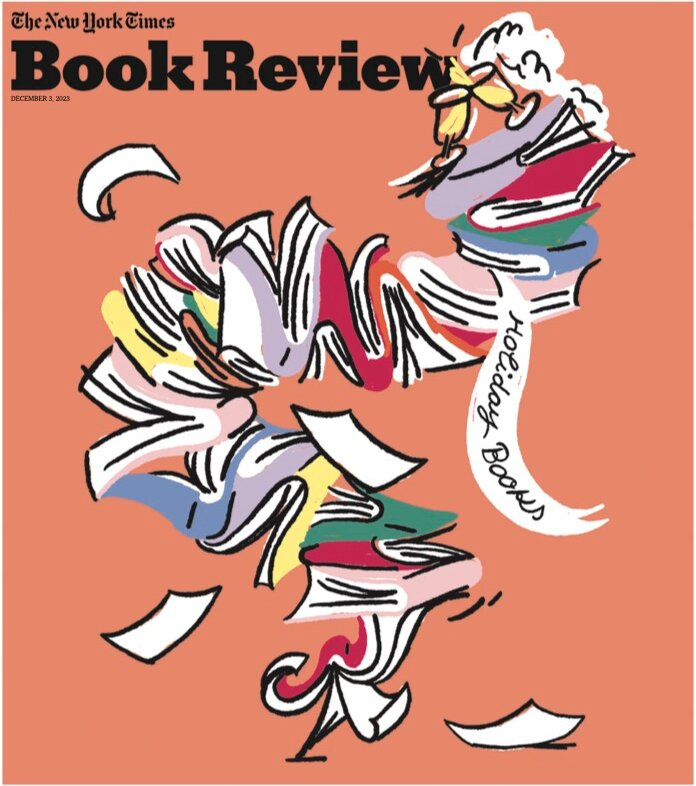
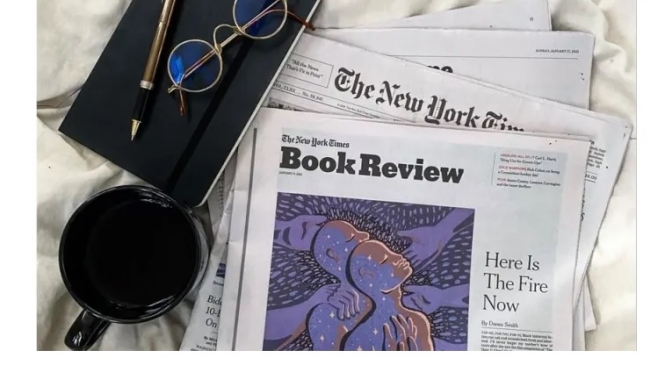
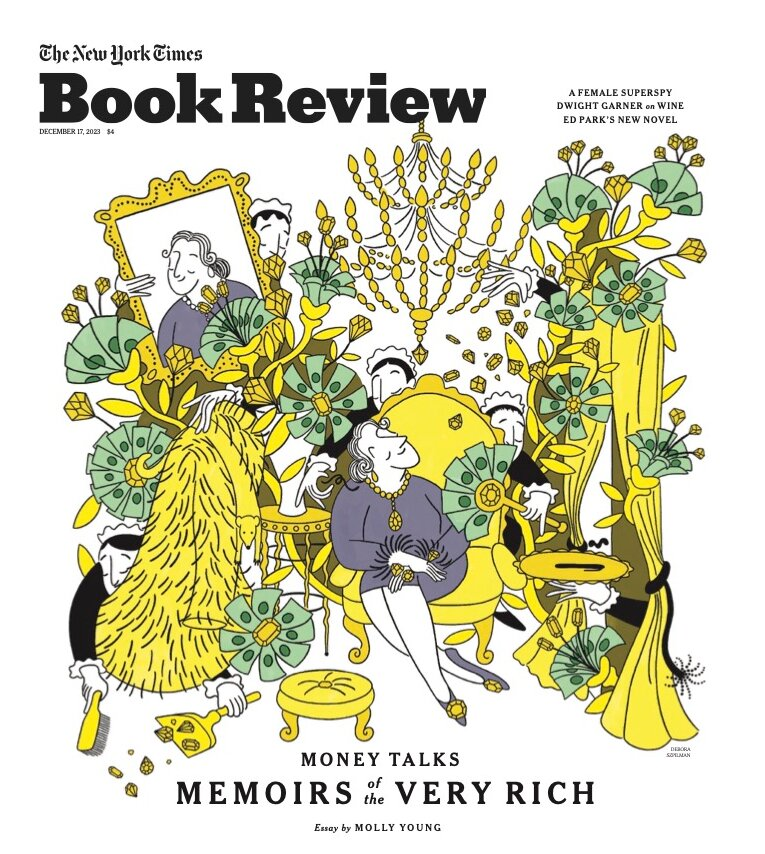
THE NEW YORK TIMES BOOK REVIEW (December 3, 2023): This week features the Holiday Books issue that lands with a thump, a 56-page behemoth crammed with reviews, coffee-table book spreads, recommendations from our genre columnists, a children’s book gift guide and our 100 Notables list.
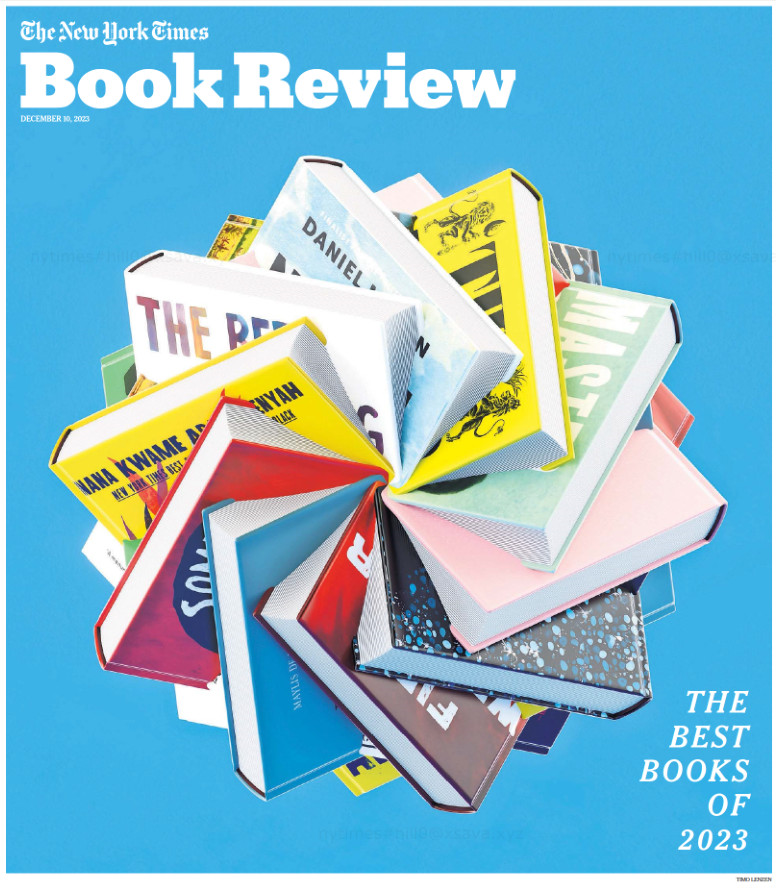
Each year, we pore over thousands of new books, seeking out the best novels, memoirs, biographies, poetry collections, stories and more. Here are the standouts, selected by the staff of The New York Times Book Review.
As long as people have been buying gifts for the holidays, they have been buying books. Books offer infinite variety, are easily wrapped, can be personalized for the recipient and displayed as a signifier of one’s own identity. They are, in many respects, the quintessential Christmas — or Hanukkah or Kwanzaa or other December celebration — gift.
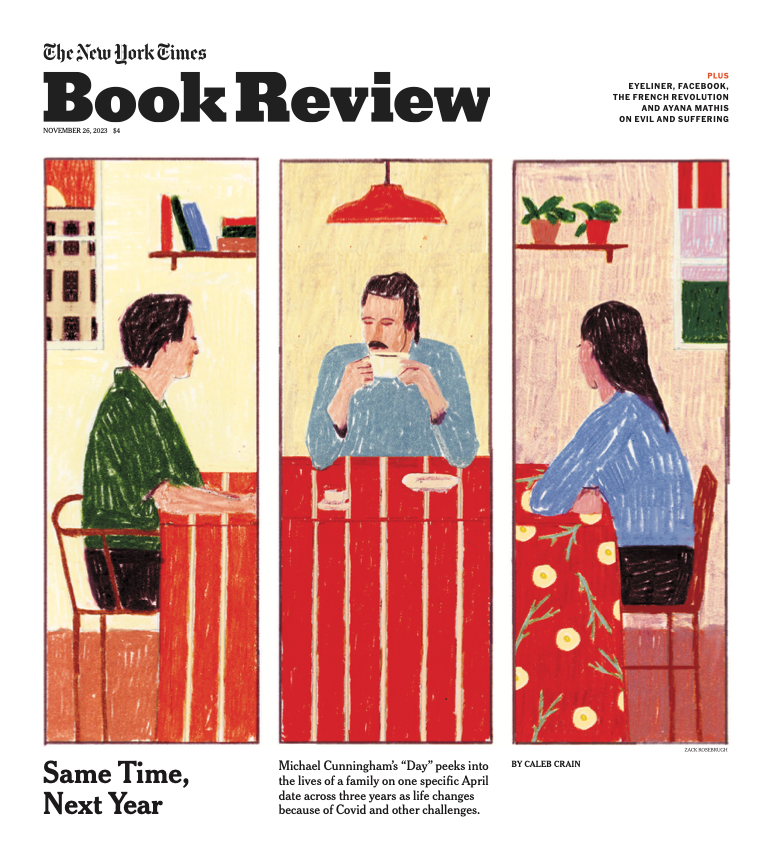
Michael Cunningham’s “Day” peeks into the lives of a family on one specific April date across three years as life changes because of Covid and other challenges.
By Caleb Crain
DAY, by Michael Cunningham
Michael Cunningham’s new novel, “Day,” visits a family on April 5 in 2019, 2020 and 2021 — before, during and after the onset of the Covid-19 pandemic, which shadows the book although the words “Covid” and “pandemic” never appear.
In Chetna Maroo’s debut novel, an adolescent girl mourns the death of her mother in the empty reverberations between points.
By Ivy Pochoda
WESTERN LANE, by Chetna Maroo
At the start of Chetna Maroo’s polished and disciplined debut, Gopi, an 11-year-old Jain girl who has just lost her mother, stands on a squash court outside London. She isn’t playing. Instead, she’s listening to the sound of the ball hitting the wall on the adjacent court, “a quick, low pistol-shot of a sound, with a close echo.” It is not so much the shot itself that Gopi is hearing, but that echo, the empty reverb, the lonely response as the ball’s impact gives the striker a split second to retreat to the T, the center of the court, and prepare to counteract her opponent’s responding shot.
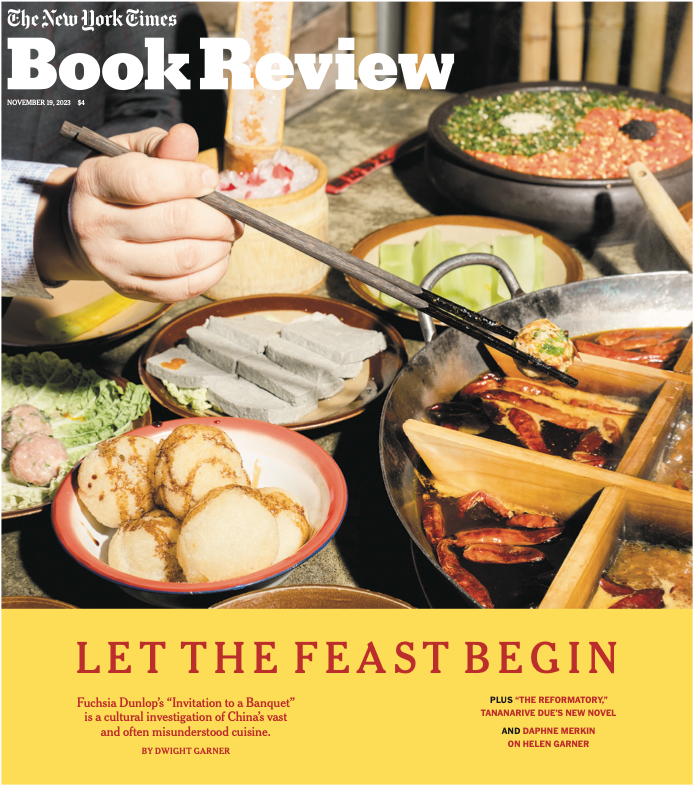
THE NEW YORK TIMES BOOK REVIEW (November 19, 2023): This week’s issue featuresFuchsia Dunlop’s seductive new exploration of Chinese cuisine, “Invitation to a Banquet”; Michael Lewis Tells His Own Story of Sam Bankman-Fried; He Carried the Bags (and the Secrets) for the Beatles – A new biography resuscitates the colorful, tragic life of Mal Evans: roadie, confidant, procurer, cowbell player…
INVITATION TO A BANQUET: The Story of Chinese Food, by Fuchsia Dunlop
“A really good cookbook,” Jan Morris wrote, “is intellectually more adventurous than the Kama Sutra.” Fuchsia Dunlop’s masterly new book, “Invitation to a Banquet: The Story of Chinese Food,” is not a cookbook per se. But it has an earthiness that calls to mind Morris’s comment.
AUDIOBOOKS
Listen to a Wellness-Culture Satire That Delves a Few Levels Deeper
In Jessie Gaynor’s debut novel, “The Glow,” read by Gabra Zackman, a P.R. rep immerses herself in the woo-woo world of a cultlike “spiritual retreat,” and its enigmatic leader.
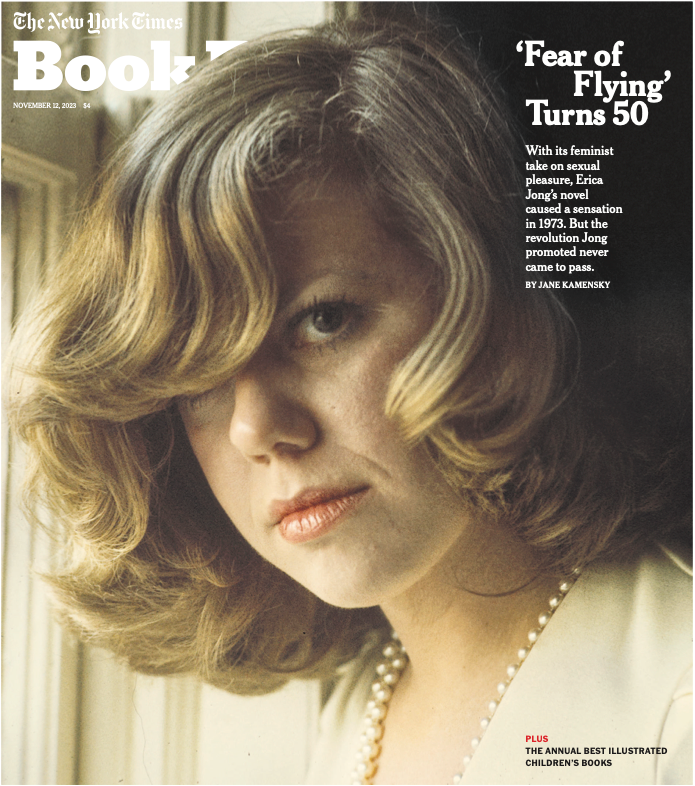
THE NEW YORK TIMES BOOK REVIEW (November 12, 2023): This week’s issue features ‘Fear of Flying’ turns 50 – With its feminist take on sexual pleasure, Erica Jong’s novel caused a sensation in 1973; The 2023 New York Times/New York Public Library Best Illustrated Children’s Books, and more…
With its feminist take on sexual pleasure, Erica Jong’s novel caused a sensation in 1973. But the revolution Jong promoted never came to pass.
By Jane Kamensky
Fifty years ago last month, Erica Jong published a debut novel that went on to sell more than 20 million copies. “Fear of Flying,” a book so sexually frank that you may have found it hidden in your mother’s underwear drawer, broke new ground in the explicitness of writing by and for women. Jong’s heroine, Isadora Wing, was a live wire. She was also a dead end, certainly for Jong, and maybe for feminism, too.
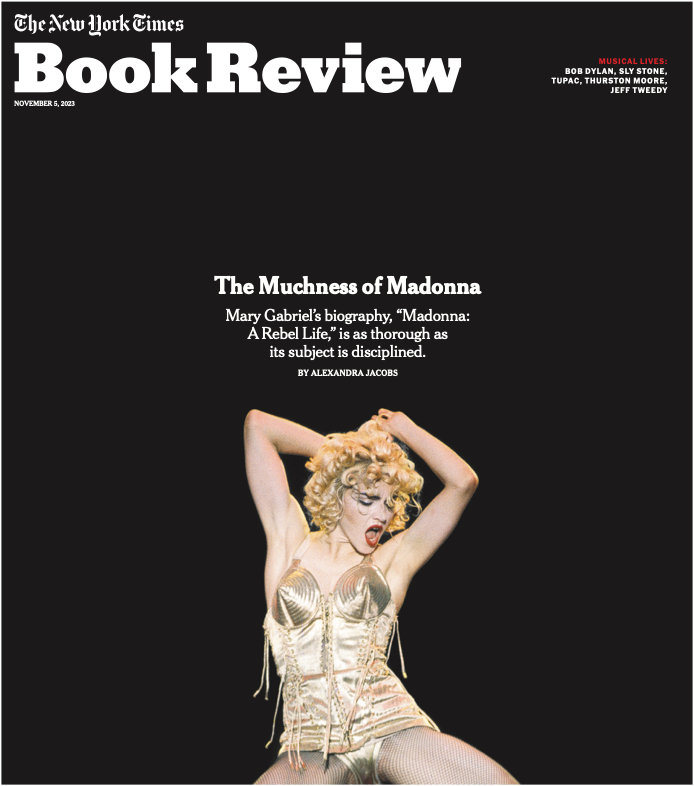
“I want to be alone,” Greta Garbo’s dancer character famously said in “Grand Hotel,” a quote permanently and only semi-accurately attached to the actress after she retreated from public life. Garbo was first on the list of Golden Agers in one of Madonna’s biggest hits, “Vogue,” but the pop star has long seemed to embody this maxim’s very opposite. She wants to be surrounded, as if with Dolby sound.
THANK YOU (FALETTINME BE MICE ELF AGIN): A Memoir, by Sly Stone with Ben Greenman
It is difficult to convey just how astoundingly unlikely it is that this book exists. Sly Stone is one of pop music’s truest geniuses and greatest mysteries, who essentially disappeared four decades ago in a cloud of drugs and legal problems after recording several albums’ worth of incomparable, visionary songs. Fleeting, baffling, blink-and-you-miss-him appearances at his 1993 Rock & Roll Hall of Fame induction and a 2006 Grammy tribute only served as reminders that he was still alive and still not well.
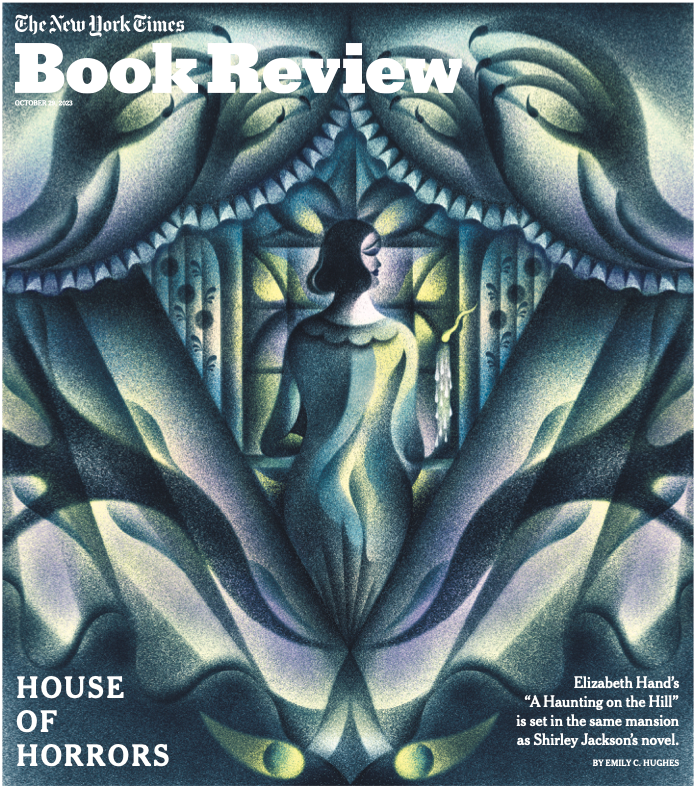
THE NEW YORK TIMES BOOK REVIEW (October 29, 2023): This week’s issue features “A Haunting on the Hill,” by Shirley Jackson; ‘I Feel a Human Deterioration’ – making sense of the violence and loss in Israel; Is It Time to Pull Up Stakes and Head for Mars? – Probably not, Kelly and Zach Weinersmith argue in “A City on Mars”….
Apparitions, black hares and time warps festoon the pages of Elizabeth Hand’s “A Haunting on the Hill,” set in the same moldering mansion as Shirley Jackson’s classic horror novel.
Probably not, Kelly and Zach Weinersmith argue in “A City on Mars.”
By W. M. Akers
A CITY ON MARS: Can We Settle Space, Should We Settle Space, and Have We Really Thought This Through?, by Kelly and Zach Weinersmith
Face it, folks. Earth is finished. It’s overheated, overcrowded, overregulated. It’s the ultimate fixer-upper, a dump we inherited from our parents that we’d be cruel to pass on to our children. It’s time to pull up stakes. It’s time for Mars.
Or maybe not.
Lighting out for the solar system is an appealing fantasy, but “A City on Mars,” an exceptional new piece of popular science by the “Soonish” authors Kelly and Zach Weinersmith, suggests we shouldn’t be so quick to give up on Earth. Forceful, engaging and funny, it is an essential reality check for anyone who has ever looked for home in the night sky.
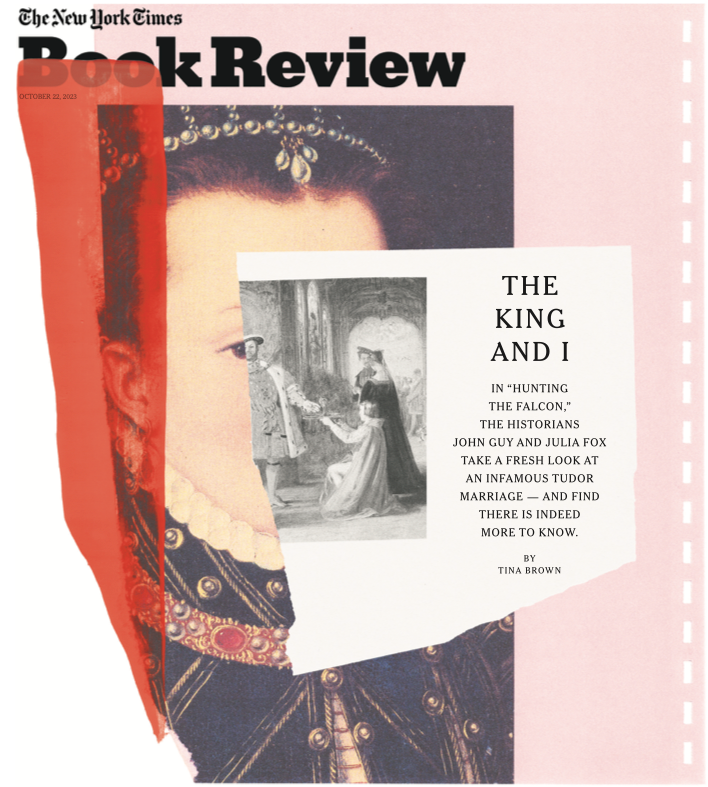
THE NEW YORK TIMES BOOK REVIEW (October 22, 2023): This week’s issue features “Hunting the Falcon,” on this week’s cover, Tina Brown, who reviewed it, calls it “a fierce, scholarly tour de force,” adding: “The authors, a husband-and-wife historian team, are a dream pairing.”
In “Hunting the Falcon,” the historians John Guy and Julia Fox take a fresh look at an infamous Tudor marriage — and find there is indeed more to know.
By Tina Brown
HUNTING THE FALCON: Henry VIII, Anne Boleyn, and the Marriage That Shook Europe, by John Guy and Julia Fox
Anne Boleyn glanced over her shoulder repeatedly as she waited at the Tower of London for her executioner, a specialist swordsman who had been summoned from France. Would Henry VIII, who could spare lives as casually as he snuffed them out, spare her life on the scaffold as he’d been known to do before?
In “The Halt During the Chase,” by Rosemary Tonks — first published in 1972, and newly reissued — a young woman goes in search of herself.
By Mary Marge Locker
THE HALT DURING THE CHASE, by Rosemary Tonks
From the first page of this clever, fishy little novel, our narrator, Sophie, is the kind of woman whose laughter is a weapon. She could scare off an assailant with one well-timed whack of her tongue. Originally published in 1972, “The Halt During the Chase” is the second Rosemary Tonks novel to be reissued by New Directions in as many years, bringing a new audience to her charming and imperfect heroines, who are all voice, half poetry and half snarl.
Apparitions, black hares and time warps festoon the pages of Elizabeth Hand’s “A Haunting on the Hill,” set in the same moldering mansion as Shirley Jackson’s classic horror novel.
VENGEANCE IS MINE, by Marie NDiaye. Translated by Jordan Stump.
The characters in Marie NDiaye’s novels are an unsettling brood. They fret and pace around their homes, tormented by their pasts. Their minds trap and trick them. A daughter can’t shake memories of her mother’s murder; a man gropes for the truth about his imprisonment in a deserted vacation town; a chef pursues culinary perfection at any cost; a woman — reminded of a friend, a schoolteacher or was it her mother? — fatally chases an apparition in green.
Tracy Daugherty’s new biography is the first comprehensive account of the prolific novelist who brought us “Lonesome Dove,” “The Last Picture Show” and more.
When the art critic Dave Hickey learned that Tracy Daugherty was writing a biography of his friend Larry McMurtry (all three men are Texans), he said to Daugherty: “Knowing Larry, it’s going to be a real episodic book.” Episodic this biography is. It’s also vastly entertaining.
McMurtry, the prolific author of “The Last Picture Show,” “Terms of Endearment” and “Lonesome Dove,” was a demythologizer of the American West who appeared to live in several registers at once.