



‘
Connections between three interstellar clouds of gas and dust offer a glimpse into their birth.
Genomic analysis reveals the complex roots of the modern fruit.
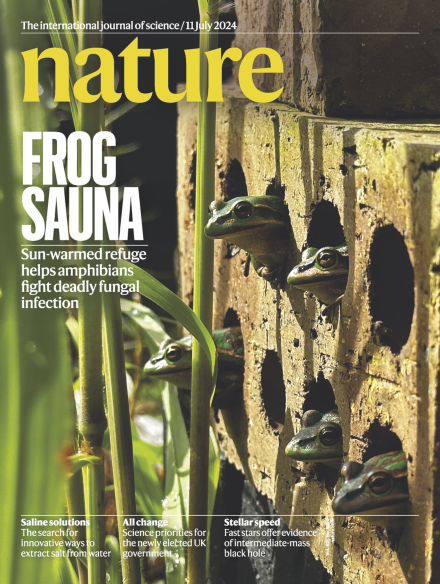
Meanwhile, deer kept a low profile — perhaps because the deafening noise of the insects made it hard to hear predators.
An oil well in Kazakhstan dumped more than 100,000 tonnes of the potent greenhouse gas into the atmosphere.
‘
Algorithm that distinguishes among a host of underlying causes of dementia could be used for diagnosis in hospitals and clinics.
Strontium-based timepiece gains or loses only one second every 40 billion years.
The ocean-going Desertas petrel often follows storms for days over thousands of kilometres.
Records on the quality of the grape harvest sheds light on 600 years of weather.
‘
Demand from Brazil itself accounts for more than half of the demand for crops and livestock from the Amazon and the savannah that surrounds it.
‘Amber’ beads dating to the Neolithic period, lasting from the fifth to the third millennium BC, are actually mollusc shells coated with resin and natural pigments.
Immune-system assassins called killer T cells compress target cells, forming a destructive crater.
The location of an injury determines whether ants bite off or preserve a damaged limb.

‘
Textile keeps its cool even when surrounded by urban surfaces that absorb and release heat.
Hubble observations of faint galaxies suggest that such objects could have been the seeds of very early supermassive black holes.
Findings support one idea about why self-directed immune responses are more common in some populations.
Samples taken near a capital of the pharaohs reveal an overhaul of the Nile 4,000 years ago.

‘
Buried items show that the poor got poorer as the Assyrian empire and its bureaucracy swelled.
The gene-editing system, normally used to disrupt a gene, is applied to improve the function of a gene in rice.
Engineers are harnessing the powers of graphics processing units (GPUs) and more, with a bevy of tricks to meet the computational demands of artificial intelligence.
‘
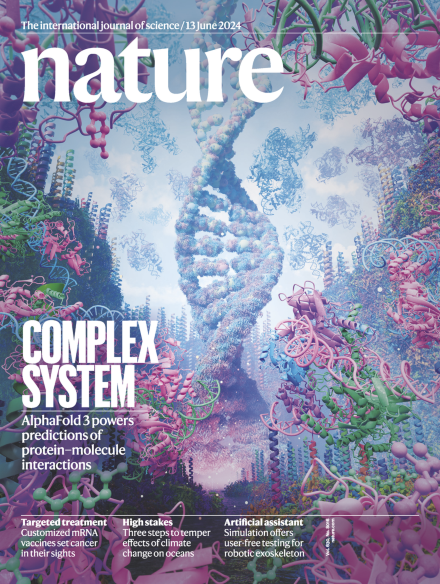
Machine-learning technique uncovers nearly 900,000 microbe-fighting peptide sequences in genomes collected from soils and other sources.
The icy body Arrokoth has a sugary coating that gives the body its distinctive red appearance.Research Highlight03 Jun 2024

‘
Researchers are striving to reverse-engineer artificial intelligence and scan the ‘brains’ of LLMs to see what they are doing, how and why.
Geological survey reveals the remains of a major waterway that ancient Egyptian builders could have used to transport materials.
As researchers mark the loss of the first living recipient of a pig kidney, they share what they’ve learnt about xenotransplantation.
and Bo Xia
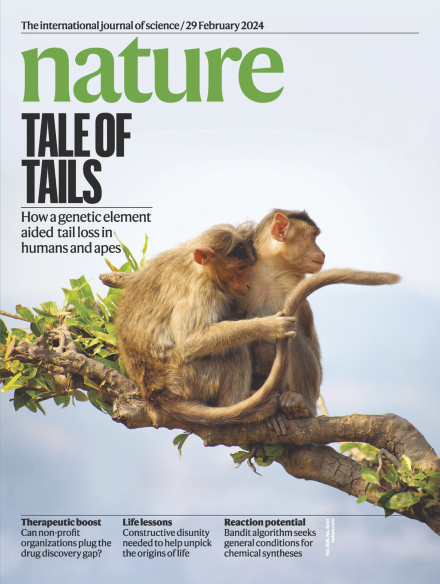
Two RNA-editing therapies for genetic diseases have in the past few months gained approval for clinical trials, raising hopes for safer treatments.
Some palaeontologists want more rigorous guidelines for naming species, along with action to address problematic historical practices.
A system that edits RNA rather than DNA can give new life to exhausted CAR T cells.

 Boomers Daily