Tag Archives: Rand Corp

Smart Technology: ‘The Internet Of Bodies’ (IoB)

Internet-connected “smart” devices are increasingly available in the marketplace, promising consumers and businesses improved convenience and efficiency. Within this broader Internet of Things (IoT) lies a growing industry of devices that monitor the human body and transmit the data collected via the internet.

This development, which some have called the Internet of Bodies (IoB), includes an expanding array of devices that combine software, hardware, and communication capabilities to track personal health data, provide vital medical treatment, or enhance bodily comfort, function, health, or well-being. However, these devices also complicate a field already fraught with legal, regulatory, and ethical risks. In this video,

RAND mathematician Mary Lee examines this emerging collection of human body–centric and internet-connected technologies; explores their benefits, security and privacy risks, and ethical implications; surveys the nascent regulatory landscape for these devices and the data they collect; and makes recommendations to balance IoB risks and rewards.

Read more about the Internet of Bodies here: https://www.rand.org/pubs/research_re…

Covid-19: The Realities Of “Automated Contact Tracing” (Rand Video)

Ben Boudreaux, policy researcher with the RAND Corporation, describes how contact tracing can be used to track the spread of COVID-19 and explains the differences between manual and automated contact tracing.

Get more insights from RAND on the COVID-19 pandemic: https://www.rand.org/latest/covid-19….

Media: 41% Of Americans Believe News Has Become Less Reliable, 44% No Change (Rand Corp, 2019)

From a Rand.org online release:

Rand Corporation LogoMany people (41 percent) indicated that they believed that news has become less reliable than in the past; a similar number (44 percent) said they believed there has been no change; and 15 percent said they thought news is more reliable now.
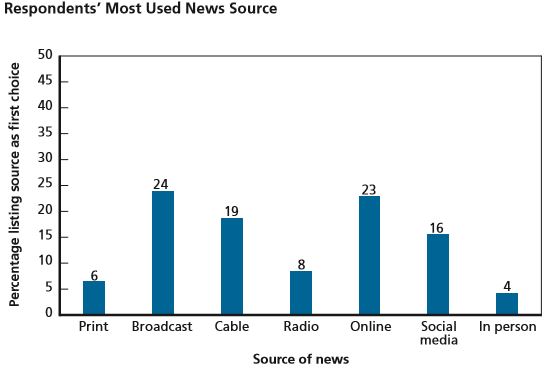
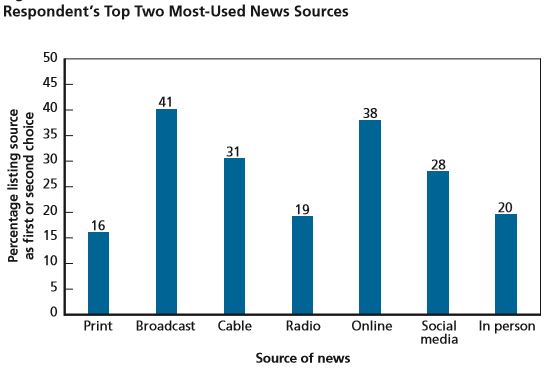
Different demographic groups get their news in different ways

  • People whose primary news sources are social media and in-person contacts are generally younger and female, and they tend to have less education than a college degree and lower household incomes.
  • People whose primary news sources are print publications and broadcast television tend to be be significantly older, and they are less likely to be married.
  • People whose primary news source is radio are significantly more likely to be male, less likely to be retired, and more likely to have a college degree.
  • People whose primary news sources are online platforms are significantly younger, more likely to be male and have a college degree and higher income, and less likely to be black.

Attitudes toward the reliability of news are mixed

  • Overall, 44 percent reported that they believed “the news is as reliable now as in the past.”
  • Nearly the same amount — 41 percent — reported a belief that the news has become less reliable.
  • A minority (15 percent) said that they believed that the news is more reliable now.
  • There was an association between news consumption profiles and perceptions of reliability — people who relied more heavily on online, radio, and social media/in-person platforms to obtain news were less likely to say that news is more reliable now than in the past.

Rand News Study Respondents' Most Used News Source

Rand News Study Respondents' Top Two Most-Used News Source


To view full Rand Study: https://www.rand.org/pubs/research_reports/RR4212.html?utm_source=WhatCountsEmail&utm_medium=RAND%20Policy%20Currents+AEM:%20%20Email%20Address%20NOT%20LIKE%20DOTMIL&utm_campaign=AEM:631600804