

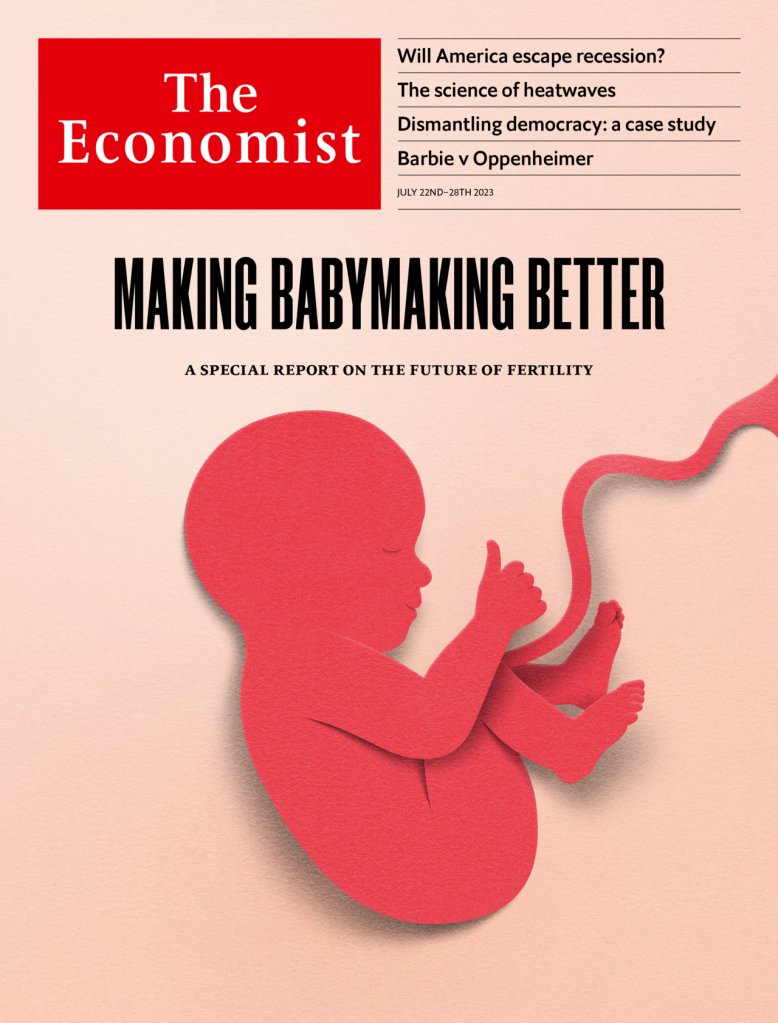

IVF is failing most women. But new research holds out hope
Fertility is still poorly understood

After louise brown was born in Manchester in July 1978, her parents’ neighbours were surprised to see that the world’s first “test-tube baby” was “normal”: two eyes, ten fingers, ten toes. In the 45 years since, in vitro fertilisation has become the main treatment for infertility around the world. At least 12m people have been conceived in glassware. An ivf baby takes its first gulp of air roughly every 45 seconds. ivf babies are just as healthy and unremarkable as any others. Yet to their parents, most of whom struggle with infertility for months or years, they are nothing short of miraculous.
How cities can respond to extreme heat
Officials from Beijing to Phoenix are grappling with unbearable temperatures

The best thing that has happened in Phoenix, Arizona, since the beginning of July is that the electricity grid has kept functioning.
This has meant that during a record-breaking run of daily maximum temperatures above 43°C (110°F), still in progress as The Economist went to press, the houses, indoor workplaces and publicly accessible “cooling stations” in the city have been air-conditioned. There have been deaths from heat stroke and there will be more; there has been a lot of suffering; and there will have been real economic losses. But if Arizona’s grid had gone out, according to an academic quoted in “The Heat Will Kill You First”, a new book, America would have seen “the Hurricane Katrina of extreme heat”.

 Staff Writer Meredith Wadman joins host Sarah Crespi to discuss the
 Boomers Daily