
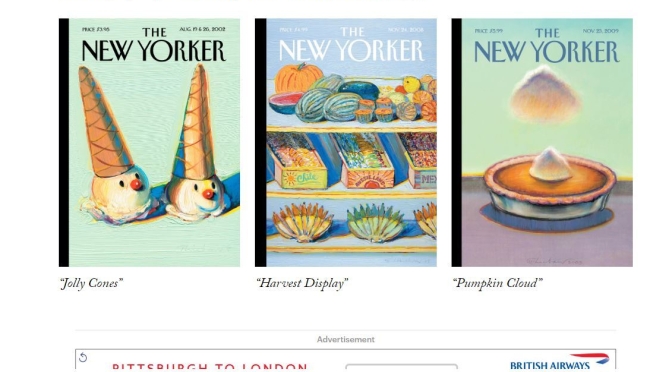
From New Yorker article:
 Since all of my paintings—almost every single one except for the figure paintings—are done from memory, I rely specifically on the memory of working in restaurants, or of visiting farms on which I worked as a young person. I try to recall the look and feel and love of what I have experienced.
At ninety-nine, Wayne Thiebaud—one of America’s greatest painters, and certainly its premier painter of food—is still going strong. This is Thiebaud’s ninth cover for the magazine, and it riffs on one of his previous paintings, an image of a turkey that he started in 2009. A sharp viewer might pick out the added details and embellishments, but more striking, perhaps, are the Thiebaud hallmarks that remain the same: soft light, clear color, a blue shadow pooling around a plate. We recently called Thiebaud at his home, in Sacramento, to talk about his work.
To read more: https://www.newyorker.com/culture/cover-story/cover-story-2019-11-25

 Chief among these delicacies is Cuban lard bread, which is what inspired the opening of Pilar Cuban Bakery: Ricardo Barreras, the owner of Pilar Cuban Eatery, next door, decided to start baking it himself, using dough, shipped frozen, from a trusted supplier in Florida. When he realized that his kitchen wasn’t big enough for the operation, he figured he might as well open a second place.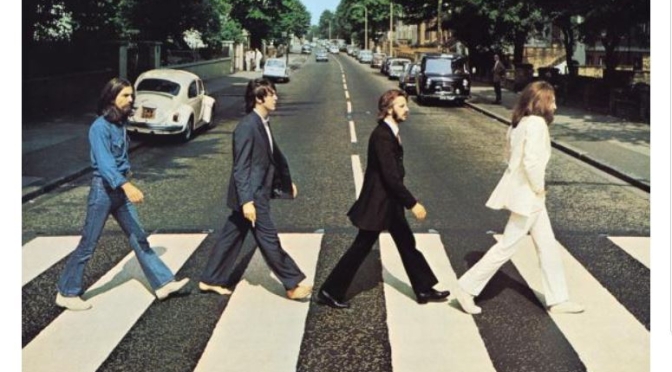
 “Abbey Road” was the Beatles’ last word—the final recordings by the most popular and influential artists of the nineteen-sixties. Now, on the occasion of its fiftieth anniversary, “Abbey Road” has been expertly remixed by Giles Martin, George Martin’s son and protégé, and reissued in a super-deluxe edition that comes with an archive of studio outtakes and a hundred-page book of essays and liner notes that chronicle how the recordings were made. “The Beatles are good even though everybody already knows that they’re good,” the classical composer Ned Rorem observed in 1968, alluding to how the band’s immense popularity confounded the usual notions of discriminating taste. If anyone needs to be reminded of this, this new edition of “Abbey Road” should do the trick.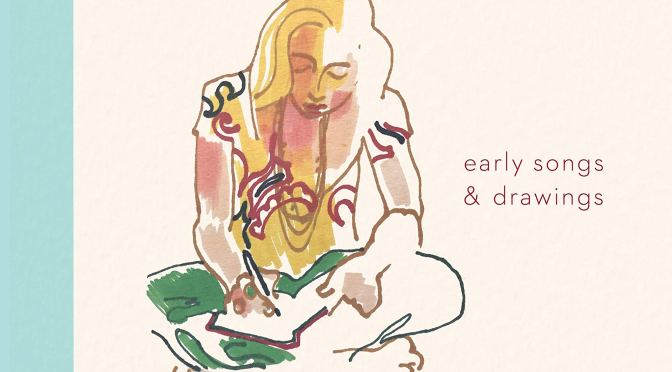
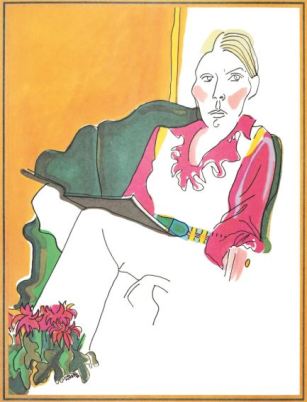 I became engrossed in Mitchell’s drawings while browsing the book—they’re vivid, intimate—but her handwritten lyrics and poems are just as revelatory. It’s hard not to think about art-making of any kind as an alchemical process, in which feelings and experiences go in and something else comes out. Whatever happens in between is mysterious, if not sublime: suddenly, an ordinary sensation is made beautiful. Our most profound writers do this work with ease, or at least appear to. Mitchell’s lyrics are never overworked or self-conscious, and she manages to be precise in her descriptions while remaining ambiguous about what’s right and what’s wrong; in her songs, the cures and the diseases are sometimes indistinguishable.
 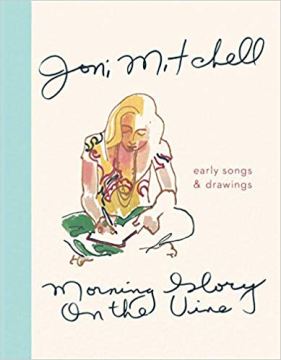 Joni Mitchell, in the foreword to “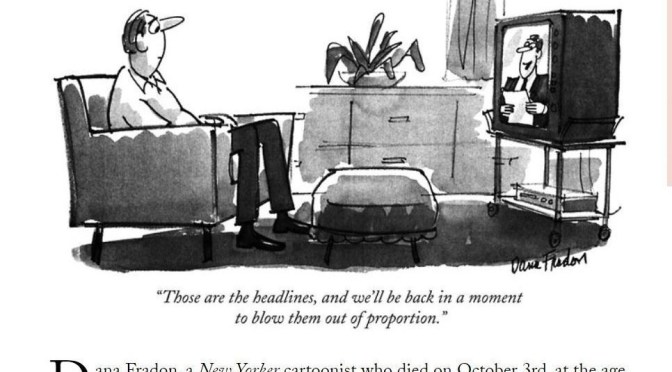
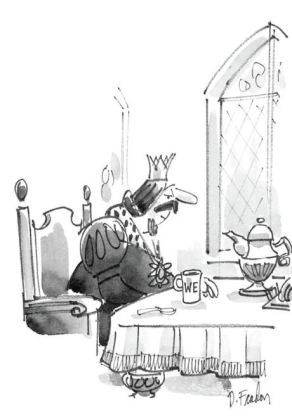 Fradon’s elaborate drawings were generous masterpieces of compressed fun. One carefully detailed illustration, published in 1987, depicts a chauffeured convertible making its way up a manicured, tree-lined drive, toward an extravagant hilltop mansion. The self-satisfied owner, seated in the rear seat, says to his companion, “It’s my one indulgence.”
 On “Travel Man,” Ayoade is fun to look at (snappy suits, thick-framed glasses, expression of amused diffidence) and fun to listen to. (Of a monastery turned hotel in Naples, he says, “As well as modish guff, like a rooftop pool and a spa, it retains attractive old shiz, like staircases dug into the hillside.”) His persona is warmly amused, broadly skeptical, and gently astringent—i.e., British. He’s not a joiner. His intros conclude with him saying, in that episode’s particular city and with that episode’s particular guest, “We’re here, but should we have come?”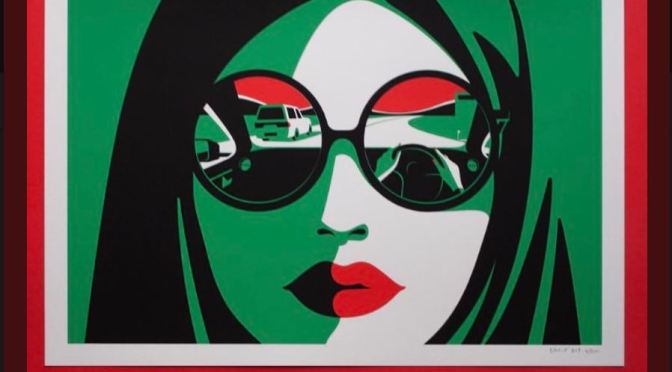
 From the top floor of a 1920s building in Hackney, in the East End of London, Favre’s confidence is at a peak. The bold, graphic style she has developed over the last fifteen years attracts prestigious projects. When she was invited to design the poster for this year’s Montreux Jazz Festival, held every summer in Switzerland since 1967, she became part of a group that includes Milton Glaser, Andy Warhol and Keith Haring. Her poster is full of female silhouettes dancing, the negative spaces between them forming instruments.
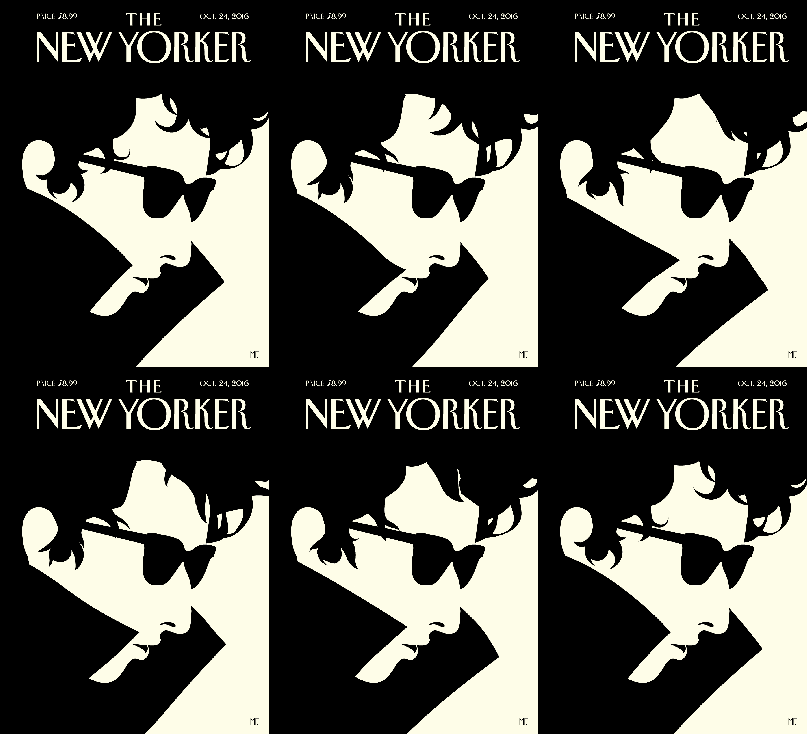 Favre is a French artist based in London.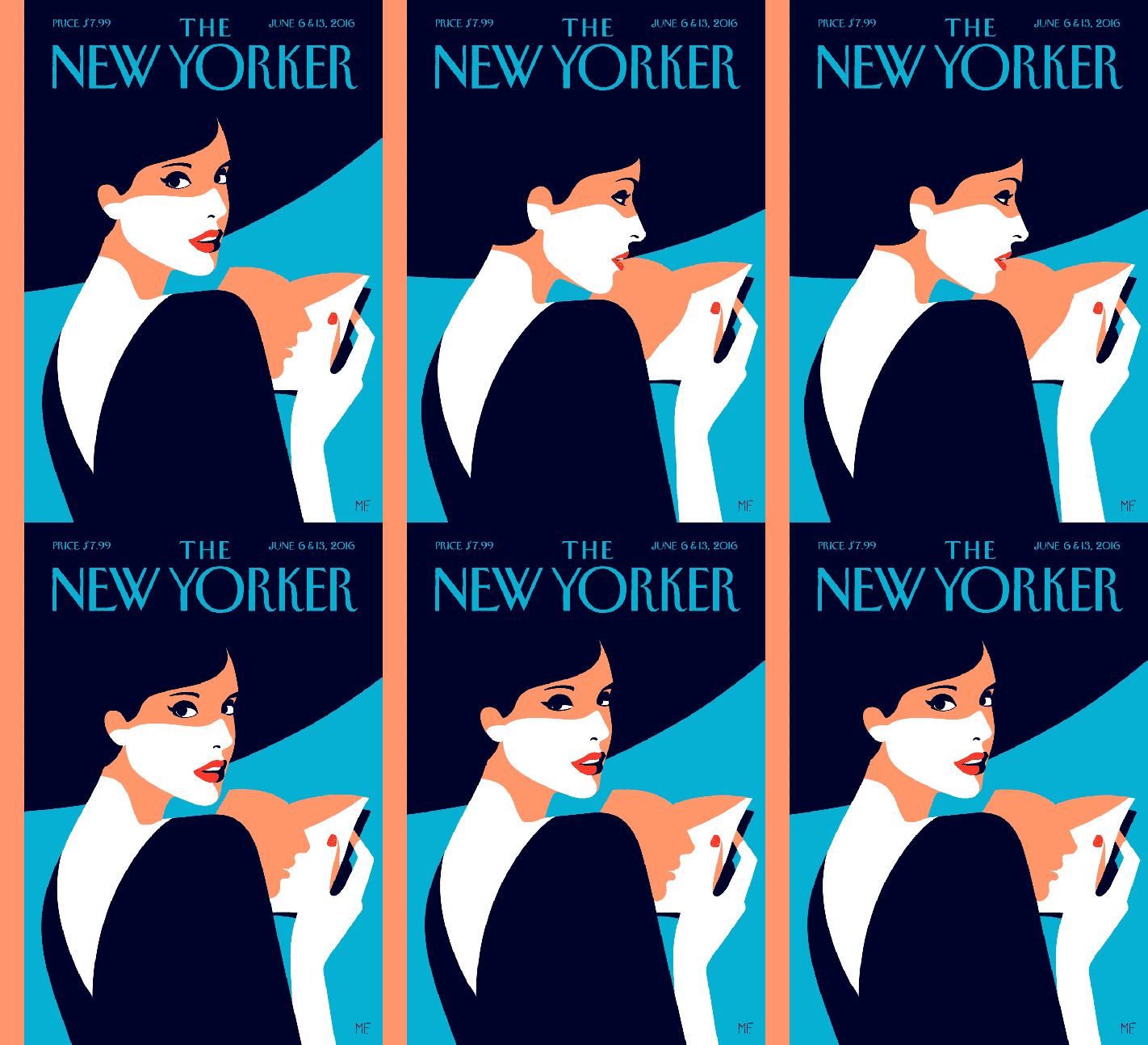
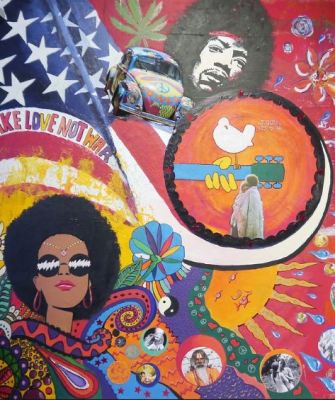 Although the boomers may not have contributed much to the social and cultural changes of the nineteen-sixties, many certainly consumed them, embraced them, and identified with them. Still, the peak year of the boom was 1957, when 4.3 million people were born, and those folks did not go to Woodstock. They were twelve years old. Neither did the rest of the 33.5 million people born between 1957 and 1964. They didn’t start even going to high school until 1971. When the youngest boomer graduated from high school, Ronald Reagan was President and the Vietnam War had been over for seven years.
 Boomers Daily