

From an 1843.com online article:
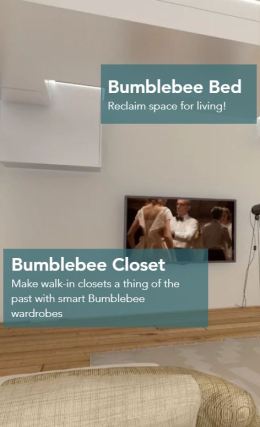 A startup called Bumblebee Spaces is trying to make micro apartments more appealing by adding movable furniture. Beds, wardrobe and drawers are stored up on the ceiling, to be lowered quietly on white suspension cords at the touch of a tablet, like a scene change on a theatre stage. In theory this frees up floor space. Once he’s raised his bed in the morning, Dabdoub sometimes does yoga and meditation. In the evening, he can sit on the couch and project Netflix onto a blank wall, which would otherwise be occupied by the bed’s headboard.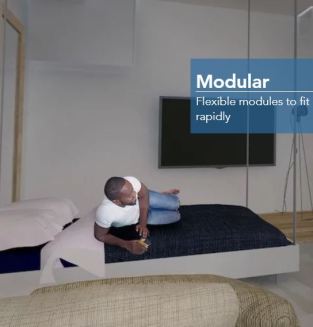
Bumblebee is putting a new twist on the Murphy bed, a mattress that folds down from the wall. That bed was named after another inventor in San Francisco, William Lawrence Murphy, who was living in a tiny one-room apartment in the early 1900s. According to lore, he was trying to woo an opera singer who refused to come to his bedroom. So he devised a way to fold up his mattress into the wall and convert the bedroom into a lounge. Lust fuelled innovation.
https://www.bumblebeespaces.com/
To read more click on the following link: https://www.1843magazine.com/upfront/postcard-from-silicon-valley/how-robotic-furniture-will-improve-our-lives

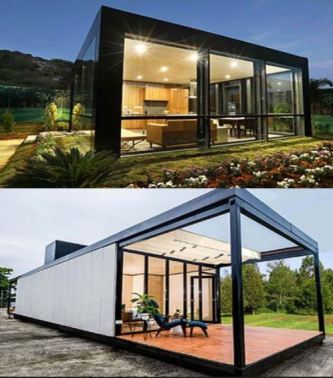
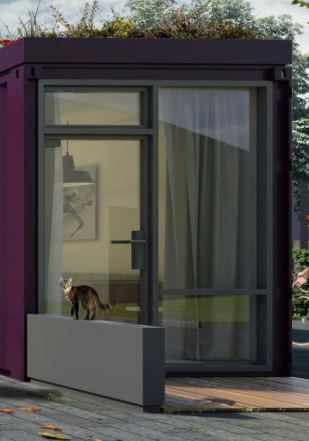 “The scheme provides much-needed single-person accommodations for social rent using converted shipping containers to create contemporary, environmentally-friendly homes in a desirable area near to local amenities and within walking distance of the town center,” explain the architects. The firm developed the design in consultation with local residents and stakeholders, and they previously completed a pop-up container cafe for Kingston University and volumetric student residential projects in Coventry.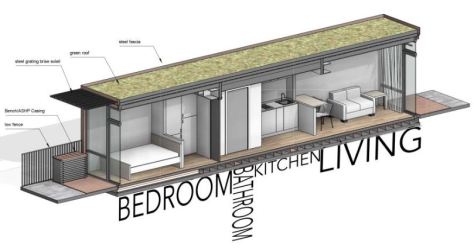
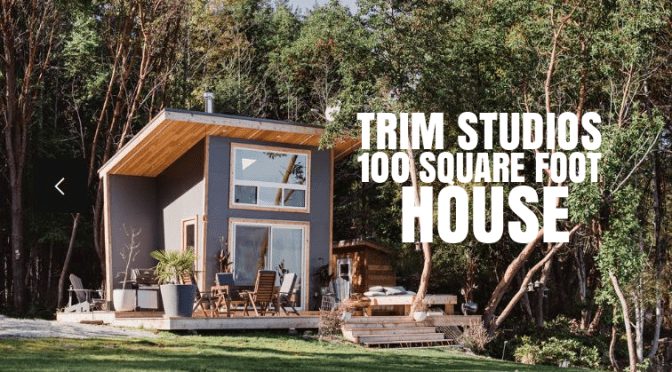
 For Trim Studio, the design requirements were simple and straightforward: a living area, kitchen, wood-burning stove, bathroom, bedroom, patio, log storage, and an outdoor shower. The challenge, however, came with the square footage restrictions: the home could be no larger than 100 square feet, and no taller than 16 feet high.
 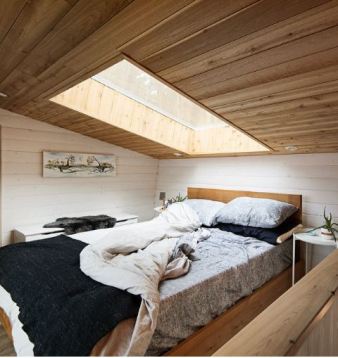 Kris and Ali visited the site and, as Rodrigo Munguia, principal of Trim Studio, tells it, “immediately fell in love with the property.” Dubbing the site and house Ohana (meaning family in Hawaiian), the couple knew they wanted a cabin that spoke to the wooded area and took advantage of the property’s magnificent views. Particularly exciting for Munguia was the fact that they also wanted to have their wedding on the property, and planned to start their lives together at Ohana as a married couple.
 systems, we are able to speed up the process, and bring down the overall cost of home construction,” says Anotnio.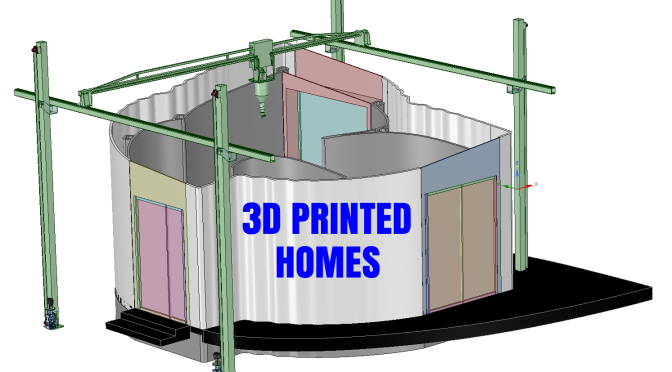
 “More than just demonstrating its ability to create 3D printed houses, the SRTI Park project also aims to reduce costs associated with construction. CyBe’s concrete 3D printers are developed for flexibility and speed—walls can be 3D printed in a single day—and do away with many of the costs of traditional construction methods.”
 Boomers Daily