Tag Archives: Deforestation

Rainforests: Indigenous People Struggle In Brazil

“They used to kill us with guns, now they kill us with deforestation and dams.” The Brazilian government’s failure to protect the Amazon forest is forcing the Munduruku indigenous people to take action against land grabs and illegal logging – and try to save the rain forest on their own.

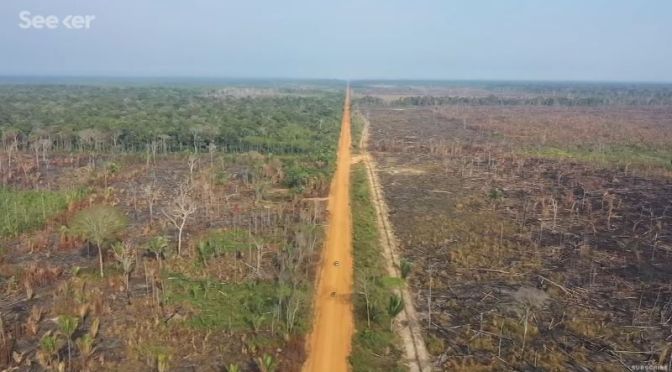
In an unprecedented movement led by Chief Juarez Saw Munduruku, for the last six years indigenous people have been fighting the theft and destruction of their forest home. Since 1970, 20% of the Brazilian Amazon has been deforested. Logging and forest fires are threatening a further 20%. Scientists say that at 40% deforestation, we will reach the point of no return. The forest will be lost forever, replaced by savannahs – and the environmental consequences will be catastrophic.

The Amazon is often known as ‘the lungs of the planet,’ producing 6% of the world’s oxygen. It is no secret that the rainforest has been losing a dramatic fight against an array of threats, encouraged by capitalism, consumerism and greed – both legal and illegal.

In today‘s Brazil, some 600,000 square kilometers of land – an area about the size of France — are farmed by farmers who don’t officially own it. The military dictatorship (1964-1985) encouraged them to settle on state-owned land, but the farmers never became legal owners. As a result, speculators now seize the areas, clear the forests, then resell the plots with forged title deeds. This land grab, known as “grilagem” in Portuguese, has led to uncontrolled forest clearing and fierce conflicts.

The documentary was shot from 2014 to 2020, under three different Brazilian governments. It provides deep insights into the drama of the illegal occupation of state land and forest areas by organized crime groups. Several indigenous peoples have united under Juarez Saw Munduruku, leader of the Munduruku people, in a last-ditch bid to save the planet’s most important forest.

Habitats: The Destruction Of Paraguay’s Rainforests

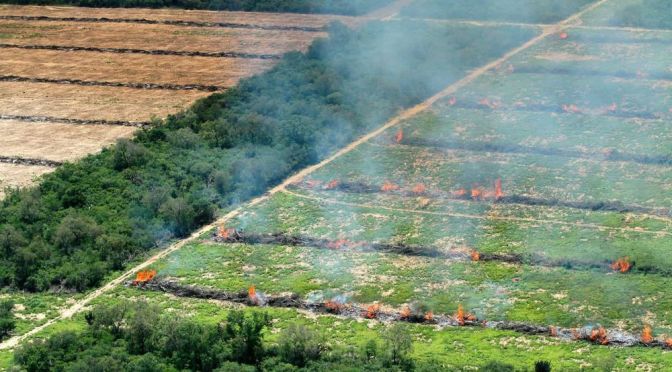
Paraguay might be one of the world’s first countries to lose its rainforest because of a confluence of factors including inequality, corruption, drug trafficking, and climate change. The South American nation offers a stark warning for what the planet stands to lose if it doesn’t act to protect its natural resources.

Paraguay is a landlocked country between Argentina, Brazil and Bolivia, home to large swaths of swampland, subtropical forest and chaco, wildernesses comprising savanna and scrubland. The capital, Asunción, on the banks of the Paraguay River, is home to the grand Government Palace and the Museo del Barro, displaying pre-Columbian ceramics and ñandutí lacework, the latter available in many shops. 

Morning News: Coal And Deforestation At COP26, U.S. Supreme Court Cases

At the global climate summit, more than 100 countries have promised to end deforestation by 2030. Similar promises have been made before, but might this time be different? 

America’s Supreme Court dives into the thorny topics of abortion and gun rights. And we report on the peculiar economics of African cities where the UN has set up shop.

Conservation: Protecting Chile’s Araucaria Forests

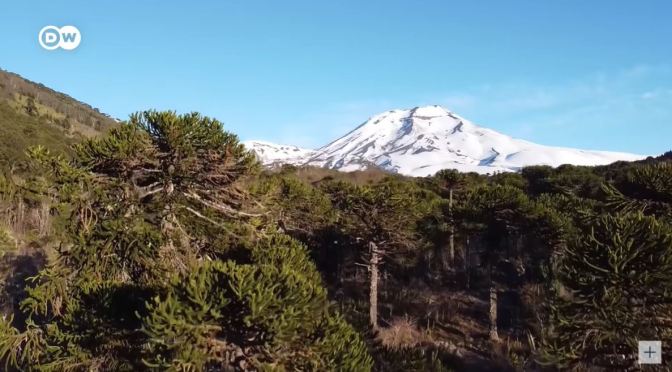
The monkey puzzle tree is one of the oldest tree species in the world, dating back to the dinosaur age. Climate change and deforestation endanger them, but in areas inhabited by indigenous peoples in Chile, their numbers are increasing.

Araucaria araucana is an evergreen tree growing to 1–1.5 m in diameter and 30–40 m in height. It is native to central and southern Chile and western Argentina. Araucaria araucana is the hardiest species in the conifer genus Araucaria.

Deforestation: ‘Amazon Rainforest’ – Becoming A Savannah In 15 Yrs? (Video)

New research suggests that if the current rate of deforestation continues, the Amazon rainforest could transform into a savannah within 15 years. Do we have time to stop it?

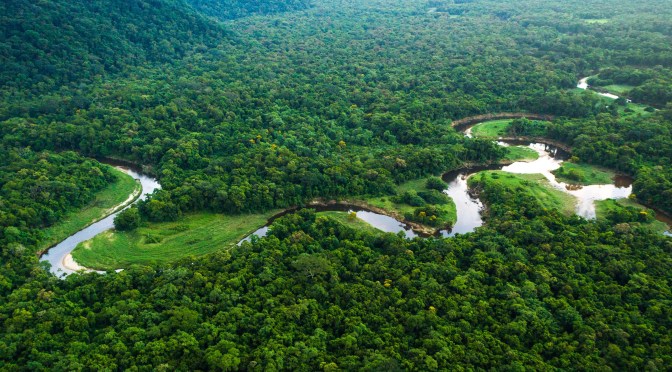
The Amazon basin spans over 6 million square kilometers, and is home to one-fifth of the world’s land species. In addition, it supports the 30 million people who live and depend on the land as a source of food, medicine, and shelter. That’s not even including the key role it plays in regulating the regional AND global climate.

Trees absorb water through their roots and transport it to their leaves, where it’s released as vapor through small pores in a process called transpiration. As the water vapor rises and condenses, it forms rain clouds over the forest canopy. Basically, the rainforest is making its own weather. For example, one large tree can release 1,000 liters of water into the atmosphere in a single day.

The rainforest recycles this water up to six times before it moves out of the region, but as more trees are cut down, those that remain may not be able to recycle enough water to survive. Less trees means more sunlight will hit the forest floor, exposing the forest to higher temperatures. Since deforestation began accelerating in the 1970’s, 800,000 square kilometers of the Amazon have been lost. And over that same period, the average temperature of the basin has risen by 1 degree Celsius.