Tag Archives: Country Life Magazine

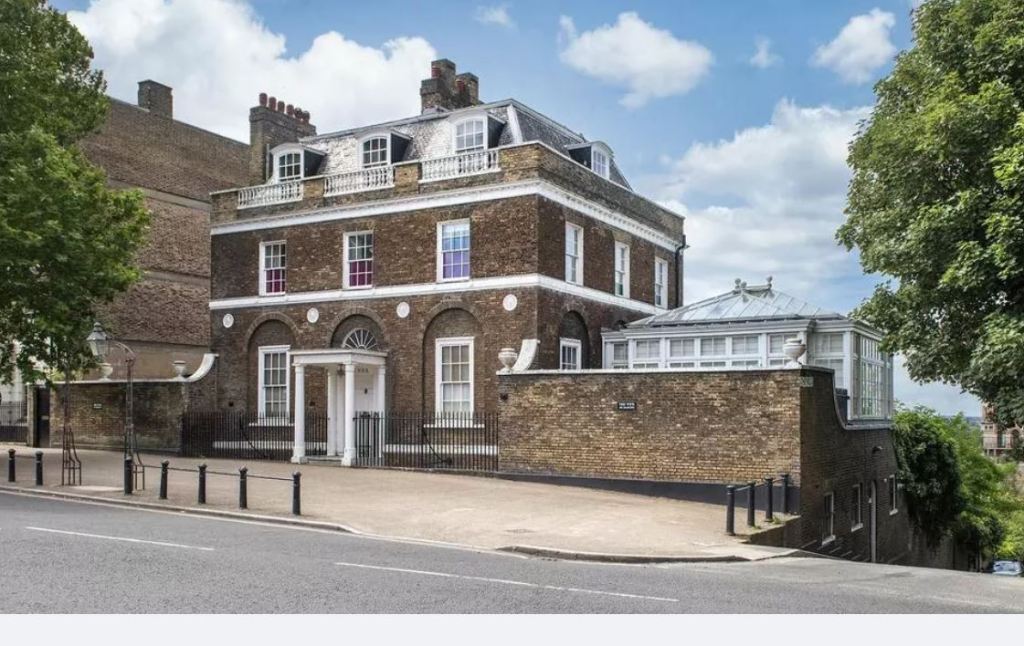
Village View: Clerkenwell In Northern London

‘Clerkenwell was right outside the London city walls, but close enough to it, so was ideal for monasteries. With four or five in the area, people came to serve them, shops opened and you had quite a nice little village.’

Carla Passino June 14, 2021

A medieval well lies hidden inside a brick office block on Farringdon Lane. It may look a little more than a hole in the ground, but it’s from there that Clerkenwell came to life.

‘The parish clerks from the City of London would come to perform plays and read from the Bible and, because they gathered around this particular well, it became known as the well of the Clerks,’ explains Mark Aston, local-history manager for Islington Council, under which authority Clerkenwell falls. ‘It’s not only water that sprung from it, but Clerkenwell’s name itself.’

Read full article in Country Life Magazine

English Country Homes: 17th-Century Urchfont Manor In Wiltshire, UK

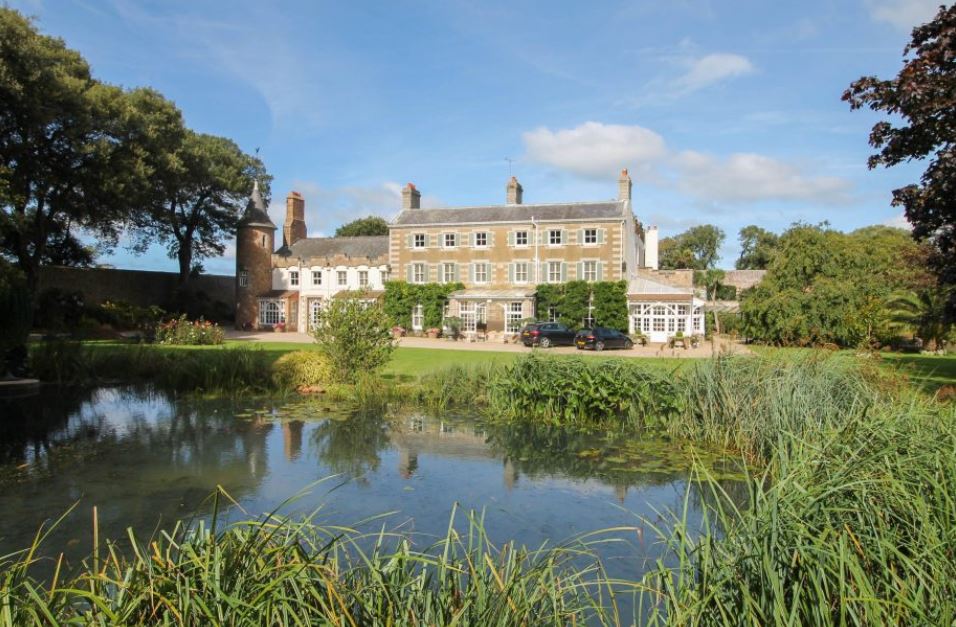
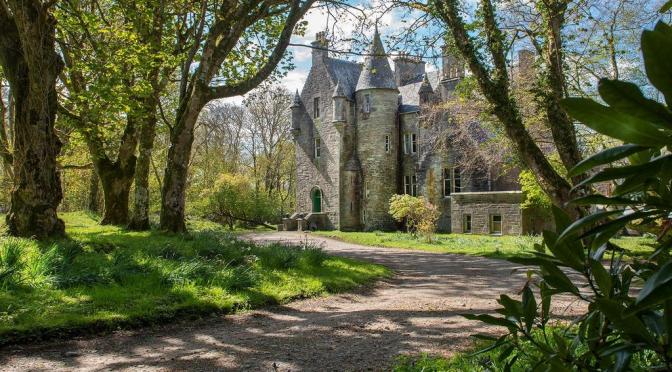
Within a few years of buying Urchfont Manor in 2013, Chris Legg and Eleanor Jones, with the help of a friend, landscape architect Paul Gazerwitz, had given their home a new vista that unites house and garden, as well as evoking the formal Baroque of the house’s late-17th-century past.

George Plumptre June 12, 2021

Their aim was to balance historical integrity with the development of a new garden. Continuity would be kept by preserving the garden’s bones, such as the walled garden and the fine trees beyond open lawn to the south and east. Work began on the rectangular walled kitchen garden.

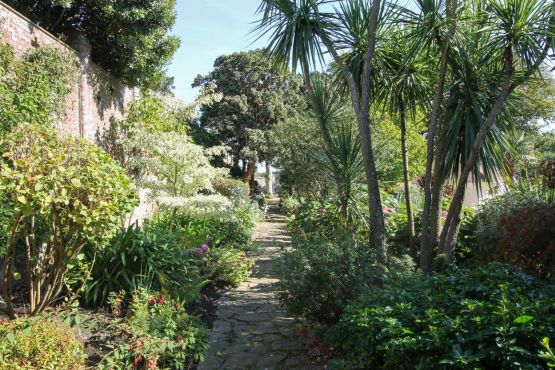
The architecture on this side of the house is engagingly uneven and this is picked up in the new garden, which is neat and formal, but appropriately domestic in scale. The kitchen garden has been laid out afresh, with 16 rectangular patches divided by narrow gravel paths and with a square of four greengages in the centre. Crops are rotated and, every year, one bed celebrates an unusual plant, such as borlotti beans or root ginger. Elsewhere are nurtured asparagus and strawberry beds and a fruit cage with raspberries and gooseberries.

Read more at Country Life Magazine

English Country Estates: Glynn House, Cornwall

Much of the building as it stands today was completed in 1805 by Edmund Glynn, son of American Independence supporter John Glynn, but its history is much older.

Penny Churchill June 9, 2021

The manor was mentioned in the Domesday Book and was later home to distinguished personages such as Henry II’s Justiciar, Richard de Lucy, and perhaps most extraordinary of all the Earl of Warwick, ‘the Kingmaker’.

In the 18th century, the estate belonged to Waterloo hero Sir Hussey Vivian and, in the 1960s, to Nobel-prize winning chemist Peter Mitchell.

Read more

Views: The Last Remaining Windmills Of England

There are about 140 windmills left in the UK today — of these, about 40 still work. By comparison, explains Mildred Cookson, chair of the Society for the Protection of Ancient Buildings (SPAB)’s mills section, there were more than 1,000 in the 1890s.

They tend to take one of two styles: the brick-built tower mill, where only the cap rotates, or the wooden post mill, which fully rotates around a vertical post and dates to about 1185, when one was built at Weedly, East Yorkshire. 

Some are more famous than others. John Constable painted the mill at Petworth, West Sussex, and, in Buckinghamshire, Cobstone features as the home of Caractacus Potts in the 1968 film adaptation of Ian Fleming’s Chitty Chitty Bang Bang. In the BBC’s mystery crime series Jonathan Creek, starring Alan Davies, it’s King’s Mill in Shipley, West Sussex, that steals the show.

Read more

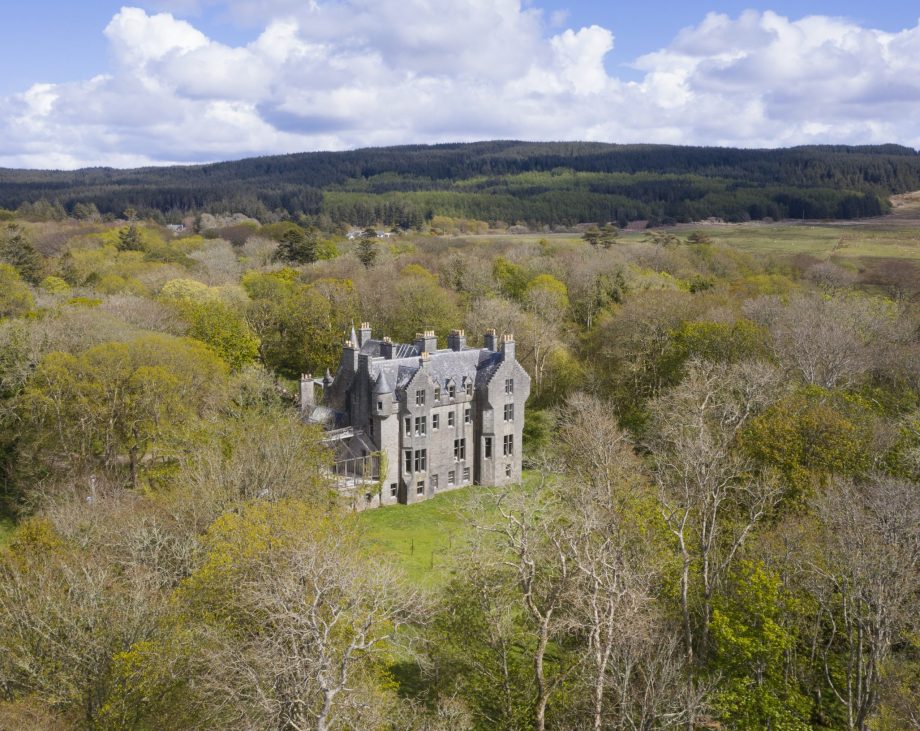
Scottish Villas: The Old School House, Loch Fyne

Situated just outside of the former fishing town of Lochgilphead in West Scotland, and close to the neighbouring Ardrishaig (which is renowned for sailing and watersports) sits The Old School House.

Located just back from the road and leading directly down onto Loch Fyne, the traditionally charming property, which was once — unbelievably — a school house, has, in recent years undergone renovation work. The result is a lovely home in an unbeatable location.

Read and see more at Country Life UK

Green Travel Views: The Faroe Islands – Denmark

These 18 rugged spikes of basalt half way between Shetland and Iceland are windy, wet and wild. The crew shooting aerial scenes for the upcoming James Bond film, No Time to Die (out September 30) had to bring in a small helicopter on the ferry from Denmark to film the sheer cliffs surrounding the deep road tunnels that link the four tiny villages on the island of Kalsoy (total population: 70).

In reality the Faroese are probably the people least likely to ever harbour a Bond villain—a tight-knit community of just 52,000 where most people can still name a common ancestor. Getting there is easier than many imagine, with twice weekly flights from Edinburgh (with Atlantic Airways) or twice daily from Copenhagen.

Read more at Country Life UK

English Seaside Views: ‘The Beach Hut’ In Cornwall

Popular with celebrities and surfers alike, The Beach Hut, in Millook, is a charming seaside home at quite a price — but it comes with its own stretch of beach and 40 acres of Cornwall.

Carla Passino, May 18, 2021

Built in 1929 as a tearoom, the property was converted in the 1980s and today has a romantic charm that complements the idyllic setting.

The open-plan studio interiors feature stripped wooden floors, exposed stone walls and a log burning stove, and open onto a covered veranda that’s the perfect place to relax and soak up the panorama.

Read more

English Country Homes: Little Wolford Manor, Cotswolds, Warwickshire

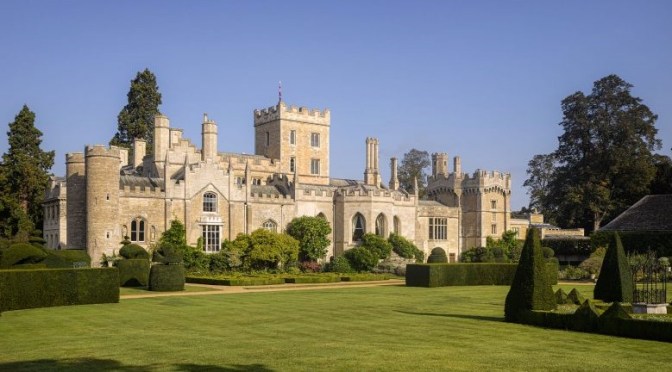
According to its Historic England listing, Little Wolford Manor dates from the late 15th or early 16th century, and although there have been 16th-, 17th- and 20th-century additions, Little Wolford Manor still follows the original medieval plan, its focal point being the great hall with its vaulted roof and hammer beams, minstrels’ gallery and huge fireplace.
Penny Churchill, May 16, 2021

An April 1957 piece in the now defunct The Antique Collector describes Little Wolford Manor, in the timeless timeless south Warwickshire village of Little Wolford, as a house ‘of truest Cotswold type… a small gem of Cotswold rural craftsmanship with many well-preserved features in wood as well as in stone’.

Read more

English Country Homes: The Old Rectory Near Beeston, North Norfolk

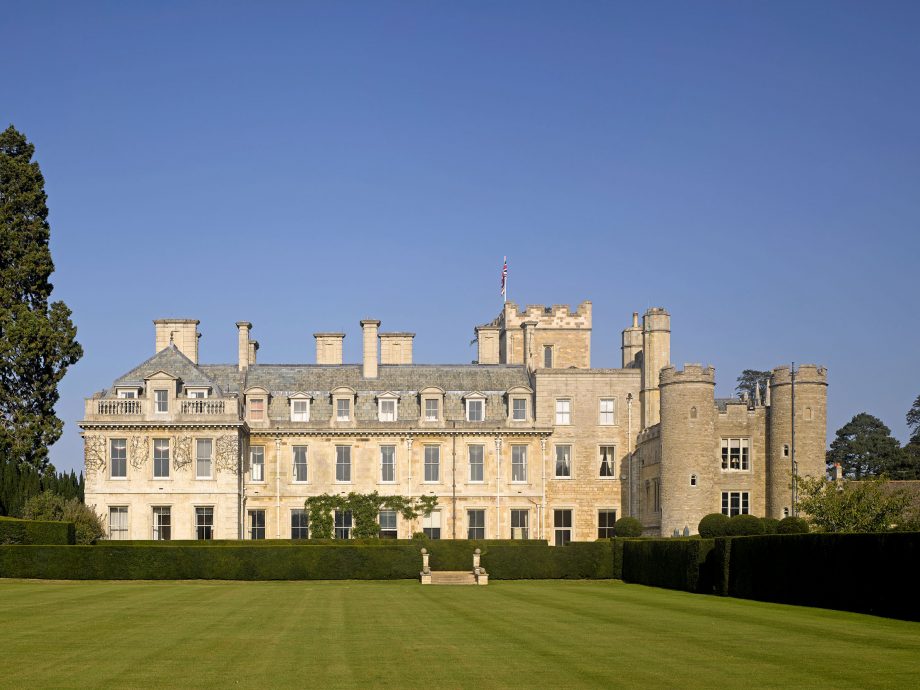
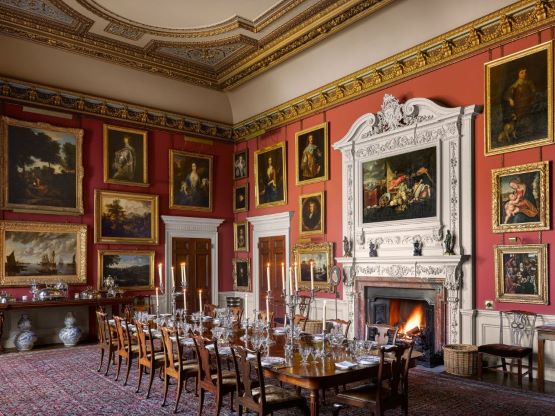
Mixing the right amount of luxury and comfort with a Shakespearean inspired garden, The Old Rectory near Beeston in north Norfolk has a charming moat that surrounds three-quarters of the property, a Willow tree that frames the water and a wooden Monet-style bridge that crosses the moat?

Beeston is a town in Nottinghamshire, England, 3.4 miles south-west of Nottingham city centre. To the immediate north-east is the University of Nottingham’s main campus, University Park. 
Read more

Poetic Views: London’s ‘Maida Vale’ Inspired Lord Byron & Robert Browning

The new crop of Italianate villas, iced white with stucco like giant cakes, and the rows of brick terraces and mansion blocks that followed them soon became home to publishers (Charles Ollier), artists (Sir John Tenniel) and poets: Robert Browning lived at 19, Warwick Crescent for more than 20 years and the pool where the Grand Union and Regent’s canals meet is now called after him.

Watercolor Paintings by Liam O’Farrell

Although Browning has been credited with naming the canal area Little Venice, it was Byron that first (facetiously) compared the basin to the Italian lagoon.

Carla Passino – April 16, 2021

Story has it that the poet used to walk along the Paddington arm of the Grand Union Canal with his publisher, John Murray — helpfully pointing to the bridge where another publisher had once drowned himself — and was inspired to write that ‘there would be nothing to make the canal of Venice more poetical than that of Paddington, were it not for its artificial adjuncts’; a fair point, considering that, at the time, the London canals were lined with warehouses and wrapped in soot.

Even today, however, the elegant terraces halfway up Randolph Avenue, with their tripartite arched windows, are far more reminiscent of the Italian city than Little Venice itself, where the serene buildings and tree-lined banks have a rather more bucolic feel.

Read more at Country Life UK

Liam O’Farrell website