

From a NeuroscienceNews.com online release article (01/02/20):
During the years 1976 through 1980, 15% of U.S. adults were obese. Today, about 40%of adults are obese. Another 33% are overweight.
“But, of course, food is now abundant, and our next meal is as close as the kitchen, or the nearest fast-food drive-through, or right here on our desk. Often, these foods are high in fats, sugars, and therefore calories, and that’s why they taste good. It’s easy to overconsume, and, over time, this takes a toll on our health.”
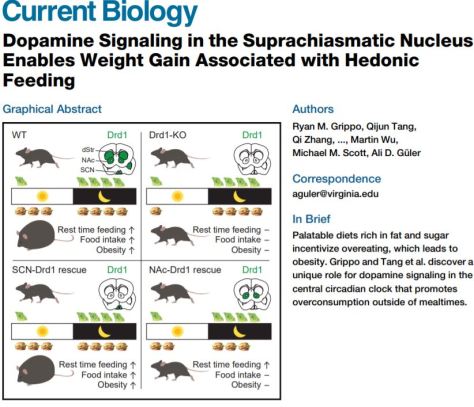
In a study published Thursday in the journal Current Biology, Güler and his colleagues demonstrate that the pleasure center of the brain that produces the chemical dopamine, and the brain’s separate biological clock that regulates daily physiological rhythms, are linked, and that high-calorie foods – which bring pleasure – disrupt normal feeding schedules, resulting in overconsumption. Using mice as study models, the researchers mimicked the 24/7 availability of a high-fat diet, and showed that anytime snacking eventually results in obesity and related health problems.
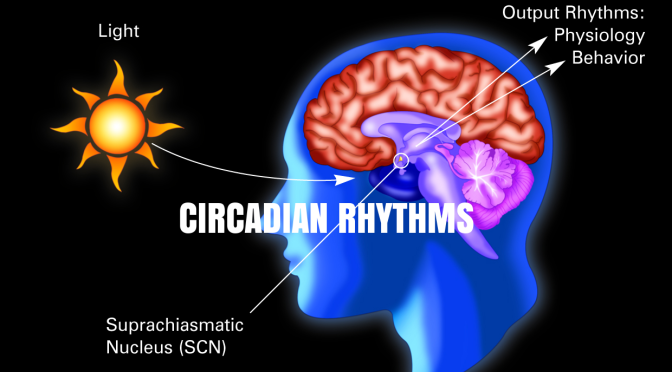
 When people are awake during the night, their behaviors are often mismatched with their internal body clocks. This can lead to nighttime eating, which can influence the way the body processes sugar and could lead to a higher risk in diabetes. “What happens when food is eaten when you normally should be fasting?” Scheer asked the audience. “What happens is that your glucose tolerance goes out the window….So your glucose levels after a meal are much higher.” This can increase people’s risk for diabetes.
 Boomers Daily