BBC Radio 4 (July 30, 2024): From the Hay Festival, James and a panel of experts explain what we can all do to help ourselves age well. We discover what’s going on in our bodies when we age, the difference between biological and chronological age, as well as getting the audience moving for a physical test.
James is joined by gerontologist Sarah Harper from the University of Oxford, biomedical scientist Georgina Ellison-Hughes from King’s College London, and doctor Norman Lazarus to understand how exercise, diet, and mental health all have a part to play in how we age.
BBC Radio 4 ‘Inside Science’ talks about satellite navigation in the UK; the science of the World Wide Web and Neolithic genomics.
Is the UK losing its way when it comes to satellite navigation? There’s GPS from the US, but other countries and regions, including Russia, China, India and Japan, either have, or are building, satellite navigation systems of their own. The EU has Galileo, but with Brexit, Britain is no longer involved. The Government has announced that it’s just acquired a satellite technology company called OneWeb. It’s primary role is enhanced broadband, but there’s talk of adding in a navigation function to the constellation of satellites. But how feasible will that be?
In an era of cyber-crime, misinformation, disinformation, state-sponsored attacks on rival countries’ infrastructure, government-imposed internet shutdowns in places like Eritrea and Kashmir, the World Wide Web is an increasingly dark and troubled place. Making sense of how the internet has changed from the democratic, sharing, open platform it was designed to be, and predicting what’s next, are the web scientists. Professor Dame Wendy Hall, Regius Professor of Computer Science at the University of Southampton, and a co-founder of the whole field of web science, is hosting an online, annual conference this week. The theme this year is ‘Making the web human-centric’.
Communal burial sites tend to suggest an egalitarian society, where everyone is considered equal. And this is what we expected the Neolithic societies that spread across Europe with the birth of agriculture around 6000 years ago would be. But DNA evidence from a single human, NG10, buried in 3200 B.C.E in the vast tomb of Newgrange, 25 miles north of Dublin, in Ireland, shows very strong inbreeding. Couple this with the fact the body was buried and not cremated and placed in a highly adorned chamber. Does this indicate an elite ruling class where marrying one’s close kin was the order of the day? Dr. Lara Cassidy, palaeogeneticist at Trinity College Dublin, decoded NG10’s DNA and she tells Adam Rutherford the story.
Presenter – Gareth Mitchell
Producers – Fiona Roberts and Beth Eastwood
BBC Radio 4 “Books And Authors” Talks To Maggie O’Farrell on her new novel, “Hamnet”
On a summer’s day in 1596, a young girl in Stratford-upon-Avon takes to her bed with a fever. Her twin brother, Hamnet, searches everywhere for help. Why is nobody at home?
Their mother, Agnes, is over a mile away, in the garden where she grows medicinal herbs. Their father is working in London. Neither parent knows that one of the children will not survive the week.
Hamnet is a novel inspired by the son of a famous playwright. It is a story of the bond between twins, and of a marriage pushed to the brink by grief. It is also the story of a kestrel and its mistress; flea that boards a ship in Alexandria; and a glovemaker’s son who flouts convention in pursuit of the woman he loves. Above all, it is a tender and unforgettable reimagining of a boy whose life has been all but forgotten, but whose name was given to one of the most celebrated plays ever written.

 BBC Radio 4 ‘Inside Science’ talks about satellite navigation in the UK; the science of the World Wide Web and Neolithic genomics.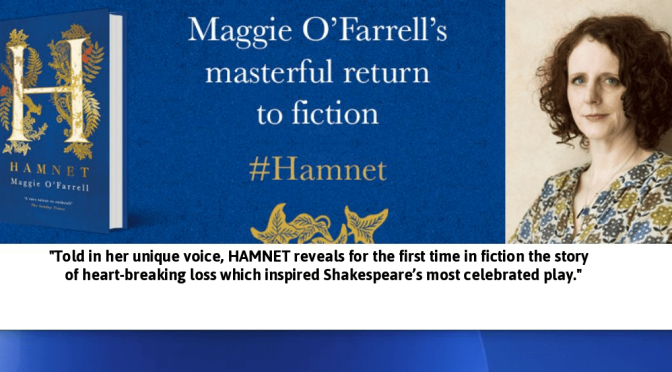
 BBC Radio 4 “Books And Authors” Talks To Maggie O’Farrell on her new novel, “Hamnet”
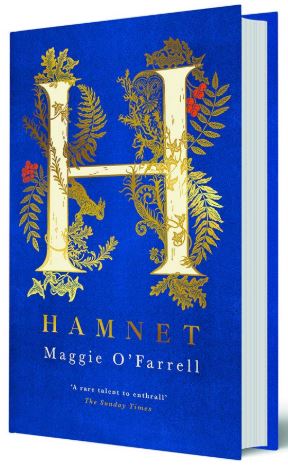 On a summer’s day in 1596, a young girl in Stratford-upon-Avon takes to her bed with a fever. Her twin brother, Hamnet, searches everywhere for help. Why is nobody at home?
 Boomers Daily