Category Archives: Science

Top Science Podcasts: Child Mortality Rates, Evolving New Genes & Vaping Deaths (Nature)

Nature PodcastListen to the latest from the world of science, with Benjamin Thompson and Shamini Bundell. This week, investigating child mortality rates at a local level, and building genes from non-coding DNA.

In this episode:

00:43 A regional view of childhood mortality

Researchers map countries’ progress towards the UN’s Sustainable Developmental Goals. Research Article: Burstein et al.World View: Data on child deaths are a call for justiceEditorial: Protect the census

07:22 Research Highlights

Astronomers identify a second visitor from beyond the solar system, and extreme snowfall stifles animal breeding in Greenland. Research Highlight: The comet that came in from interstellar spaceResearch Highlight: Extreme winter leads to an Arctic reproductive collapse

09:22 Evolving genes from the ground up

Natural selection’s creative way to evolve new genes. News Feature: How evolution builds genes from scratch

15:43 News Chat

A spate of vaping-related deaths in the US, and Japan’s import of the Ebola virus. News: Scientists chase cause of mysterious vaping illness as death toll risesNews: Why Japan imported Ebola ahead of the 2020 Olympics

Thoughts On Aging: Should Some Older People Be Allowed To Change Their Legal Age?

From an Aeon.co online article by Bioethicist Joona Räsänen:
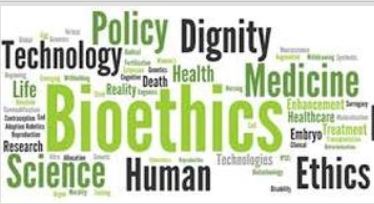
BioEthicsAge change should be allowed when the following three conditions are met. First, the person is at risk of being discriminated against because of age. Second, the person’s body and mind are in better shape than would be expected based on the person’s chronological age (that is, the person is biologically younger than he is chronologically). Third, the person does not feel that his legal age is befitting.

Let’s say that on average you are in better shape than other people of your age. You are more able than them: quicker, sprightlier, livelier. You feel and identify as younger than your official age. However, despite all your youthful energy, you are also discriminated against because of your greater age. You cannot get a job – or, if you do, you might earn less than some of your younger coworkers simply due to your advanced years. The question is, should you be allowed to change your ‘official’ age in order to avoid this discrimination and to better match how you identify and feel?

To read more: https://aeon.co/ideas/older-people-should-be-allowed-to-change-their-legal-age?utm_source=Aeon+Newsletter&utm_campaign=ae6b281c0d-EMAIL_CAMPAIGN_2019_10_07_04_28&utm_medium=email&utm_term=0_411a82e59d-ae6b281c0d-70852327

Top Science Podcasts: Estimating Earthquake Risk, And Difficulties For Deep-Learning (Nature)

Nature PodcastThis week, a method for predicting follow-up earthquakes, and the issues with deep learning systems in AI.
In this episode:

00:47 Which is the big quake?

A new technique could allow seismologists to better predict if a larger earthquake will follow an initial tremor. Research Article: Real-time discrimination of earthquake foreshocks and aftershocksNews and Views: Predicting if the worst earthquake has passed

07:46 Research Highlights

Vampire bats transmitting rabies in Costa Rica, and why are some octopuses warty? Research Article: Streicker et al.Research Article: Voight et al.

10:03 Problems for pattern-recognition

Deep-learning allows AIs to better understand the world, but the technique is not without its issues. News Feature: Why deep-learning AIs are so easy to fool

16:31 News Chat

We roundup the 2019 Nobel Prizes for science. News: Biologists who decoded how cells sense oxygen win medicine NobelNews: Physics Nobel goes to exoplanet and cosmology pioneersNews: Chemistry Nobel honours world-changing batteries

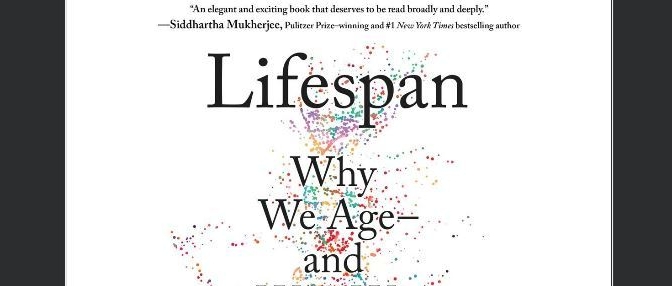
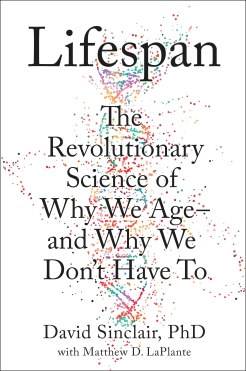
New Books On Aging: “Lifespan: Why We Age — and Why We Don’t Have To” By David A. Sinclair And Matthew D. LaPlante (2019)

From a Nature.com online review:

Lifespan-cover-imageLifespan, by geneticist David Sinclair and journalist Matthew LaPlante, provides a vision of a not-too-distant future in which living beyond 120 will be commonplace. For Sinclair and LaPlante, the answer lies in understanding and leveraging why we age…

Lifespan is entertaining and fast-paced — a whirlwind tour of the recent past and a near future that will see 90 become the new 70. In a succession of colourfully titled chapters (‘The demented pianist’, ‘A better pill to swallow’), Sinclair and LaPlante weave a masterful narrative of how we arrived at this crucial inflection point. Among the historical figures evoked are a sixteenth-century Venetian proponent of caloric restriction, Luigi Cornaro, and the twentieth-century ‘father of information theory’, Claude Shannon.

To read more: https://www.nature.com/articles/d41586-019-02667-5?WT.ec_id=NATURE-20190912&utm_source=nature_etoc&utm_medium=email&utm_campaign=20190912&sap-outbound-id=34E4EBDF3E516F09DA62FA13A7FD9F1CDB19356F&utm_source=hybris-campaign&utm_medium=email&utm_campaign=000_AGN6567_0000014844_41586-Nature-20190912-EAlert&utm_content=EN_internal_32879_20190912&mkt-key=005056B0331B1EE88A92FE6D6D25F179

Top Science Podcasts: Modelling Embryonic Development, Baby Sea Turtles, “Nature” News

Nature PodcastListen to the latest from the world of science, with Benjamin Thompson and Shamini Bundell. This week, modelling embryonic development, and an analysis of male dominated conferences.
In this episode:

00:44 Imitating implantation

Researchers have created a system that uses stem cells to model the early stages of pregnancy. Research article: Zheng et al.News and Views: Human embryo implantation modelled in microfluidic channels

08:03 Research Highlights

Traces of baby turtle tracks, and Titan’s explosive past. Research Highlight: A baby sea turtle’s ancient trek is captured in a fossilResearch Highlight: Giant explosions sculpted a moon’s peculiar scenery

09:36 ‘Manferences’

Nature investigates the prevalence of conferences where most of the speakers are male. News Feature: How to banish manels and manferences from scientific meetings

15:41 News Chat

An update on India’s latest moon mission, drugs that may reverse biological age, and this year’s Breakthrough Prize winners. News: India loses contact with its Moon lander minutes before touchdownNews: First hint that body’s ‘biological age’ can be reversedNews: First-ever picture of a black hole scoops US$3-million prize

Health Technology: First Successful Tele-Robotic Heart Surgery Performed

From an InterestingEngineering.com online article:

CorPath GRX robot“Remote procedures have the potential to transform how we deliver care when treating the most time-sensitive illnesses such as heart attack and stroke. The success of this study paves the way for large-scale, long-distance telerobotic platforms across the globe, and its publication in Lancet’s EClinicalMedicine demonstrates the transformative nature of telerobotics,” said in a press statement Mark Toland, President and Chief Executive Officer of Corindus Vascular Robotics.

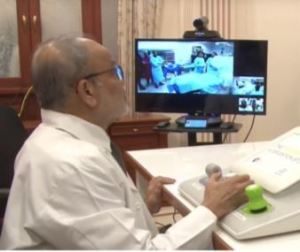
A surgeon in India has performed a series of five percutaneous coronary intervention (PCI) procedures on patients who were on operating tables 32 kilometers (20 miles) away from him. The event marks the first long-distance heart surgery.

The operation was performed in patients who have atherosclerosis, a condition where plaque builds up in the blood vessels and restricts blood flow. In this special remote procedure, a robot called the CorPath GRX robot and controlled by the surgeon inserted a small instrument called a stent in order to open blood vessels in the heart.

To read more: https://interestingengineering.com/first-long-distance-heart-surgery-performed-through-a-robot?_source=newsletter&_campaign=JerqNzW7B80q5&_uid=46dBBxnxd7&_h=0c209d493fa27bb2c39469a873cbbd733289c833&utm_source=newsletter&utm_medium=mailing&utm_campaign=Newsletter-07-09-2019

Top Science Podcasts: Persistent Antibiotic Resistance And Modeling Hot Cities (Nature)

Nature PodcastResearchers have identified how Salmonella ‘persister’ cells can spread antibiotic resistance genes in mice intestines. 

Cities are generally hotter than their surroundings, but what are the causes of these ‘heat islands’?

In this episode:

00:46 Antibiotic resistance reservoirs

Researchers have identified how Salmonella ‘persister’ cells can spread antibiotic resistance genes in mice intestines. Research article: Bakkeren et al.

08:12 Research Highlights

Bright barn owls stun prey, and the evolution of dog brains. Research Highlight: Zip-lining owls reveal what really scares their preyResearch Highlight: A dog’s breed is a window onto its brain

10:13 Urban heating

Cities are generally hotter than their surroundings, but what are the causes of these ‘heat islands’? Research Article: Manoli et al.

16:54 News Chat

A cryptic Russian radiation spike, and India’s moon mission gets closer to touchdown. News: How nuclear scientists are decoding Russia’s mystery explosionNews: ‘The most terrifying moments’: India counts down to risky Moon landing


Memory Research: Ability To Forget Is Crucial To How The Brain Works

From a Nature.com online article:

Nature Outlook The Brain“What is memory without forgetting?” asks Oliver Hardt, a cognitive psychologist studying the neurobiology of memory at McGill University in Montreal, Canada. “It’s impossible,” he says. “To have proper memory function, you have to have forgetting.”

A growing body of work, cultivated in the past decade, suggests that the loss of memories is not a passive process. Rather, forgetting seems to be an active mechanism that is constantly at work in the brain. In some — perhaps even all — animals, the brain’s standard state is not to remember, but to forget. And a better understanding of that state could lead to breakthroughs in treatments for conditions such as anxiety, post-traumatic stress disorder (PTSD), and even Alzheimer’s disease.

To read more click on the following link: https://www.nature.com/articles/d41586-019-02211-5

Top Scientific Podcasts: Carbon-Based Computing And Depleting Ancient-Human Genomes (Nature)

Nature PodcastA nanotube microprocessor: Scientists are looking beyond silicon, by constructing a computer chip using carbon nanotubes.

Using ancient-human remains conscientiously: While genetic sequencing of ancient-human remains is providing more information than ever, these remains must be safeguarded, warn researchers.

In this episode:

00:45 A nanotube microprocessor

Scientists are looking beyond silicon, by constructing a computer chip using carbon nanotubes. Research article: Shulaker et al.News and Views: Nanotube computer scaled up

08:38 Research Highlights

Weighing neutrinos, and discovering a hidden Zika epidemic. Research Highlight: Lightest neutrino is at least 6 million times lighter than an electronResearch Highlight: Cuba’s untold Zika outbreak uncovered

10:29 Using ancient-human remains conscientiously

While genetic sequencing of ancient-human remains is providing more information than ever, these remains must be safeguarded, warn researchers. Comment: Use ancient remains more wisely

17:21 News Chat

The discovery of a 3.8-million-year-old hominin skull, and using CRISPR to make ‘smart’ materials. News: Rare 3.8-million-year-old skull recasts origins of iconic ‘Lucy’ fossil; News: CRISPR cuts turn gels into biological watchdogs

Research: UC Berkeley Announces First Large Scale Study Of Healthy Lifestyle On Aging Brains

From a Berkeley News online article:

UC Berkeley Helen Wills Neuroscience“A healthy diet and lifestyle are generally recognized as good for health, but this study is the first large randomized controlled trial to look at whether lifestyle changes actually influence Alzheimer’s disease-related brain changes,” said Susan Landau, a research neuroscientist at Berkeley’s Helen Wills Neuroscience Institute, and principal investigator of the add-on study.

UC Berkeley was awarded a five-year grant expected to total $47 million from the U.S. National Institute on Aging (NIA) to incorporate advanced brain imaging into an Alzheimer’s Association-led study to explore whether lifestyle changes can protect memory in those at risk of developing dementia.

The expanded study will be the first large-scale investigation of how lifestyle interventions, which include exercise, diet, cognitive stimulation and health coaching, affect well-known biological markers of Alzheimer’s and dementia in the brain.

To read more click on following link: https://news.berkeley.edu/2019/07/29/47-million-grant-to-explore-how-a-healthy-lifestyle-changes-the-aging-brain/