Tag Archives: Travel & Conservation

Conservation: ‘Tides Of Trash’ In The Maldives

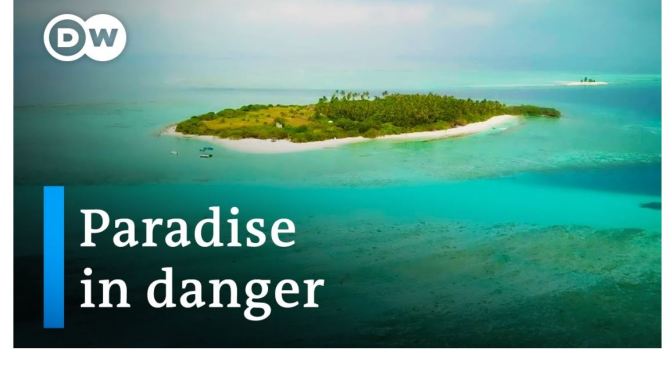
Thilafushi, an island of floating rubbish island in the Maldives, grows by a square meter a day. But diving instructor Shaahina Ali is trying to slow that growth by recycling and using floating barriers to hold back the rising seas.

For decades, the Maldives simply dumped the trash the tourists and the island country’s 400 thousand residents generated. Yet Shaahina Ali says that has to stop. Almost every day, the diving instructor and her allies go from island to island in the Indian Ocean. Working with an environmental organization, they have obtained trash compactors that make plastic waste transportable, allowing it to be shipped abroad for recycling. Ali also advocates avoiding disposable plastic. She gives lectures, advises hotel managers and even bends the ear of the Maldives’ president himself.

When she has time, Shaahina Ali goes scuba diving. Beneath the waves she sees environmental degradation – dying corals and fish caught up in plastic waste. She says, “We can’t afford to address just one problem. We’ve got to take care of everything at once because everything is connected to the sea.” But the island paradise is not only threatened by rubbish. Climate change is also causing the sea levels to rise, and the Maldives are at risk of sinking beneath the water.

That’s why conservationists are using floating barriers made of recycled plastic to help prevent flooding. In addition to the environmental group “Parley for the Oceans,” Ali has also won politicians to her cause. Last year saw a democratic change of government in the Maldives. “The new government no longer views environmentalists as annoying troublemakers. They see us as partners instead,” Ali says. But those trying to save the island are in a race against time. “If we don’t succeed,” says Shaahina Ali, “far more than a vacation paradise will be lost. We will lose our homeland.”
Conservation: Protecting Amazonian Rainforests In French Guiana (Video)

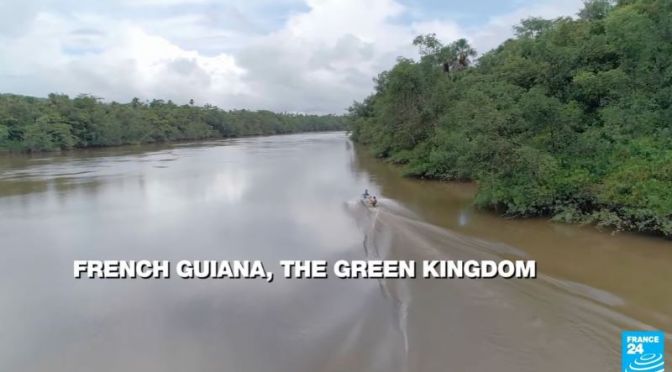
In France’s overseas department of French Guiana, the Amazon rainforest covers 90 percent of land. It’s teeming with wildlife, but this unique biodiversity is in danger. Researchers and locals are doing their best to protect it, like in Favard, where the village healer passes on his knowledge to the younger generations and educates tourists on the need to protect the forest. Meanwhile, entomologists list different species of insects, a titanic job as this knowledge is still in its infancy. Finally, researchers are trying to understand what’s driving the decline in sea turtles.

French Guiana is an overseas department of France on the northeast coast of South America, composed mainly of tropical rainforest. The ruins of 17th-century Fort Cépérou overlook the capital, Cayenne, with its colorful Creole houses and street markets. Shops and cafes surround the palm-filled main square, Place des Palmistes. The Rémire-Montjoly suburb is lined with Atlantic coast beaches. 

Travel & Nature Videos: ‘Nordhorland – Norway’s Only UNESCO Biosphere’

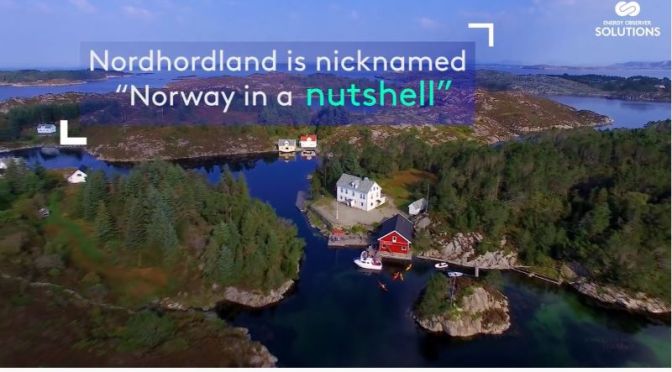
In western Norway, the Nordhordland region is the only UNESCO Biosphere Reserve in Norway. This site of more than 600,000 hectares between sea and fjords promotes sustainable development, combining economic activity and protection of biodiversity.

Travel & Conservation: “Bound By The River – Colorado River” (Video)

Filmed and Edited by: Vital Films

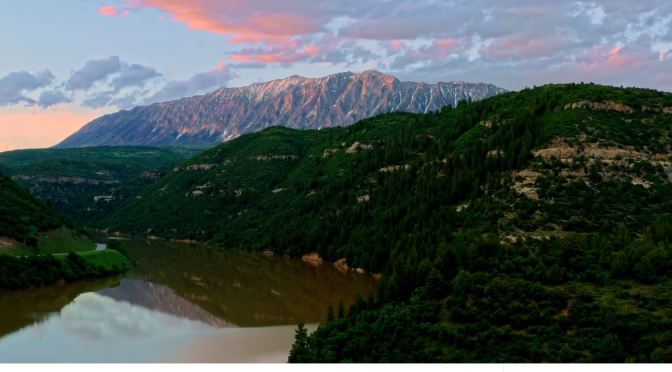
For more than 80 years, the Colorado River District has been working to safeguard Western Colorado’s water resources for agriculture, recreation, industry and the environment.

From the Continental Divide to the Utah border, the Colorado River District serves more than 500,000 West Slope citizens and covers approximately 29,000 square miles – nearly one-third of the state’s total land mass.

Approximately 70% of the Colorado River’s natural flow originates on Colorado’s Western Slope.

Visit ColoradoRiverDistrict.org to learn more.