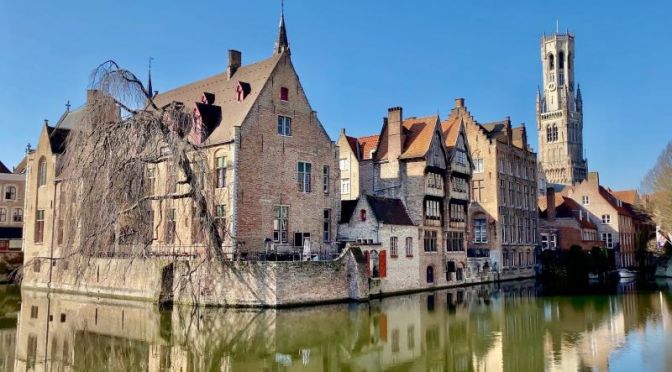
The Flying Dutchman (October 13, 2023) – An evening tour of Bruges, the capital of West Flanders in northwest Belgium. It is distinguished by its canals, cobbled streets and medieval buildings.
Its port, Zeebrugge, is an important center for fishing and European trade. In the city center’s Burg square, the 14th-century Stadhuis (City Hall) has an ornate carved ceiling. Nearby, Markt square features a 13th-century belfry with a 47-bell carillon and 83m tower with panoramic views.
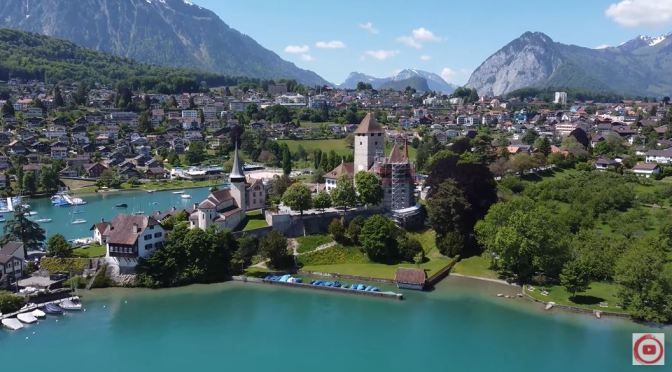
The Flying Dutchman (July 23, 2023) – Spiez is a town and municipality on the shore of Lake Thun in the Bernese Oberland region of the Swiss canton of Bern. It is part of the Frutigen-Niedersimmental administrative district.
Besides the town of Spiez, the municipality also includes the settlements of Einigen, Hondrich, Faulensee, and Spiezwiler.
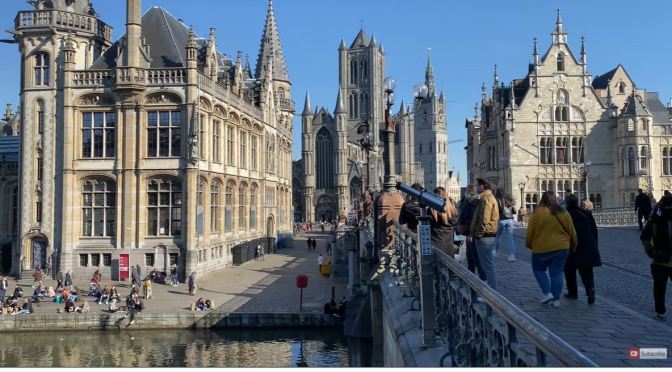
The Flying Dutchman (June 10, 2023) – Ghent, in the Flanders Region, northwestern Belgium. Ghent lies at the junction of the canalized Lys and Scheldt and is the centre of an urban complex that includes Ledeberg, Gentbrugge, and Sint-Amandsberg.
One of Belgium’s oldest cities and the historic capital of Flanders, Ghent was powerful, well-organized in its wealthy trade guilds, and virtually independent until 1584. Within its walls was signed the Pacification of Ghent (1576), an attempt to unite the Lowlands provinces against Spain. The Treaty of Ghent (December 24, 1814) marked the end of the War of 1812 between the United States and Britain.
Along with Brugge (Bruges) and Ypres, Ghent was one of the chief towns of the medieval county of Flanders. It owes its origin to the economic developments that occurred in Flanders in the 10th century, and the town sprang up on the banks of the Lys River at a spot under the protection of a nearby castle built by the counts of Flanders. Ghent grew rapidly in the 12th century, and by the 13th century it was one of the largest towns in northern Europe. Its astonishing prosperity was based on the manufacture of cloth; Ghent’s luxury cloths made from English wool were famous throughout Europe until the 15th century.
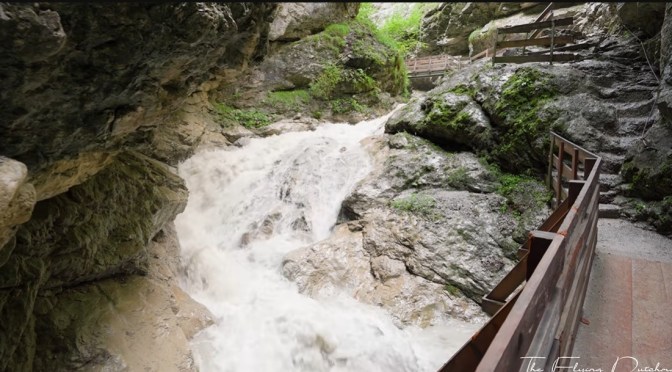
The Flying Dutchman (April 30, 2023) -The Aareschlucht (Aare River Gorge, Aare Gorge) is the only way into the upper Aare valley, called Haslital. It is the original connection between the two villages Innertkirchen and Meiringen. Today there is a road across the Kirchet, the mountain ridge around the gorge, which blocks the valley. It is also called Querriegel (crossbeam), which is not a name but an old term which expresses that it runs across the valley and block it.
The Aare river is fed by rainwater and melting water from the Alps, and here it already has a decent size. The river is about 30 m wide and quite fast flowing. But the gorge is much narrower, typically about 10 m wide, and as a result the water flows faster and is quite deep. And if there is heavy rainfall in the catchment area or in spring during snowmelt the river has much more water and the level inside the gorge rises substantially.
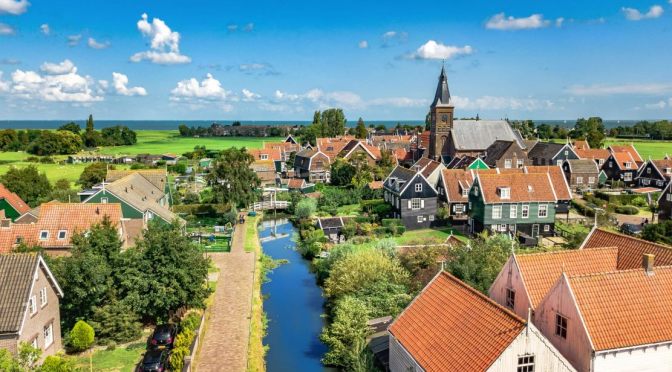
The Flying Dutchman (April 19, 2023) – The island of Marken has been inhabited since the thirteenth century. During this period, the island was owned by the Frisian monastery Mariëngaarde, who built dikes and a drainage system here. They also ensured that agriculture and livestock farming became possible here.
About a century later, the monks were expelled here by Count William the Fourth of Holland. After this, the island quickly impoverished, the islanders were forced to live on mounds to protect themselves against the water.
These mounds are known here as wharves, a number of these wharfs are still inhabited. The many floods made farming impossible and fishing became the island’s main source of income. This came to an end with the arrival of the Afsluitdijk.
The Flying Dutchman (December 2022) – This natural gorge is located on the edge of Imst and represents one of the most important biotopes in Tirol. The Rosengartenschlucht measures 1.5 kilometres in length and is traversed by the rushing Schinderbach river starting at the enchanting Blue Grotto. Wooden walkways, paths blasted into the rock and small tunnels through the mountainside invite visitors to explore this fantastic landscape. The entrance to the gorge is a highlight in its own right, with a number of houses which have been built into the rockface. The gorge is open from May until October. Sturdy footwear is required.
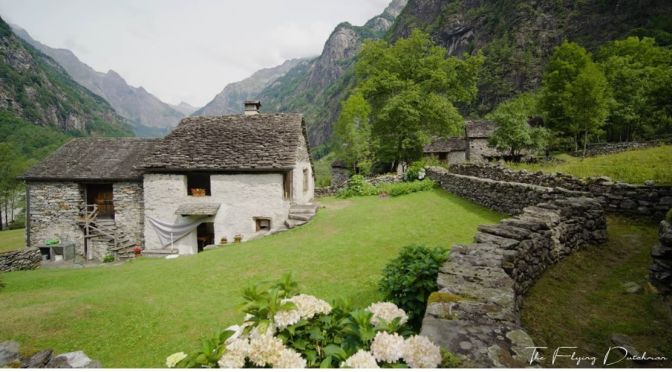
The Flying Dutchman (November 2022) – A scenic walking tour in Roseto, Roseto is situated nearby to Foroglio and San Carlo (Bavona), in Southern Switzerland.
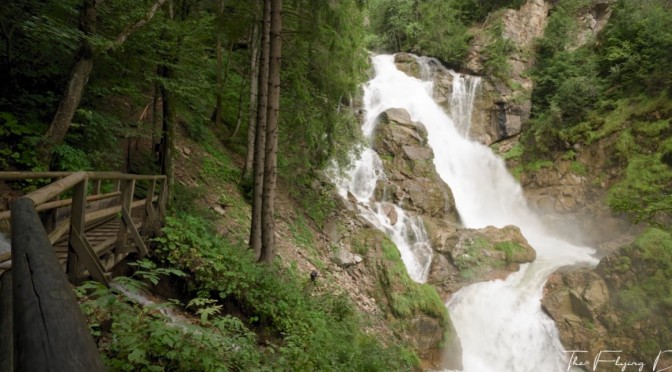
The Flying Dutchman – A scenic gorge walk over trails and bridges, past rapids and Groppenstein waterfall (30 m), followed by the newly erected part of the gorge’s trail that develops Zechnerfall waterfall. Hike on a wooden trail system to the gorge’s exit. Then possibility to continue the hike to the romantic tavern “Zur Guten Quelle” or to “Almgasthof Himmelbauer” (1240 m).
The Groppensteinschlucht is located in the Hohentauern national park near Obervellach in the region Kärnten, Austria.
News, Views and Reviews For The Intellectually Curious




 Boomers Daily