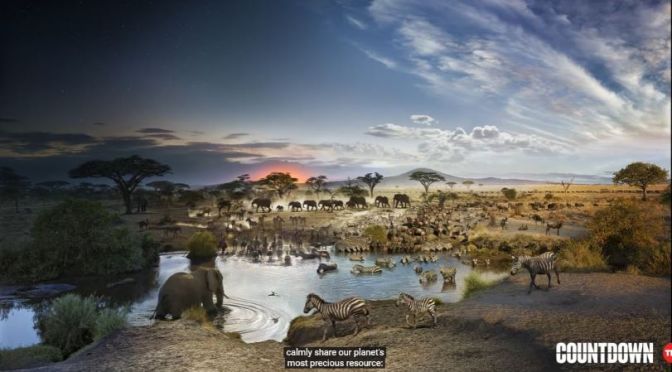
“Nature reveals itself to us in unique ways, if we stop and look at the world through a window of time,” says photographer Stephen Wilkes. Using a special photographic technique that reveals how a scene changes from day to night in a single image,
Wilkes exposes the Earth’s beautiful complexity and the impacts of climate change — from the disruption of flamingo migrations in Africa to the threat of melting ice — with unprecedented force. This performance was part of the Countdown Global Launch on 10.10.2020.
Countdown is TED’s global initiative to accelerate solutions to the climate crisis. The goal: to build a better future by cutting greenhouse gas emissions in half by 2030, in the race to a zero-carbon world.
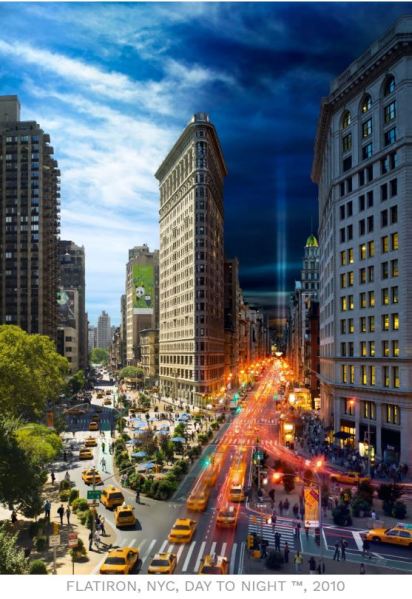
At first glance, Stephen Wilkes’ photographs look like a single moment in time. It is only upon closer inspection that viewers discover that each of his works is actually the result of shooting thousands of photographs from a stationary position over the course of a day and stitching them together digitally to create one cohesive panorama. The painstaking task of editing all of this information and whittling it down into one image can take months to complete, but the results capture a sense of place that can’t be expressed by a single frame alone.
Wilkes expands on this concept in his new book, Day to Night, which features panoramas of iconic places like New York’s Coney Island, Moscow’s Red Square and Arizona’s Grand Canyon seen over the course of a day. Time-lapse photos these are not, as Wilkes carefully selects the exact frames he’ll compile into the final image. (The book release coincides with “A Witness to Change,” a photographic exhibition to be held at Bryce Wolkowitz Gallery in New York City beginning September 12.)


 At first glance, Stephen Wilkes’ photographs look like a single moment in time. It is only upon closer inspection that viewers discover that each of his works is actually the result of shooting thousands of photographs from a stationary position over the course of a day and stitching them together digitally to create one cohesive panorama. The painstaking task of editing all of this information and whittling it down into one image can take months to complete, but the results capture a sense of place that can’t be expressed by a single frame alone.
 Boomers Daily