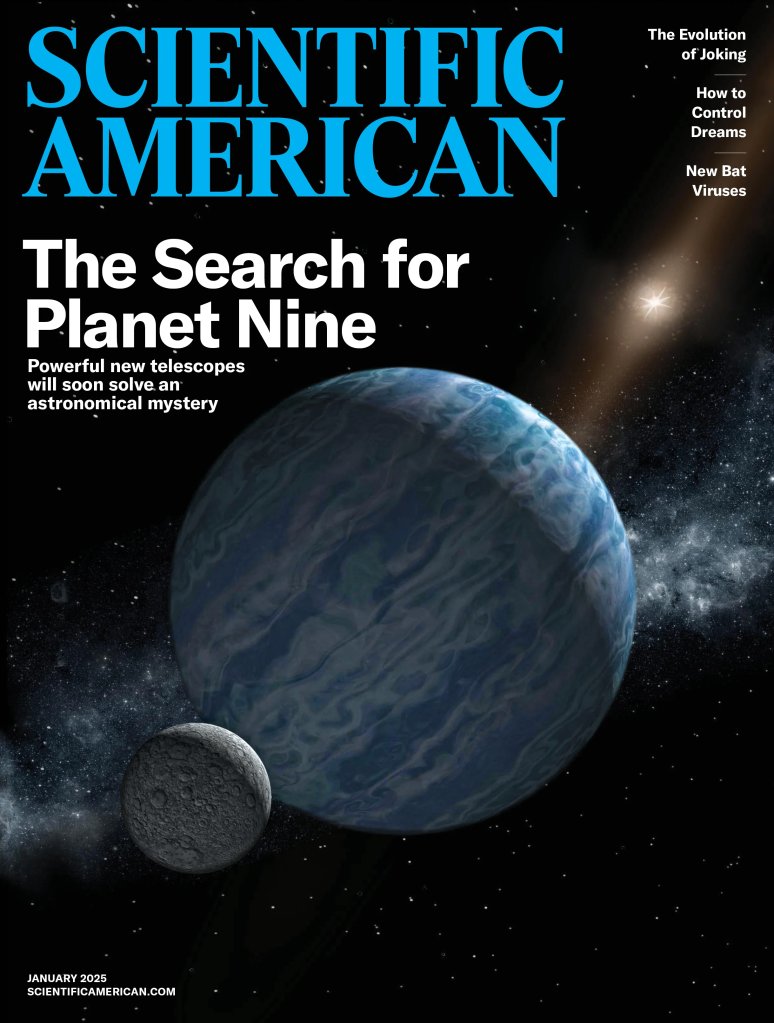
SCIENTIFIC AMERICAN MAGAZINE (January 21, 2025): The latest issue features ‘A Cellular Revolution’ – Long-overlooked molecular blobs are transforming our understanding of how life works….
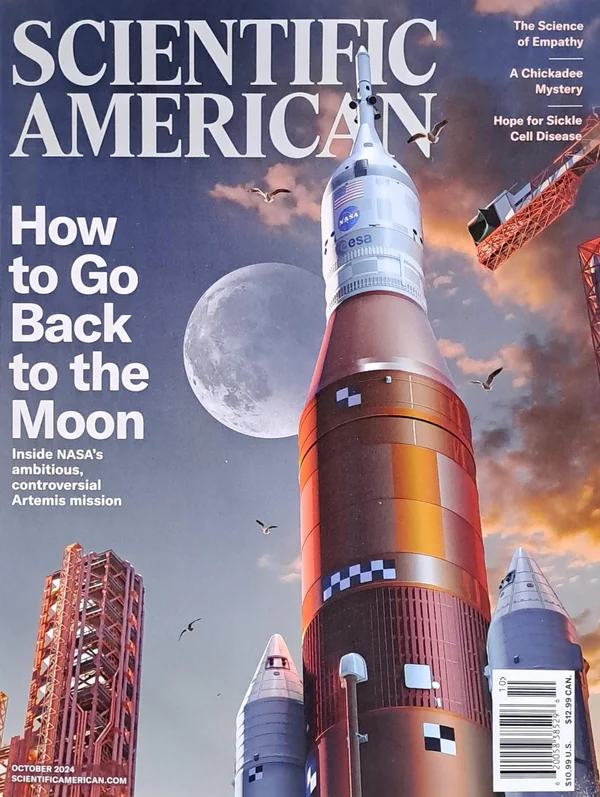
Scientific American (September 16, 2024): The October 2024 issue features ‘How To Go Back To The Moon’ – Inside NASA’s ambitious, controversial Artemis mission; The science of Empathy and Hope for Sickle Cell Disease…
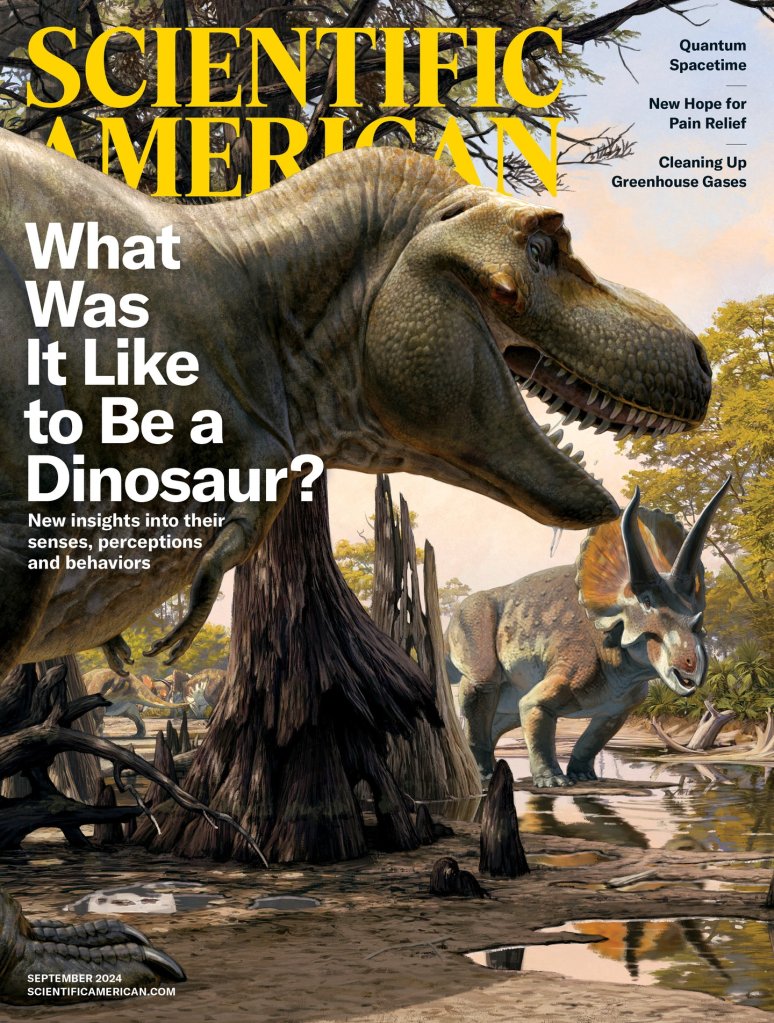
Scientific American (August 21, 2024): The September 2024 issue features ‘What Was It Like To Be A Dinosaur? – New insights into their senses, perceptions and behaviors…
New fossils and analytical tools provide unprecedented insights into dinosaur sensory perception by Amy M. Balanoff, Daniel T. Ksepka
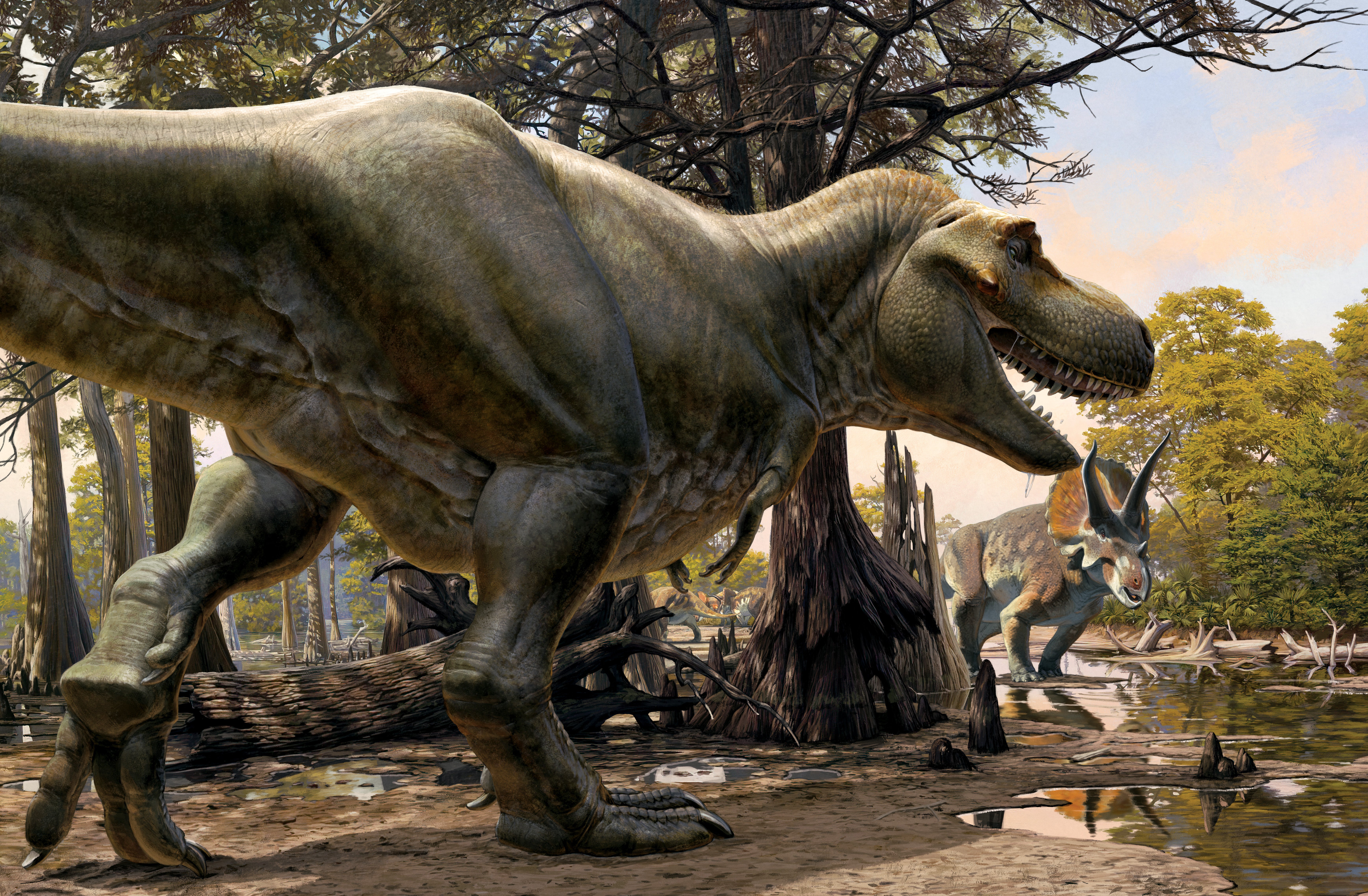
Alone Tyrannosaurus rexsniffs the humid Cretaceous air, scenting a herd of Triceratops grazing beyond the tree line. As the predator scans the floodplain, its vision suddenly snaps into focus. A single Triceratops has broken off from the herd and wandered within striking distance. Standing motionless, the T. rex formulates a plan of attack, anticipating the precise angle at which it must intersect its target before the Triceratops can regain the safety of the herd. The afternoon silence is shattered as the predator crashes though the low branches at the edge of the forest in hot pursuit.
T. rex has hunted Triceratops in so many books, games and movies that the encounter has become a cliché. But did a scene like this one ever unfold in real life? Would T. rex identify its prey by vision or by smell? Would the Triceratops be warned by a loudly cracking branch or remain oblivious because it was unable to locate the source of the sound? Could T. rex plan its attack like a cat, or would it lash out indiscriminately like a shark?
Scientific American (June 26, 2024): The July/August 2024 issue featuresThe New Science of Health and Appetite – What humans really evolved to eat and how food affects our health today…
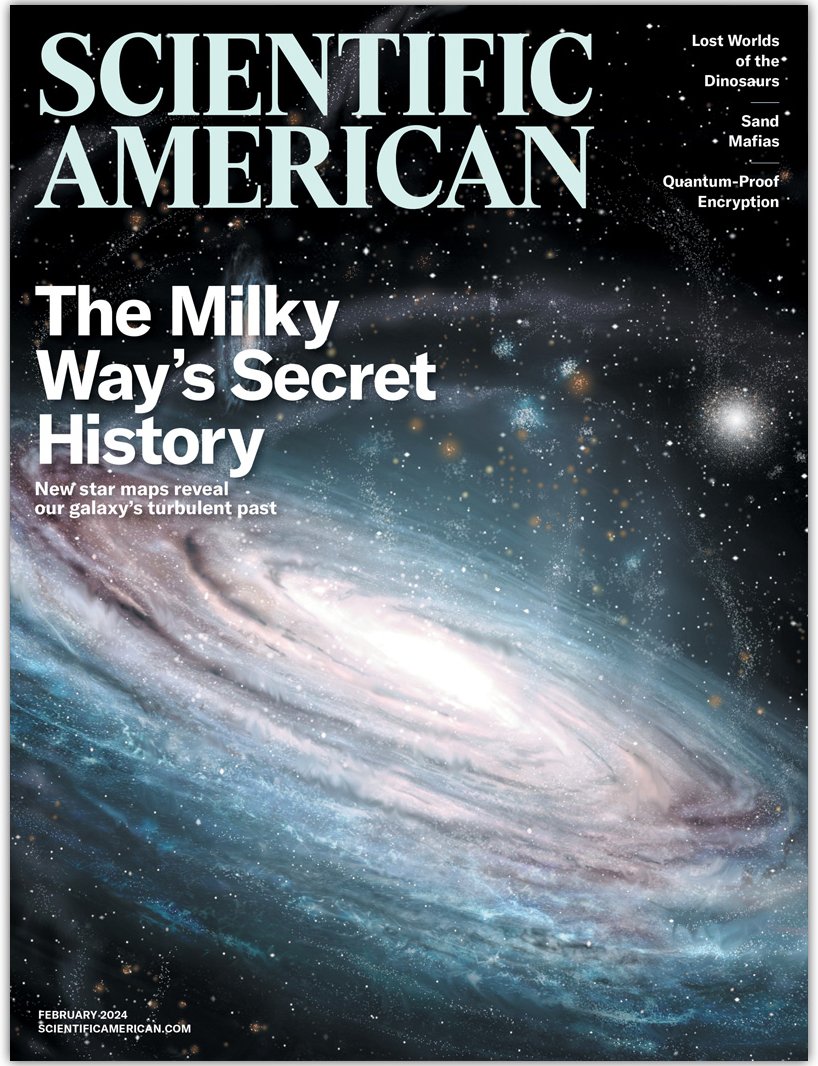
Scientific American (January 16, 2024): The February 2024 issue features ‘The Milky Way’s Secret History’ – New star maps reveal our galaxy’s turbulent past; Why Aren’t We Made of Antimatter? – To understand why the universe is made of matter and not antimatter, physicists are looking for a tiny signal in the electron…










 Boomers Daily