
Tag Archives: Paris Review

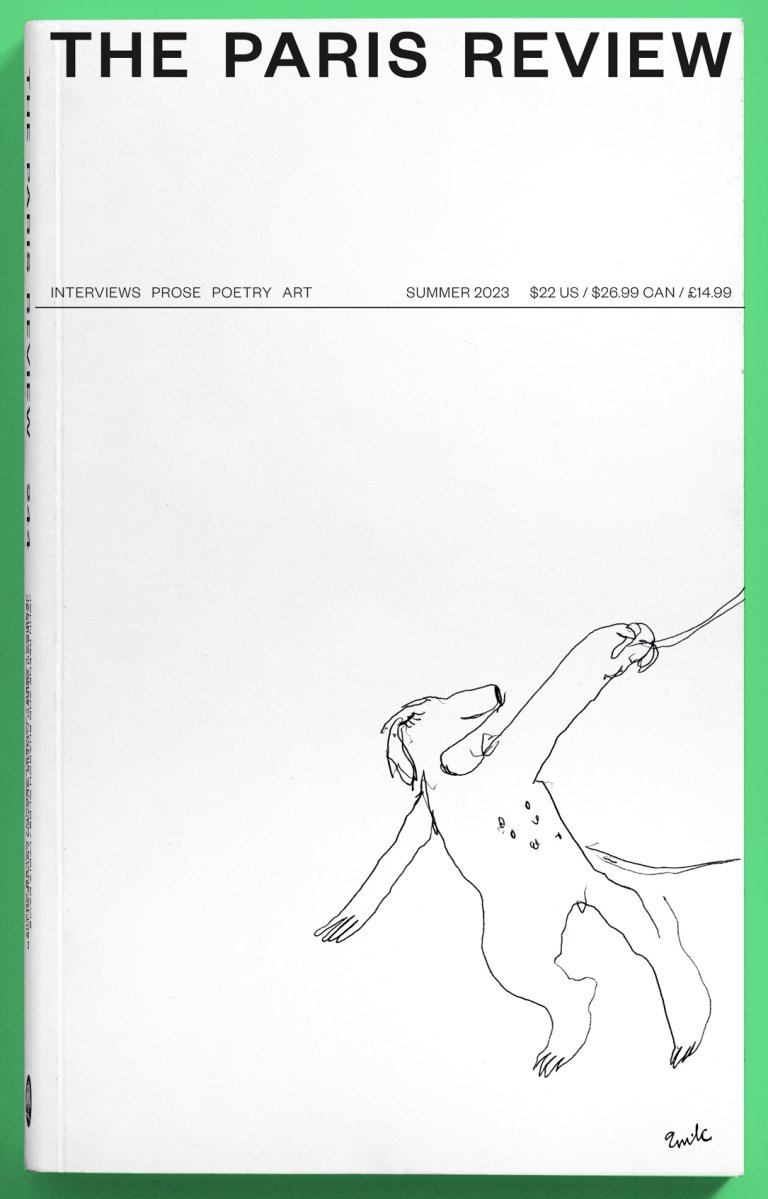
Literary Preview: The Paris Review – Summer 2023

Image

The Paris Review – Summer 2023 Issue: The  Review  take an especial pleasure, as readers, in the diary form: that peculiar mixture of performance and unwitting self-revelation, of shapelessness and obsessive (occasionally deranged) selectivity; that sense of a narrative unfolding in real time, almost without the author’s permission. And while the Review doesn’t do themes, as we were putting together our new Summer issue, no. 244, it was hard not to notice our partiality peeking through.

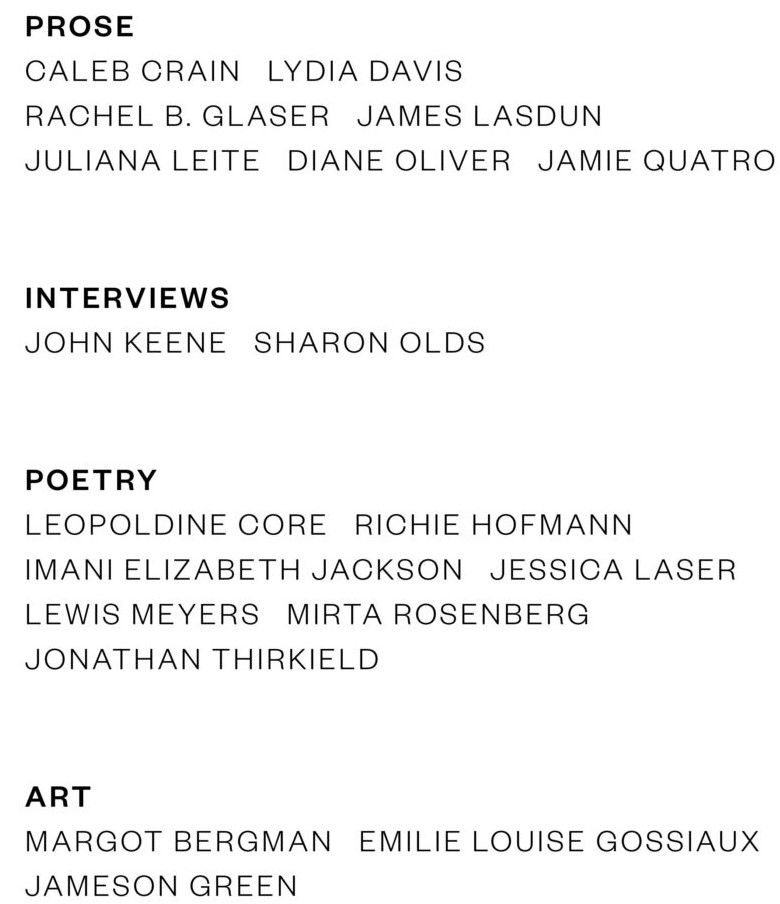
In the issue, Lydia Davis shares selections from her 1996 journal, and they often read like warm-up scales for her exquisitely off-kilter stories. (“For lunch—a huge potato and a glass of milk.”) You’ll also find masterful uses of the diary as a fictional device. The Brazilian writer Juliana Leite’s “My Good Friend,” translated by Zoë Perry, is an elderly widow’s apparently unremarkable Sunday-evening entry—“About the roof repair, I have nothing new to report”—that turns into a story of mostly unspoken decadeslong love. And James Lasdun’s “Helen” features excerpts from the journal of a woman who lives in what the narrator describes as a “state of incandescent, almost spiritual horror,” and whose crippling self-consciousness doesn’t protect her from humiliations the reader can see coming.

Also in issue no. 244, John Keene, in an Art of Fiction interview with Aaron Robertson, describes how blogging heralded his recovery as a writer after losing drafts of several of the stories that eventually became Counternarratives. And Sharon Olds, in an Art of Poetry interview, tells Jessica Laser about the need to keep one’s art and biography separate, especially when they are clearly not. Keeping a diary might be therapeutic, Olds explains, but “writing a poem to understand yourself better would be like making a cup with no clay, or maybe like having the clay but not making the cup.” She concludes, “If I had to choose between a poem being therapeutic and it being a better poem, I’d want it to be a better poem.”
Literary Preview: The Paris Review – Spring 2023

Image

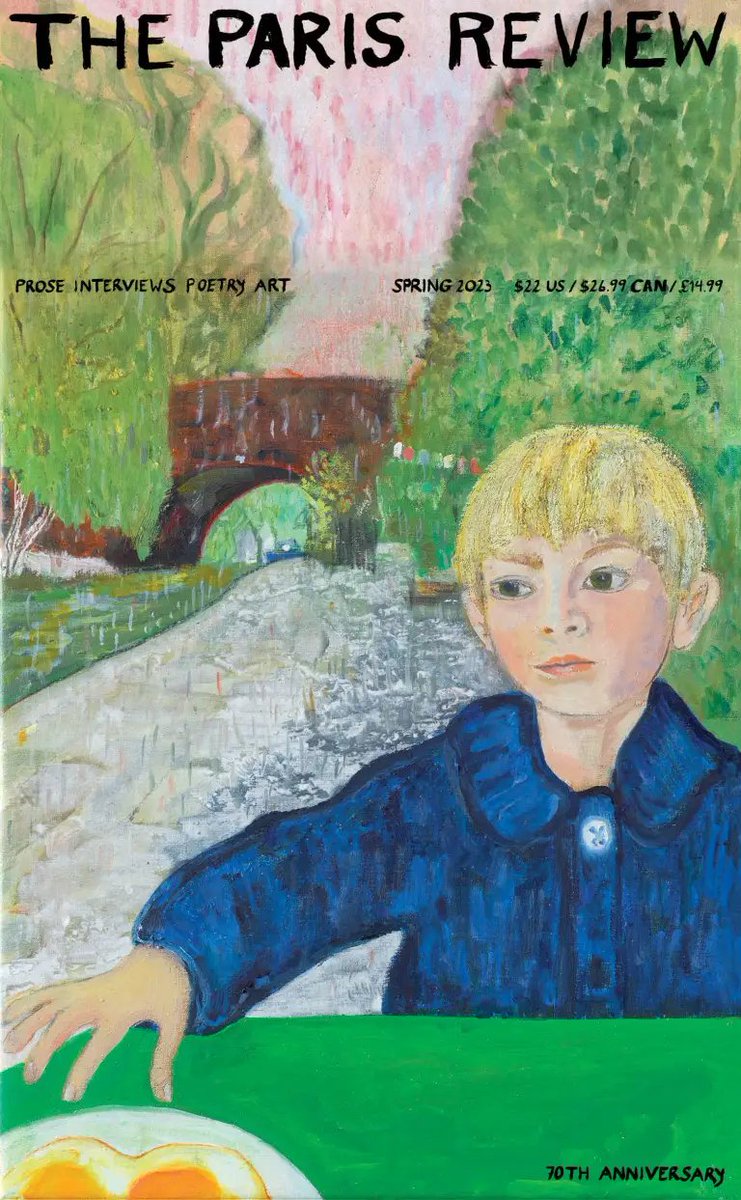
The Paris Review – Spring 2023 Issue:

Camus’s New York Diary, 1946

March 1946. Albert Camus has just spent two weeks at sea on the SS Oregon, a cargo ship transporting passengers from Le Havre to New York City. He’s made several friends during this transatlantic passage. 

The Blk Mind Is a Continuous Mind

In his poem “After Avery R. Young,” the Pulitzer Prize–winning poet Jericho Brown writes, “The blk mind / Is a continuous mind.” These lines emerge for me as a guiding principle—as a mantra, even—when I consider the work of Black poetry in America, which insists upon the centrality of Black lives to the human story, and offers the terms of memory, music, conscience, and imagination that serve to counteract the many erasures and distortions riddling the prevailing narrative of Black life in this country.

Season of Grapes

As I was going to enter college that fall my parents felt that I should build myself up at a summer camp of some sort. They sent me down to a place in the Ozarks on a beautiful lake. It was called a camp but it was not just for boys. It was for both sexes and all ages. It was a rustic, comfortable place. But I was disappointed to find that most of the young people went to another camp several miles down the lake toward the dam. I spent a great deal of time by myself that summer, which is hardly good for a boy of seventeen.

Literary Magazines: The Paris Review – Winter 2021