
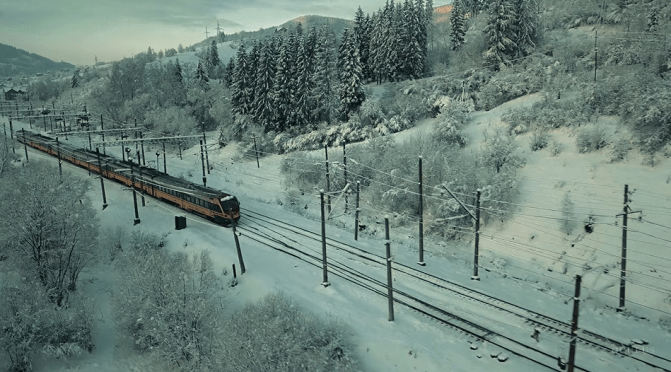
Winter landscapes from around the world.
Tag Archives: Oculus Films

Cinematic Travel: Streets & Colors Of India (4K UHD)
India, officially the Republic of India, is a country in South Asia. It is the seventh-largest country by area, the second-most populous country, and the most populous democracy in the world.
@Oculus Films presents incredible India cinematography 4k film 60fps travel video shot on Blackmagic Pocket Cinema Camera 4K BMPCC4K and various other best cinema cameras showcasing Indians’ lifestyles, India street tour, slum areas of India, festivals of India for example Indian Holi, colors of India, Indian streets and streets’ lives, Indian villages, Indian cultures, Indian railway, India vegetable and meat markets, Indian kids, India time lapses and many more.
Video timeline: 0:00 Starts 0:06 India Shores and Beaches 0:29 India Railways and Streets’ Lifestyles 0:43 India Vegetables Markets 0:59 India Meat Markets 1:08 India Holi Festival 1:36 India Tarpa Music Instrument 1:49 Indian Lifestyles 2:28 India Factories and Mills 2:58 Indian Classic Dance 3:19 Indian Kids 3:35 Indian Village Lifestyle 4:30 Indian Street and India Streets’ Lifestyles and Indian Families 5:35 Colors of India ( Indian Festivals and Indian Religious Events ) 5:49 India Roads and India Time lapse

Aerial Views: Mountains & Lakes Of Switzerland (4K)
Switzerland is a mountainous Central European country, home to numerous lakes, villages and the high peaks of the Alps. Its cities contain medieval quarters, with landmarks like capital Bern’s Zytglogge clock tower and Lucerne’s wooden chapel bridge. The country is also known for its ski resorts and hiking trails. Banking and finance are key industries, and Swiss watches and chocolate are world renowned.

Aerial Views: ‘Icebreakers & Ships’ Of The Arctic (4K)
The Icebreaker and ships in Artic, cinematic drone footage in 4K by Oculus Films.
The Arctic is a polar region located at the northernmost part of Earth. The Arctic consists of the Arctic Ocean, adjacent seas, and parts of Alaska (United States), Canada, Finland, Greenland (Denmark), Iceland, Norway, Russia, and Sweden. Land within the Arctic region has seasonally varying snow and ice cover, with predominantly treeless permafrost (permanently frozen underground ice) containing tundra. Arctic seas contain seasonal sea ice in many places.
The Arctic region is a unique area among Earth’s ecosystems. The cultures in the region and the Arctic indigenous peoples have adapted to its cold and extreme conditions. Life in the Arctic includes zooplankton and phytoplankton, fish and marine mammals, birds, land animals, plants and human societies. Arctic land is bordered by the subarctic.
The Arctic Ocean is the smallest and shallowest of the world’s five major oceans. It spans an area of approximately 14,060,000 km² and is also known as the coldest of all the oceans. The International Hydrographic Organization (IHO) recognizes it as an ocean, although some oceanographers call it the Arctic Mediterranean Sea. It is sometimes classified as an estuary of the Atlantic Ocean, and it is also seen as the northernmost part of the all-encompassing World Ocean. The Arctic Ocean includes the North Pole region in the middle of the Northern Hemisphere, and extends south to about 60°N.
The Arctic Ocean is surrounded by Eurasia and North America, and the borders follow topographic features; the Bering Strait on the Pacific side, and the Greenland Scotland Ridge on the Atlantic side. It is mostly covered by sea ice throughout the year and almost completely in winter. The Arctic Ocean’s surface temperature and salinity vary seasonally as the ice cover melts and freezes; its salinity is the lowest on average of the five major oceans, due to low evaporation, heavy fresh water inflow from rivers and streams, and limited connection and outflow to surrounding oceanic waters with higher salinities. The summer shrinking of the ice has been quoted at 50%.
The US National Snow and Ice Data Center (NSIDC) uses satellite data to provide a daily record of Arctic sea ice cover and the rate of melting compared to an average period and specific past years, showing a continuous decline in sea ice extent. In September 2012, the Arctic ice extent reached a new record minimum. Compared to the average extent (1979-2000), the sea ice had diminished by 49%. An icebreaker is a special-purpose ship or boat designed to move and navigate through ice-covered waters, and provide safe waterways for other boats and ships. Although the term usually refers to ice-breaking ships, it may also refer to smaller vessels, such as the icebreaking boats that were once used on the canals of the United Kingdom.
For a ship to be considered an icebreaker, it requires three traits most normal ships lack: a strengthened hull, an ice-clearing shape, and the power to push through sea ice. Icebreakers clear paths by pushing straight into frozen-over water or pack ice. The bending strength of sea ice is low enough that the ice breaks usually without noticeable change in the vessel’s trim. In cases of very thick ice, an icebreaker can drive its bow onto the ice to break it under the weight of the ship.
A buildup of broken ice in front of a ship can slow it down much more than the breaking of the ice itself, so icebreakers have a specially designed hull to direct the broken ice around or under the vessel. The external components of the ship’s propulsion system (propellers, propeller shafts, etc.) are at greater risk of damage than the vessel’s hull, so the ability of an icebreaker to propel itself onto the ice, break it, and clear the debris from its path successfully is essential for its safety.
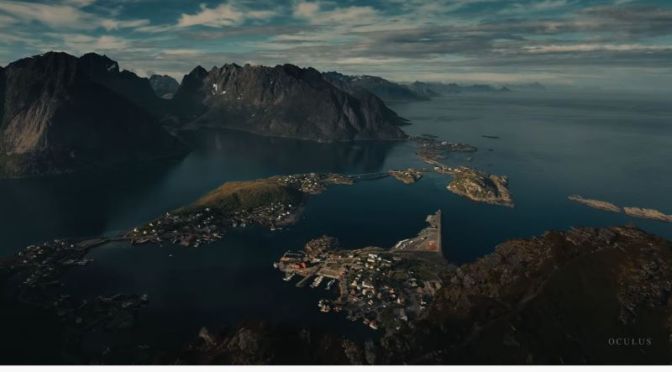
Aerial Travel: ‘Norway – Land Of Vikings’ (Video)
Explore the land of Vikings ‘Norway’ in this 4K cinematic travel film by Oculus Films.
Vikings were the seafaring Norse people from southern Scandinavia (present-day Denmark, Norway and Sweden)[who from the late 8th to late 11th centuries raided, pirated, traded and settled throughout parts of Europe, and explored westward to Iceland, Greenland, and Vinland. In the countries they raided and settled, the period is known as the Viking Age, and the term ‘Viking’ also commonly includes the inhabitants of the Norse homelands. The Vikings had a profound impact on the early medieval history of Scandinavia, the British Isles, France, Estonia, Kievan Rus’ and Sicily.
Norway is a Scandinavian country encompassing mountains, glaciers and deep coastal fjords. Oslo, the capital, is a city of green spaces and museums. Preserved 9th-century Viking ships are displayed at Oslo’s Viking Ship Museum. Bergen, with colorful wooden houses, is the starting point for cruises to the dramatic Sognefjord. Norway is also known for fishing, hiking and skiing, notably at Lillehammer’s Olympic resort.
 Boomers Daily