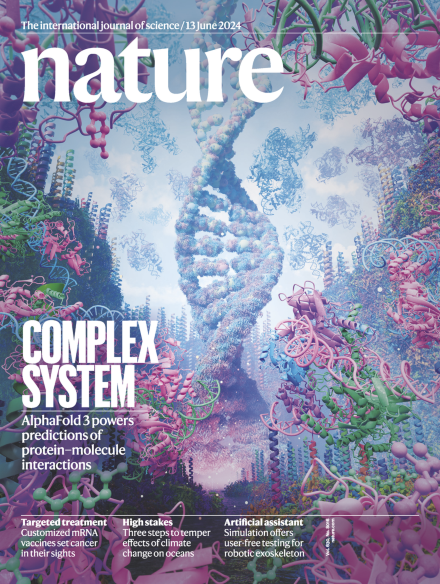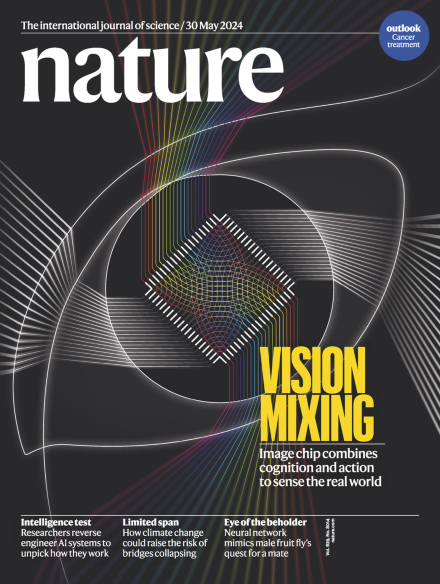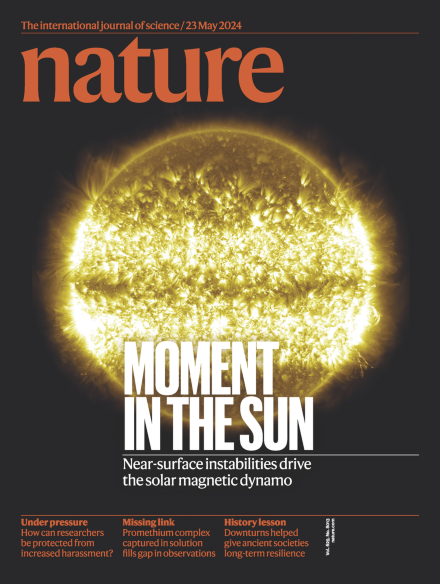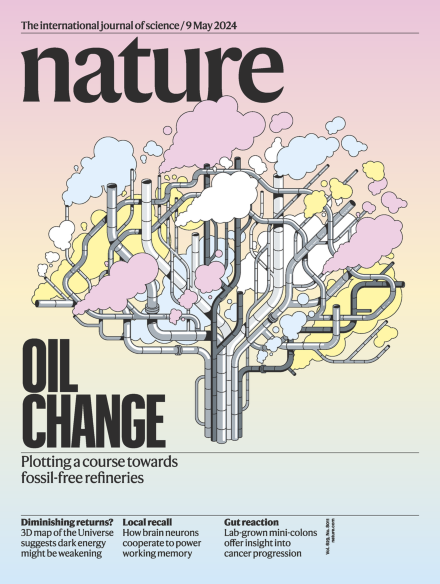
From extreme cold to strong magnets and high pressures, the Synergetic Extreme Condition User Facility (SECUF) provides conditions for researching potential wonder materials
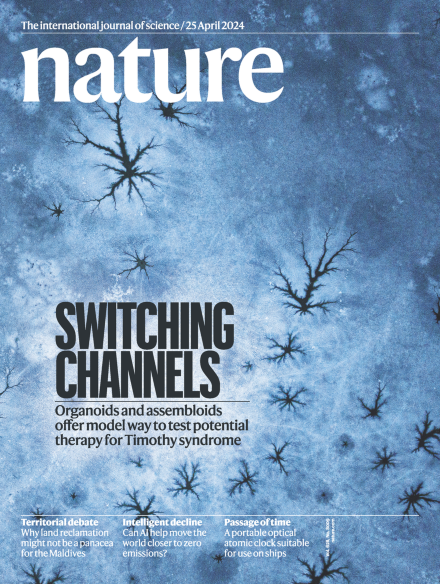
‘Nature Magazine – April 24, 2024: The latest issue cover features‘ Switching Channels’ – Organoids and assembloids offer model way to test potential therapy for Timothy syndrome…
The bioengineered immune players called CAR T cells last longer and work better if pumped up with a large dose of a protein that makes them resemble stem cells.
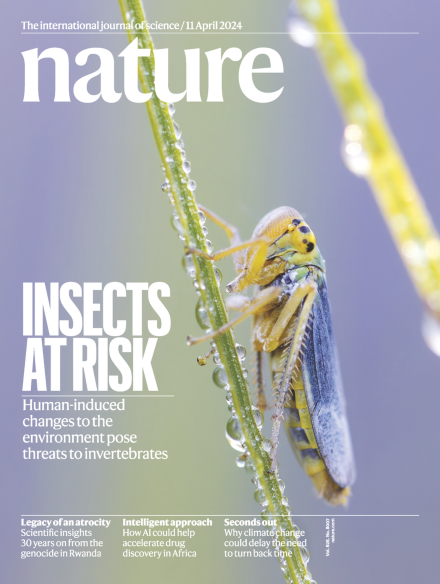
Nature Magazine – April 11, 2024: The latest issue cover features the environmental challenges now facing insect populations, with climate change emerging as a key factor whose influence has potentially been underestimated…
Verbose robots, and why some people love Bach: Books in Brief
Vision Impairment
Michael Crossland UCL Press (2024)
On a typical day in his clinic, London-based optometrist Michael Crossland assesses both young children and centenarians with low vision. Severe vision impairment affects 350 million people around the world, many of whom in poorer countries lack access to any eye care. His fascinating, sometimes moving, account — mixing ophthalmology with the stories of his patients and many others — reveals that life with vision impairment can be “just as rich and rewarding as life with 20/20 vision”.
Literary Theory for Robots
Dennis Yi Tenen W. W. Norton (2024)
Artificial intelligence (AI) is rooted in the humanities, argues Dennis Yi Tenen, a comparative-literature professor and former Microsoft engineer. Chatbots are trained using electronic versions of tools such as “dictionaries, style guides, schemas, story plotters [and] thesauruses” that were historically part of the collective activity of writing. Indeed, a statistical model called the Markov chain, crucial to AI, arose from an analysis of vowel distribution in poems by Alexander Pushkin. Tenen’s cogitation is a witty, if challenging, read.
The Last of Its Kind
Gísli Pálsson Princeton Univ. Press (2024)
Living species could never become extinct, thought naturalist Carl Linnaeus. Charles Darwin disagreed, saying extinction was a natural process. Then ornithologists John Wolley and Alfred Newton began studying great auks, flightless birds living on remote islands in the North Atlantic Ocean. They visited Iceland in 1858 to see great auks, but instead met locals who described killing off the birds — revealing how humans could extinguish a species. Anthropologist Gísli Pálsson tells the engaging story of this “key intellectual leap”.
All Mapped Out
Mike Duggan Reaktion (2024)
Cultural geographer Mike Duggan works in partnership with the UK national mapping agency, Ordnance Survey, to study everyday digital-mapping practices. Important as it is, digital mapping is not superseding analogue maps, he observes in his global history of cartography, which begins with Palaeolithic carvings. Sales of Ordnance Survey paper maps are rising, perhaps because of their convenience. “Although digital maps are improving constantly in accuracy and design, they do not always live up to those promises.”
The Neuroscience of Bach’s Music
Eric Altschuler Academic (2024)
Physician and neuroscientist Eric Altschuler regards J. S. Bach as the greatest composer ever, as do many others. Altschuler’s pioneering study — illustrated with numerous musical examples — aims to show how Bach-centred neuroscience “can help us better appreciate perceptual and cognitive affects in Bach” and create better performances of the composer’s work. It also teaches us how music perception is not localized to one region of the brain but occurs throughout it, and varies from person to person.
Nature Magazine – March 13, 2024: The latest issue cover features ‘Burning Question’ – How drought conditions are driving overnight fires in North America…
The de-extinction company Colossal is the first to convert elephant cells to an embryonic state, but using them to make mammoths won’t be easy, say researchers.
Nature Magazine – March 6, 2024: The latest issue cover features ‘Flood Warning’ – Sinking land and rising sea pose increased threat to US coastal cities.…