
Tag Archives: Medieval

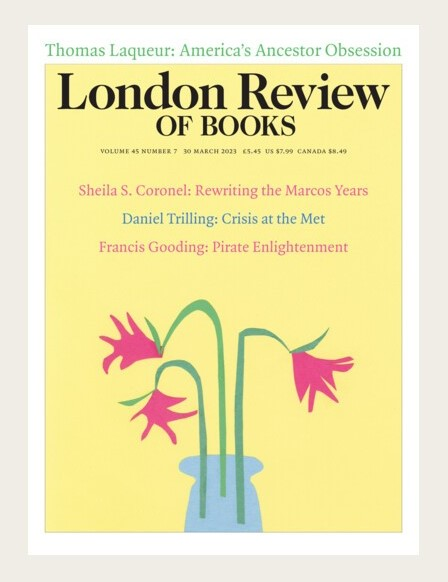
Preview: London Review Of Books – March 30, 2023

Image

London Review of Books (LRB) – March 30, 2023 issue:

The Pocahontas Exception

A Nation of Descendants: Politics and the Practice of Genealogy in US History by Francesca Morgan.

In A Nation of Descendants: Politics and the Practice of Genealogy in U.S. History (University of North Carolina Press, 2021), historian Francesca Morgan tracks Americans’ obsession with tracing family ancestry. Morgan sheds light on the evolution of genealogical knowledge from the early republic to the present day. Although our New Books Network conversation concentrates on African Americans, in her text, she looks explicitly at how Anglo-American white, Mormon, Jewish, African American, and Native American people wrestled with locating and documenting their kin and ultimately shaped the practice of genealogy. A Nation of Descendants also explores the transformation of genealogical practices as it becomes commercialized and commodified.

When Thieves Retire

Pirate Enlightenment, or the Real Libertalia by David Graeber

Pirate Enlightenment, or the Real Libertalia

Pirates have long lived in the realm of romance and fantasy, symbolizing risk, lawlessness, and radical visions of freedom. But at the root of this mythology is a rich history of pirate societies―vibrant, imaginative experiments in self-governance and alternative social formations at the edges of the European empire.
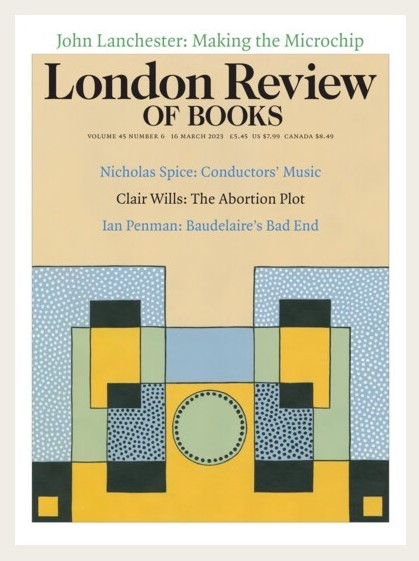
Preview: London Review Of Books – March 16, 2023

Image

London Review of Books (LRB) – March 16, 2023 issue:

Libel Tourism

Defamation isn’t the only legal threat to investigative journalism. Data protection and privacy laws are increasingly used as alternatives to a libel claim. Unlike a defamation writ, which claimants generally have only a year to file, data protection and privacy actions can be taken up to six years after publication, and there is no defence of truth.

Medieval Selfhood

Medieval Christians understood themselves to be interconnected to an extent that would surprise many people today, at least in Western cultures. Their minds and hearts were legible to other people as well as to God and the devil, and they saw themselves as vulnerable to interference from human and supernatural forces, to both good and bad ends.

Revolutionary Portraiture

The majority of women artists who exhibited at the Salon in the revolutionary period had never before shown their work in public. During the 1790s and early 1800s, several of them submitted self-portraits or portraits of other women artists, presenting, implicitly, an idea of the female painter as both a subject for portraiture and a professional in her own right.