Tag Archives: Literary History

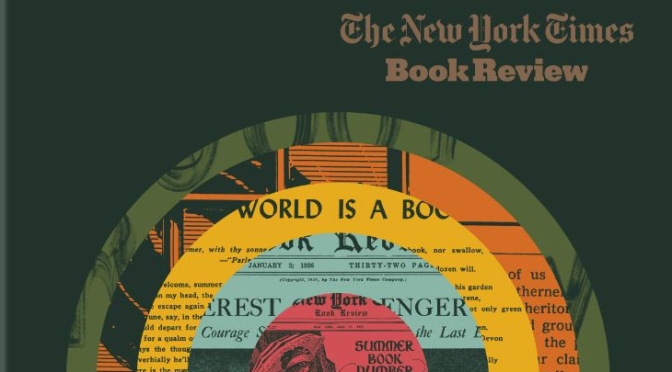
Preview: ‘The New York Times Book Review – 125 Years Of Literary History’

ABOUT THE NEW YORK TIMES BOOK REVIEW

From the longest-running, most influential book review in America, here is its best, funniest, strangest, and most memorable coverage over the past 125 years.

Since its first issue on October 10, 1896, The New York Times Book Review has brought the world of ideas to the reading public. It is the publication where authors have been made, and where readers first encountered the classics that have enriched their lives.
 
Now the editors have curated the Book Review’s dynamic 125-year history, which is essentially the story of modern American letters. Brimming with remarkable reportage and photography, this beautiful book collects interesting reviews, never-before-heard anecdotes about famous writers, and spicy letter exchanges. Here are the first takes on novels we now consider masterpieces, including a long-forgotten pan of Anne of Green Gables and a rave of Mrs. Dalloway, along with reviews and essays by Langston Hughes, Eudora Welty, James Baldwin, Nora Ephron, and more.
 
With scores of stunning vintage photographs, many of them sourced from the Times’s own archive, readers will discover how literary tastes have shifted through the years—and how the Book Review’s coverage has shaped so much of what we read today.
Views: France Honors 150th Anniversary Of Marcel Proust’s Birth

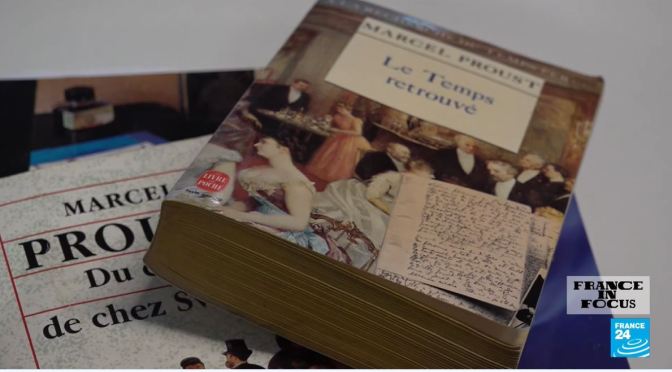
#France is marking the 150th anniversary of the birth of famed #novelist Marcel #Proust. He penned much of his greatest work, the seven-volume saga “In Search of Lost Time”, along the shores of Cabourg, in Normandy. Under the fictional name of Balbec, the town was put on the literary map. To find out more about Cabourg’s Proustian legacy, and Proust’s short but hugely influential career, we take you to The Villa of Time Found, whose immersive exhibit takes visitors on a sensory trip back in time. 

Literature: “Shakespeare And Company” Digitizes Reading Library Of Joyce, Hemingway & De Beauvoir

Shakespeare and Company lending library cards

Shakespeare And CompanyGertrude SteinJames JoyceErnest HemingwayAimé CésaireSimone de BeauvoirJacques LacanWalter Benjamin.

What do these writers have in common? They were all members of the Shakespeare and Company lending library.

In 1919, an American woman named Sylvia Beach opened Shakespeare and Company, an English-language bookshop and lending library in Paris. Almost immediately, it became the home away from home for a community of expatriate writers and artists now known as the Lost Generation. In 1922, she published James Joyce’s Ulysses under the Shakespeare and Company imprint, a feat that made her—and her bookshop and lending library—famous around the world. In the 1930s, she increasingly catered to French intellectuals, supplying English-language publications from the recently rediscovered Moby Dick to the latest issues of The New Yorker. In 1941, she preemptively closed Shakespeare and Company after refusing to sell her last copy of Joyce’s Finnegans Wake to a Nazi officer.

The Shakespeare and Company Project uses sources from the Beach Papers at Princeton University to reveal what the lending library members read and where they lived. The Project is a work-in-progress, but you can begin to explore now. Search and browse the lending library members and books. Read about joining the lending library. Download a preliminary export of Project data. In the coming months, check back for new features and essays.

Website