SCIENCE MAGAZINE VIDEOS – JUNE 6, 2023: Some of the most notable lakes in the world, from the Great Salt Lake to Poyang Lake, have shrunk dramatically in recent decades. But because most lakes lack long-term, on-the-ground measurements, it was hard to say whether this was a widespread phenomenon.
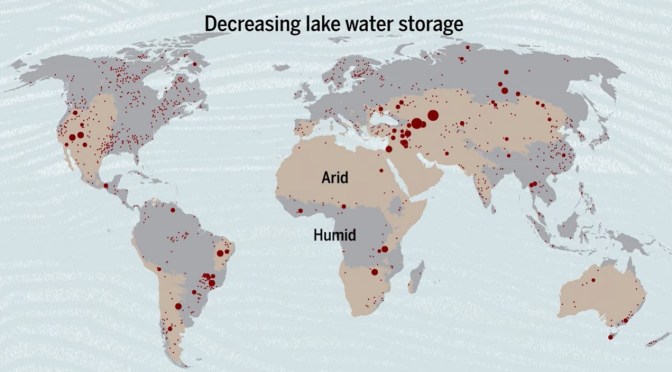
Now, researchers have published a first-of-its-kind data set to look at how lake water storage has changed in nearly 2000 of the world’s largest lakes. They find significant global losses and tease out what might be driving these decreases.
Science Magazine – May 19, 2023 issue: More than half of the world’s largest lakes have declined over the past three decades. Human water consumption, warming climate, and sedimentation are largely responsible. Lake Powell, shown here, with its once-submerged walls that now appear as whitened surfaces, exemplifies this drying trend.
Cloning vigorous crops, and finding the first romantic kiss First up this week, building resilience into crops. Staff Writer Erik Stokstad joins host Sarah Crespi to discuss all the tricks farmers use now to make resilient hybrid crops of rice or wheat and how genetically engineering hybrid crop plants to clone themselves may be the next step. After that we ask: When did we start kissing? Troels Pank Arbøll is an assistant professor of Assyriology in the department of cross-cultural and regional studies at the University of Copenhagen. He and Sarah chat about the earliest evidence for kissing—romantic style—and why it is unlikely that such kisses had a single place or time of origin.




 Boomers Daily