
See the step-by-step process of making a gold diamond ring – from the sketching of the design and cutting of the diamond, all the way to the final polishing.
Find out more about our Jewellery Collection: https://www.vam.ac.uk/collections/jew…

See the step-by-step process of making a gold diamond ring – from the sketching of the design and cutting of the diamond, all the way to the final polishing.
Find out more about our Jewellery Collection: https://www.vam.ac.uk/collections/jew…
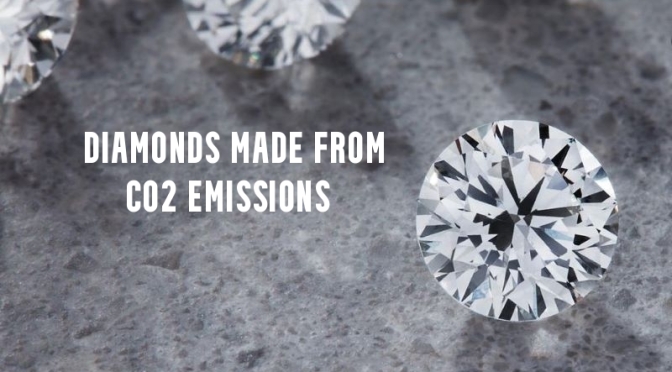
A UK company named Skydiamond hopes to revolutionize the traditional diamond mining industry by using carbon capture technology to do just that. The company calls it a ‘zero-impact diamond’ because the process pulls carbon dioxide right out of the air.
Although, a diamond traps only a modest amount of carbon — one carat contains just 200 milligrams. Pure carbon can take many forms — it all depends on how the atoms are arranged. Graphite is arranged into multiple layers, graphene in a single layer, and if it’s rolled-up, it forms carbon nanotubes. But when each carbon forms 4 strong bonds in a tetrahedral structure, it becomes a diamond.
Most natural diamonds were formed over a billion years ago, more than 120 kilometers beneath the Earth’s surface. This is where intense temperature and pressure cause carbon atoms to strongly bond together and arrange into crystal structures. Volcanic eruptions bring these crystals embedded in magma to the surface. When the magma cools, it hardens in long vertical shafts called kimberlite pipes. And these pipes are what’s sought after in the mining industry.
 This week, researchers make diamonds tough, and evidence of incest in a 5,000 year old tomb.
In this episode:
00:51 Tough versus hard
Diamonds are famed for their hardness, but they are not so resistant to fracture. Now, researchers have toughened up diamonds, which could open up new industrial applications. Research Article: Yue et al.
06:07 Research Highlights
A spacecraft helps physicists work out the lifespan of a neutron, and the icy hideaway of an endangered whale. Research Highlight: The vanishing-neutron mystery might be cracked by a robot in outer space; Research Highlight: A secluded icy fortress shelters rare whales
08:33 Ancient inbreeding
Analysis of the genomes of humans buried in an ancient Irish tomb has uncovered many surprises, including evidence of incest amongst the elite. Research Article: Cassidy et al.; News and Views: Incest uncovered at the elite prehistoric Newgrange monument in Ireland
21:13 #ShutdownSTEM
Nature reporter Nidhi Subbaraman joins us to talk about the #ShutdownSTEM movement, and anti-black racism in academia. Editorial: Note from the editors: Nature joins #ShutDownSTEM; News: Grieving and frustrated: Black scientists call out racism in the wake of police killings; News: Thousands of scientists worldwide to go on strike for Black lives; News: How #BlackInTheIvory put a spotlight on racism in academia

 Boomers Daily