

The village of Galliano di Mugello, in Tuscany, is a little more tranquil than many Italian towns, because it has no mobile service. But it’s not alone, as Italy ranks near the bottom of the European Commission’s index of digital competitiveness. Correspondent Seth Doane pays a call to a medieval town whose residents face challenges fostered by the “digital divide.”
Tag Archives: Cell Phones
Investigation: Why The Emergency ‘911 System’ Is Broken’ (CNBC Video)
More than 80% of calls to 911 come from a cellphone and often from a high-rise. But the over 5,000 locally run 911 centers, or public safety answering points (PSAP) aren’t easily able to track those callers. Fixing the system could save more than 10,000 lives and $97 billion per year according to the FCC.
Major companies like Apple, Google, Motorola and startups like RapidSOS have tried to fill the technology gap, but so far, that’s not enough. Watch the video to understand the conundrum of a large and fragmented national system that is run and funded locally, and how the federal government may be its only hope for a complete overhaul. “We’re talking about diversity of equipment connecting across these IP networks in a very complex manner,” said Capt. Mel Maier of the Oakland County Sheriff’s Office in Michigan.
“And if there are proprietary interfaces anywhere in between there, they’re not going to be able to talk. … Our technology is continually trying to catch up and playing catch up.” A number of companies including Apple, Motorola and start-ups are trying to fill the technology gap. RapidSOS is a data integration platform that has been adopted free of charge in about 4,800 PSAPs. According to the company, it covers about 92% of the country and assists in 150 million emergencies per year.
“We’re just scratching the surface of the amount of data that we could be using,” said Michael Martin, CEO of RapidSOS. “We’re passing precise location for most 911 calls now. But you can imagine all the capabilities, like in a fire if your building could talk or if your device could detect a heart attack and immediately transmit that through.” According to Maier, who is also chairman of the Public Safety Next Generation 9-1-1 Coalition, the tech industry can’t do it on its own.
He says carriers also have a responsibility, especially when it comes to addressing the altitude problem. But in the end, he says, the federal government is needed. He’s hoping Congress will pass legislation for $15 billion toward a complete overhaul. In July, a $1.5 trillion infrastructure bill that included $12 billion toward 911 passed the House but stalled in the Senate.
Cell Phones: ‘Why Plans & Bills Are So Costly’ (Video)
The average American spent $1,218 for cell phone service in 2019. That comes out to just over $100 per month. Check out the video to find out why you may be paying so much for your phone service and what you can do to save some money.
Health Studies: “Head and Neck Injuries Associated With Cell Phone Use”
From a
 Cell phone–related injuries to the head and neck have increased steeply over the recent 20-year period, with many cases resulting from distraction. Although the disposition of most cases is simple, some injuries bear a risk of long-term complications. Many of these injuries occurred among those aged 13 to 29 years and were associated with common activities, such as texting while walking. These findings suggest a need for patient education about injury prevention and the dangers of activity while using these devices.
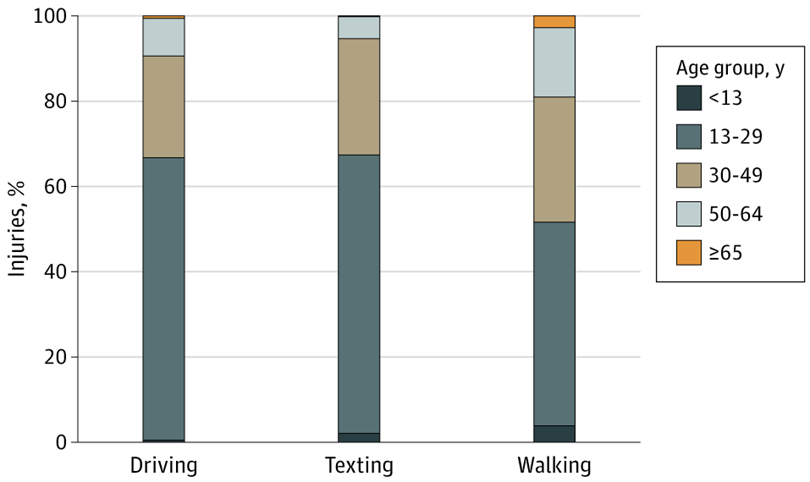
Since their invention, cell phones have played a major role in the daily lives of American adults. Approximately 96% of Americans own a cell phone, provoking interest in their role in causing injury. Given that head and neck traumas make up approximately 5% of emergency department (ED) visits in the United States, cell phone use in relation to such injuries could be of public health concern, in particular because of the psychological and financial burdens such injuries may entail. In addition, knowledge of the mechanism of injury is vital for patient risk stratification and trauma management,and understanding the mechanisms of common cell phone–related injuries can aid health care professionals in assessing patient needs. Health care professionals and public safety officials also must be aware of the epidemiologic nature of such injuries in order to provide adequate counseling and give input for legislation to protect the population.

History Of The Cell Phone: Motorola Beat Bell Labs To Engineer The First Wireless Phone In 1973
From an InterestingEngineering.com online article:
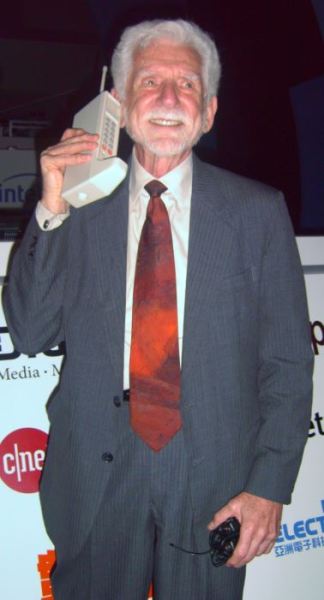
With encouragement from his boss, Motorola’s chief of portable communication products John Mitchell, Cooper and engineers at Motorola produced the working prototype for the first cell phone. On April 3, 1973, before stepping into a news conference in Manhattan to demonstrate the new device that would go on to revolutionize communications, Cooper placed the first cell phone call in history.
While cell phones are a fairly modern invention–if you consider 1973 ‘modern’–the idea of a telephone that could travel with you is as old as the telephone itself. For decades though, the best anyone could offer were bulky two-way radio devices that were essentially walkie-talkies that filled the trunk of your car, but a couple of key engineering developments and a classic American business rivalry would help lay the foundation for the device that revolutionized the way people communicate.
To read more click on the following link:
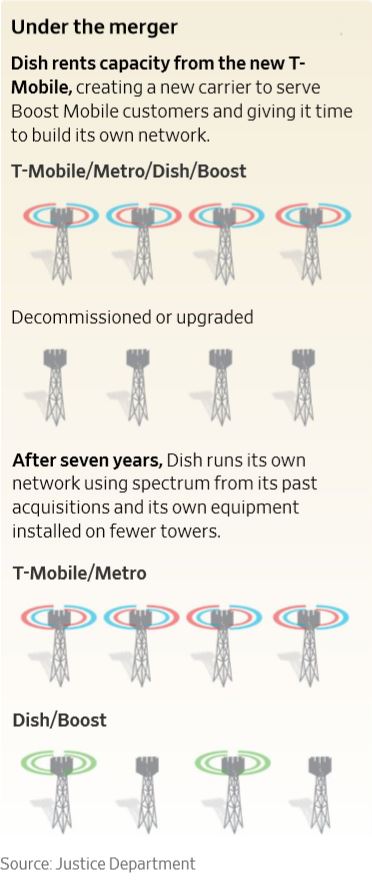
Technology Trends: Dish Network Founder To Create “Low Cost” Wireless Carrier Out Of T-Mobile / Sprint Merger
From a Wall Street Journal article by Drew FitzGerald:
 Mr. Ergen also argues wireless pricing is broken. He says U.S. carriers have many customers paying for unlimited data plans they don’t need, much as cable companies long forced subscribers to pay for big bundles of TV channels.
“This is deja vu all over again for us,” said Mr. Ergen. In wireless, he sees an opportunity for Dish to woo customers that use less data with lower monthly prices and those that are heavy data users with plans that don’t slow their connections.
Charlie Ergen has long tried to muscle his way into the U.S. wireless business. When his rivals had no other choice, the billionaire behind Dish Network Corp. finally got his way.
John Legere, the chief executive of T-Mobile US Inc., called Mr. Ergen in late May after it became clear T-Mobile’s proposed takeover of Sprint Corp. was in trouble.
To read more click on the following link: https://www.wsj.com/articles/a-tv-maverick-is-going-all-in-on-a-new-wireless-bet-11564200000
 Boomers Daily