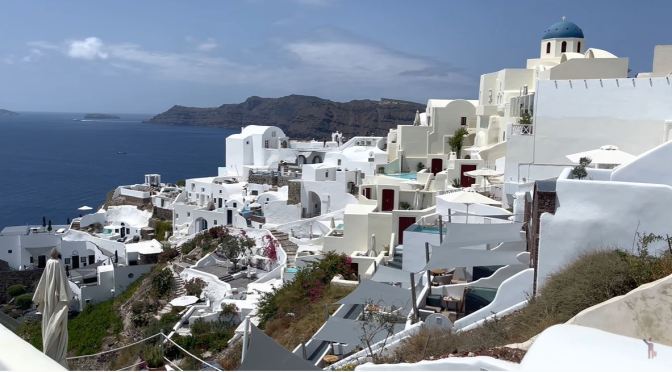
The power of the volcanic island of Santorini creates an energy that overwhelms the senses. Exquisite luxury, amazing food and wine and the unforgettable Santorini sunset are just the start of what this legendary Greek island in the Cyclades offers visitors.
Santorini is one of the Cyclades islands in the Aegean Sea. It was devastated by a volcanic eruption in the 16th century BC, forever shaping its rugged landscape. The whitewashed, cubiform houses of its 2 principal towns, Fira and Oia, cling to cliffs above an underwater caldera (crater). They overlook the sea, small islands to the west and beaches made up of black, red and white lava pebbles.
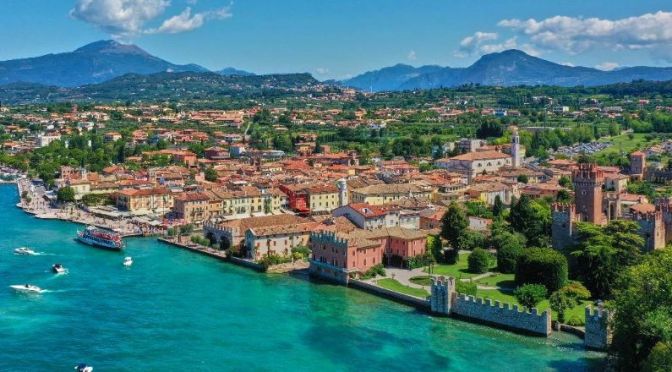
Lazise is a comune in the Province of Verona in the Italian region Veneto, located about 120 kilometres west of Venice and about 20 kilometres northwest of Verona. It is situated on the eastern shore of Lake Garda. As of 31 December 2004, it had a population of 6,213 and an area of 65.0 square kilometres.
Lake Garda, in northern Italy, is known for its crystal clear water. At the south end, the town of Sirmione is dominated by the Rocca Scaligera, a fortress with harbor views. The nearby Grotte di Catullo archaeological site includes a Roman villa. On the lake’s western shore, in Gardone Riviera, is Il Vittoriale degli Italiani, former home of poet d’Annunzio. The Dolomites frame Riva del Garda, a resort in the north.
A walking tour in 𝗣𝗼𝗹𝗶𝗴𝗻𝗮𝗻𝗼 𝗮 𝗠𝗮𝗿𝗲, region 𝗣𝘂𝗴𝗹𝗶𝗮, south of Italy, a town of about 18.000 inhabitants, the town of Domenico Modugno and rich in ancient history.
Video timeline: 0:00 – [Drone intro] 3:05 – [Arch Marchesale and 16th century painting of Christ☀️] 4:30 – [Piazza Miani Perotti] 5:40 – [Piazza Vittorio Emanuele II – main square] 6:30 – [Brief History of Polignano☀️] 11:00 – […walking in the maze of narrow streets…] 12:31 – [Panoramic view on the sea] 17:30 – [Panoramic view on Lama Monachile beach] 18:00 – […walking in the maze of narrow streets…] 30:16 – [Panoramic view on the sea] 1:02:22 – [Via Roma] 1:03:53 – [Piazza Garibaldi] 1:06:33 – [Lama Monachile beach / Red Bull Cliff Diving spot☀️] 1:07:20 – [Via San Vito] 1:11:07 – [Domenico Modugno statue] 1:12:00 – [Pietra piatta (flat stone) area] 1:14:30 – […Going back to town…] 1:21:50 – [Piazza Aldo Moro☀️] 1:24:30 – [Via Matteotti] 1:26:30 – [Via Tritone] 1:28:00 – [Passeggiata on the panoramic alley near the sea at Largo Ardito]
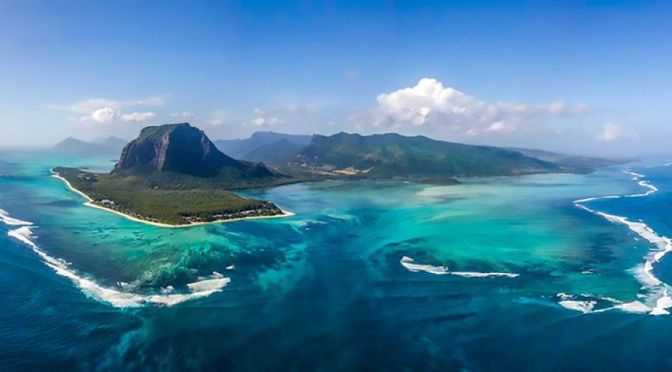
In this clip you can see all famous sights and spots like Le Morne World Heritage Site, Île aux Benitiers, Notre-Dame Auxiliatrice de Cap Malheureux, Trou d’Eau Douce with its beautiful bay and Pier, the Tropical Attitude Hotel, Melville beach, Résidence Le Maho, all the beautiful bays, ports, land tongues and so much more…
Mauritius, an Indian Ocean island nation, is known for its beaches, lagoons and reefs. The mountainous interior includes Black River Gorges National Park, with rainforests, waterfalls, hiking trails and wildlife like the flying fox. Capital Port Louis has sites such as the Champs de Mars horse track, Eureka plantation house and 18th-century Sir Seewoosagur Ramgoolam Botanical Gardens.
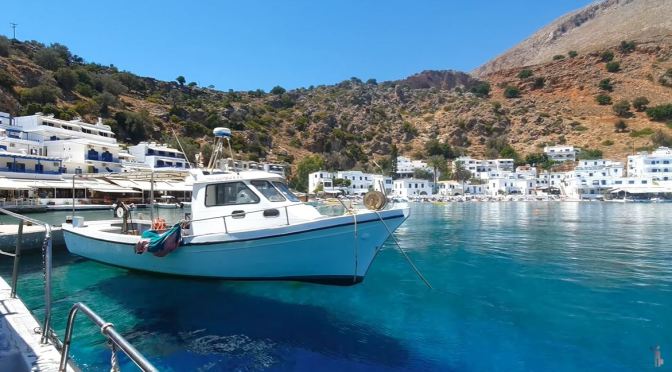
Loutro lies on the south coast of Chania regional unit in west Crete, between Chora Sfakion and Agia Roumeli, the exit to the Samaria Gorge. The whole area is known as Sfakia. The village got its name from the Greek word for “bath,” for the many ancient baths found in the area.
Loutro is such an incredibly soporific place, where there’s absolutely nothing ( … almost ) to do but eat, drink and laze – and where you fast lose any desire to do anything else. There are hundreds of people who walk down the Samaria Gorge each day in the summer. After a drink at one of the tavernas in Agia Roumeli where the gorge opens to the sea and perhaps enjoying a swim, most board the ferry taking them to Chora Sfakia (Sfakia). There, waiting for buses transport the aching crowds back to Chania. On the way, the ferry calls in at Loutro, and many vow to visit it one day – few do so! Loutro is peaceful – it is small and feels like a village even if 95% of the people here in the summer are visitors. It takes less than five minutes to amble from one side of the bay from Sifis Hotel & Maestrali Bar (Vangelis’), past Daskalogiannis Hotel, the tavernas, mini-market, the Blue House, the pebble beach, Hotel Porto Loutro, Notos, “Fat Stav’s”, a couple more tavernas and then Keramos rooms and fish taverna. This is a magic place to relax, swim, read, write your own book in western Crete, Sfakia region. Don’t forget the church, second mini-market, and a few other buildings – more rooms including perched-on-the-hillside Villa Niki – that’s it! Loutro evokes some great emotion – produced perhaps by the unique combination of the steep, harsh, rock mountainsides – audibly decorated with the clinking of goat bells – the sun visibly changing the panorama in view as its ark lights different aspects of the slopes forming the bowl – the bay that houses Loutro, the often-warm sea, the history, and the people. This magic place. No road leads here – therefore no mopeds, cars, and trucks disturb contemplation, conversation, and consumption of food or drink. A port of shelter for St Paul we hear, and one of the best shelters from a stormy workplace or busy professional life. Small, stunningly beautiful – no nightlife or discos, just a multinational, multi-everything group of visitors staying in its closely grouped buildings. During the day even when all rooms are full, Loutro can be almost empty – many have gone to sauté gently on nearby beaches, or tackle books, strolls, walks, and – let’s be serious – hikes. You are left to act as your own custodian of the semi-circular bay, with a small pebble beach, edged with the hotel, domatia, and waterside tavernas. So gaze at the ruins on the hilltop, measure the approaching ferry, decide whether to read a few pages more, walk over the hill to the taverna of Phoenix, or plot your ascent to Anopolis a thousand meters above…it’s up to you. Time passes. Loutro village was named after the baths (Loutro or Loutra) found in the area, and from which water was directed to nearby Anopoli Village. Loutro also served as the port of ancient Anopoli. Later it became the winter time port of the town of Sfakia, due to the fact that the enclosed bay and the small island at its entrance create a natural harbor where ships can be safe even in very bad weather conditions. Mountains rear straight up from the sea deep wooded gorges, ravines, and valleys, stand proud, and act as a magnet to the eye and the imagination. The Sfakia region has been the site of heroic deeds, ancient civilizations, and constant intrigue for thousands of years, and the home of brave tough people made so by their labors on the land and their experiences. Really Loutro is a place to let days flow by as they will. When you meet people who are poetic utterances appeal – converse, when striding rocky paths is the urge – proceed, when the water beckons – shout back / get in; eat and relax. You shouldn’t come here expecting entertainment – the reward is being in Loutro and listening to what your heart desires…
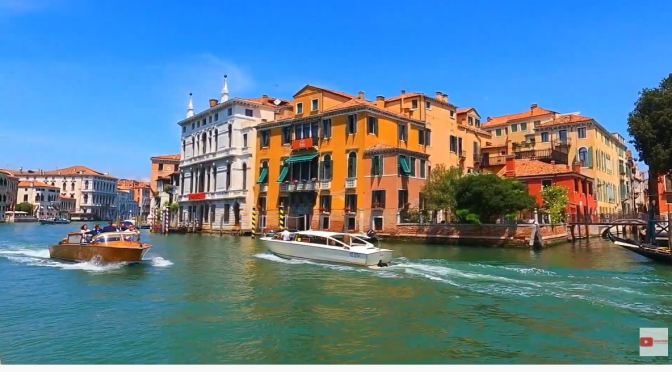
1.- The 4 Bridges Crossing the Canal Grande in Venice: Ponte de Rialto, Ponte dell’Accademia, Ponte degli Scalzi, Ponte della Costituzione. 2.- Most famouse attraction along the Grand Canal: St Mark Square, Doge Palace, Santa Maria della Salute Church, Peggy Guggenheim Colletion (Ca’ Venier dei Leoni), Palazzo Corner della Ca’ Grande, Ponte dell’Accademia and the Academy of Fine Arts, Ca’ Rezzonico, Ca’ Foscari, Rialto Bridge, Fondaco dei Tedeschi, Ca’ da Mosto, Fish Market, Ca’ d’Oro, Ca’ Pesaro, Fondamenta Turchi and the Natural History Museum, Constitution Bridge.
Video timeline: 00:00 St. Mark and Doge Palace from Grand Canal 01:50 First stop S. Marco (Line 1 vaporetto) 02:33 Punta della Dogana and Santa Maria della Salute Church 03:43 Hotel Bauer 5 stars 03:57 Palazzo Treves 04:08 Santa Maria della Salute Church 04:38 Palazzo Contarini Fasan 07:31 The Gritti Palace Hotel 5 stars 09:20 Palazzo Corner della Ca’ Granda 09:40 Casina delle Rose 10:13 Palazzi Barbaro 10:17 Palazzo Cavalli-Franchetti 10:24 Accademia bridge 13:15 Palazzo Malipiero 19:28 S. Angelo vaporetto 24:58 Rialto vaporetto stop 26:43 T Fondaco dei Tedeschi by DFS 31:15 Ca’ D’Oro vaporetto stop 34:51 Casino’ Venice 37:47 Church of san geremia 40:27 Ponte degli Scalzi 40:48 Ferrovia vaporetto stop 42:28 Traun station “Santa Lucia” 43:29 Ponte della Costituzione
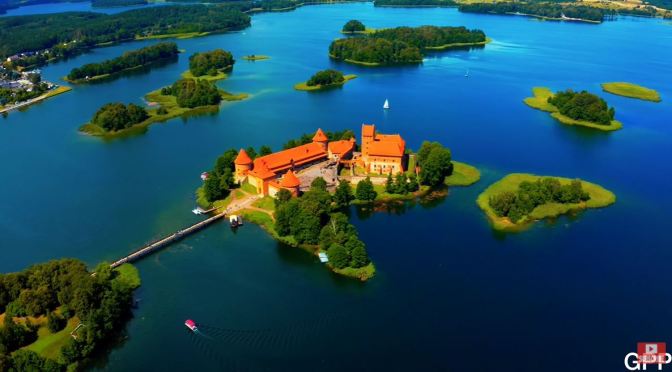
Lithuania, officially the Republic of Lithuania, is a country in the Baltic region of Europe.[a] It is one of the Baltic states and lies on the eastern shore of the Baltic Sea to the southeast of Sweden and the east of Denmark, with Latvia to the north, Belarus to the east and south, Poland to the south, and Kaliningrad Oblast of Russia to the southwest. Lithuania covers an area of 65,300 km2 (25,200 sq mi), with a population of 2.7 million. Its capital and largest city is Vilnius; other major cities are Kaunas and Klaipėda. Lithuanians belong to the ethno-linguistic group of the Balts and speak Lithuanian, one of only a few living Baltic languages.
Alberobello is a town in Italy’s Apulia region. It’s known for its trulli, whitewashed stone huts with conical roofs. The hilltop Rione Monti district has hundreds of them. The 18th-century Trullo Sovrano is a 2-level trulli. Furniture and tools at the Museo del Territorio Casa Pezzolla re-create life in the trulli as it was centuries ago. Southwest of town is the Casa Rossa, a WWII internment camp.
Dürnstein is a small town on the Danube river in the Krems-Land district, in the Austrian state of Lower Austria. It is one of the most-visited tourist destinations in the Wachau region and also a well-known wine growing area.
News, Views and Reviews For The Intellectually Curious





 Boomers Daily