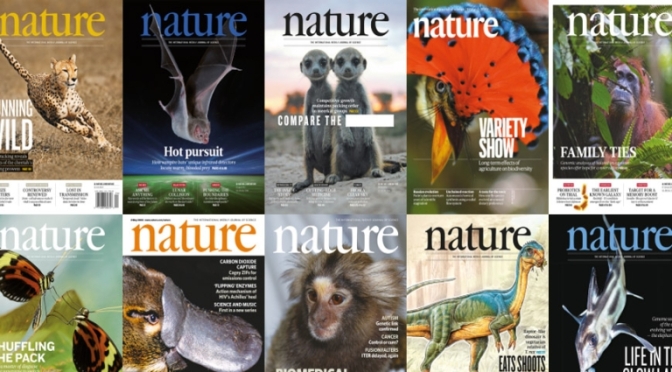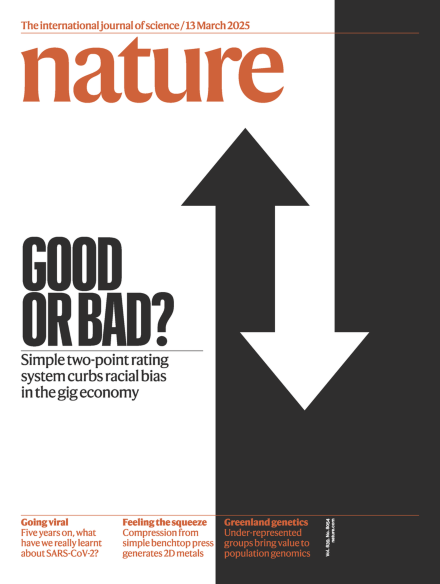
NATURE MAGAZINE (March 12, 2025): The latest issue features ‘Good Or Bad?’ – Simple two-point rating system curbs racial bias in the gig economy.
The presence of a pattern called a sleep spindle helps to predict which people will recover from an unresponsive state.
A network of two polymers plus sulfuric acid allows a hydrogel to keep its elasticity and softness at extreme temperatures.
Clay figurines found on top of the remnants of a pyramid in what is now El Salvador might have been used in public ceremonies.
Analysis of satellite imagery of the Brazilian Amazon, the Congo Basin and New Guinea helps to show that ‘secondary’ roads take an outsized toll.
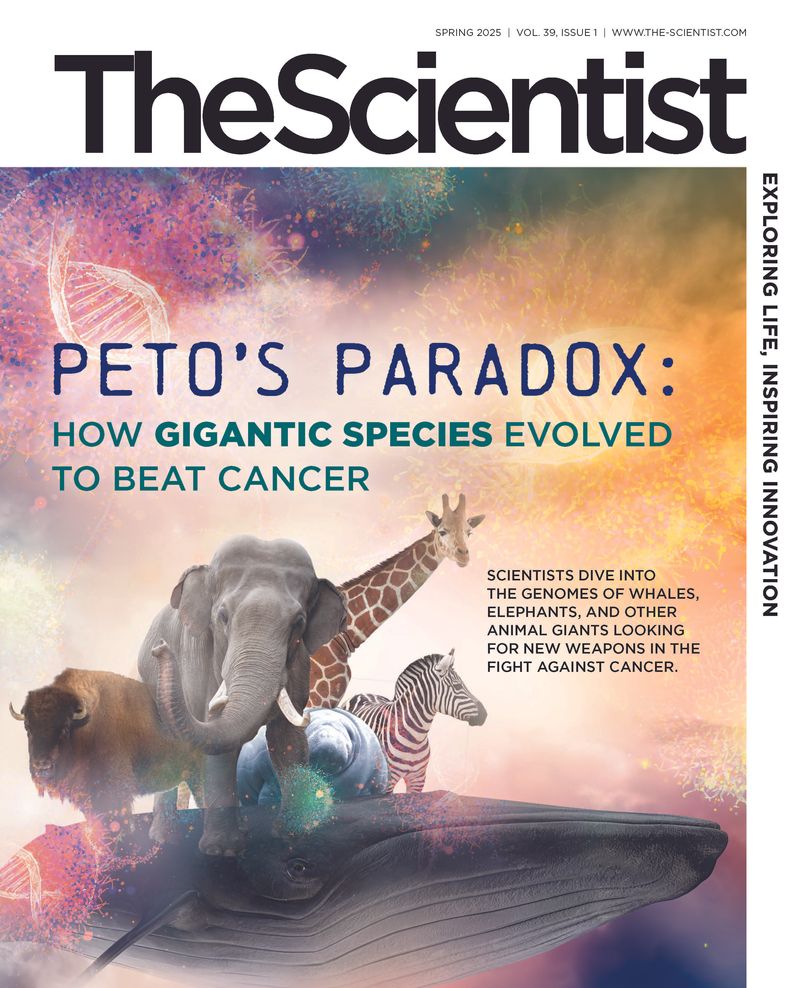
THE SCIENTIST MAGAZINE (March 12, 2025): The latest issue features ‘Peto’s Paradox’ – How gigantic species evolved to beat cancer…
Scientists dive into the genomes of whales, elephants, and other animal giants looking for new weapons in the fight against cancer.
Every DNA fragment tells a story. Forensic experts use these genetic breadcrumbs to solve old mysteries and modern crimes.
Younger individuals are developing colorectal cancer earlier in life compared to older generations, and scientists don’t know why.
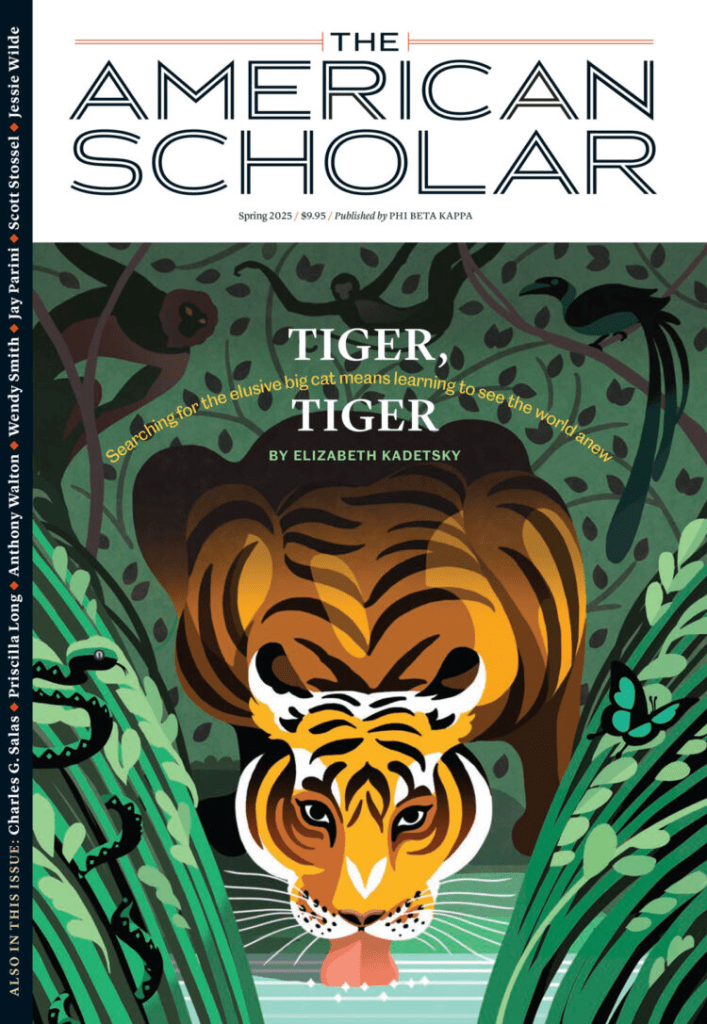
THE AMERICAN SCHOLAR (March 8, 2025): The latest issue features ‘Tiger, Tiger’ – Searching for the elusive big cat means learning to see the world anew…
At a forest preserve in India, a writer sees the world anew and learns how to focus her son’s restless mind By Elizabeth Kadetsky
The scientists and engineers who defend our planet day and night from potentially hazardous space rocks By Jessie Wilde
Echoes from the ancient conflicts between Hannibal’s city and Rome continue to reverberate well into the present By Charles G. Salas
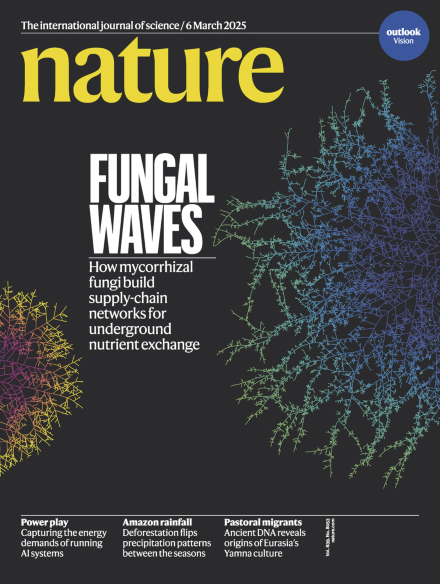
NATURE MAGAZINE (March 5, 2025): The latest issue features ‘Fungal Waves’ – How mycorrhizal fungi build supply-chain networks for underground nutrient exchange…
Granite from the chunk of Earth’s crust called the Lhasa terrane did not come from India, as had previously been thought, but from much further afield.
The James Webb Space Telescope uncovered repeated flares from the supermassive object called Sagittarius A*.
The standard protective dose is almost 14,000 units, but even 500 units raises antibody levels sufficiently to do the job.
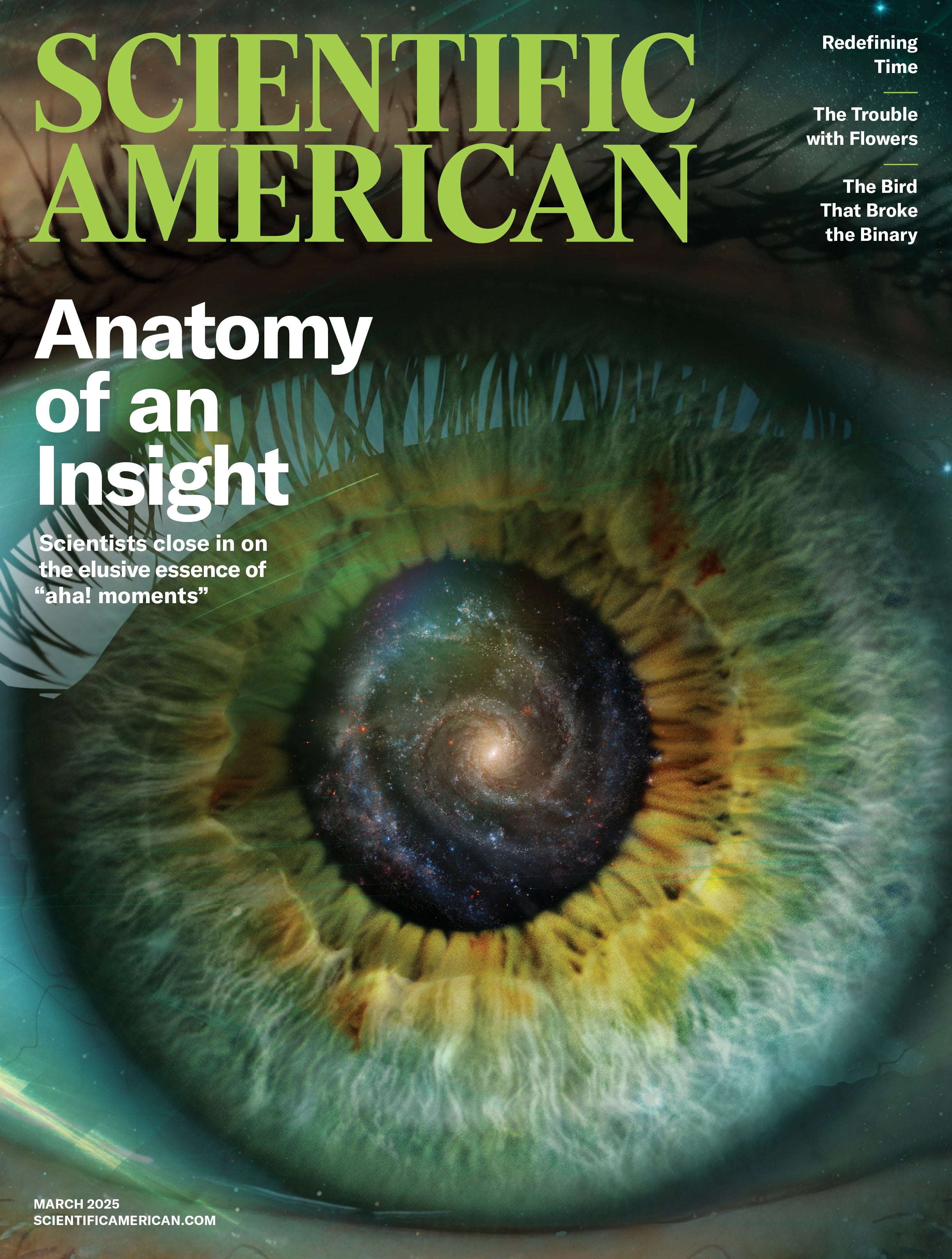
Scientific American Magazine (February 18, 2025):
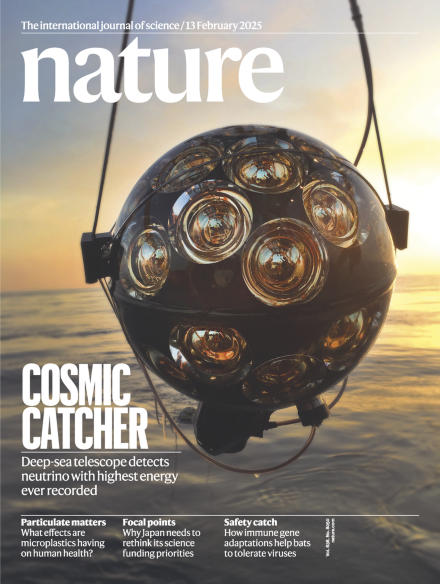
NATURE MAGAZINE (February 12, 2025): The latest issue features ‘Cosmic Catcher; – Deep sea telescope detects neutrino with highest energy ever recorded.
Process turns out eggs with delectable texture and high nutritional value.
The vaccines’ effect on inflammation-promoting cells might help to explain why the jabs protect against severe disease.
A Copper Age burial in Spain holds the largest collection of beads ever found ― enough to require a tonne of shellfish as raw material.
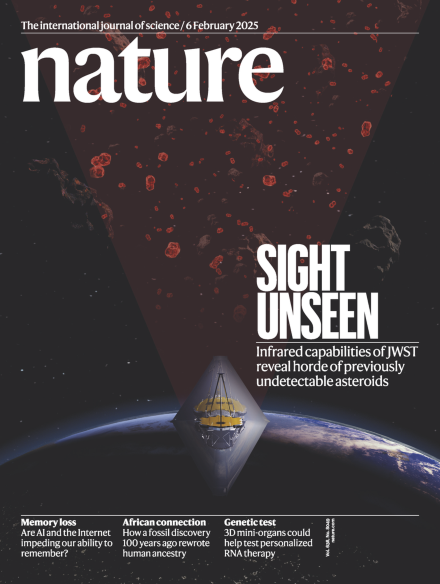
NATURE MAGAZINE (February 5, 2025): The latest issue features ‘Sight Unseen’ – Infrared capabilities of JWST reveal horde of previously undetectable asteroids…
Brain regions linked to the sense of smell in adults were activated in infants exposed to the odours of petrol, strawberry and more.
A flexible dart with a weighted tip can have 60% more kinetic energy than a rigid one, experiments show.
The large carnivores are spreading out of remote mountains and into areas settled by humans.
One of Jupiter’s biggest moons has the potential to harbour life in a subsurface sea. The nature of its core will provide information about that ocean.
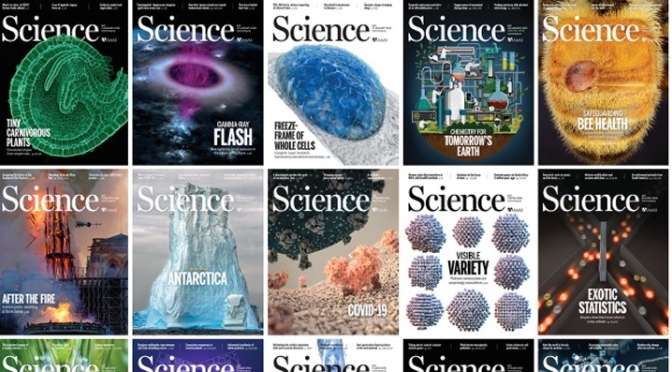
SCIENCE MAGAZINE (January 30, 2025): The latest issue features ‘Living With Tigers’ – Restoring a top predator across India…
Encouraging lab results bolster plans to harness a new kind of particle accelerator in x-ray sources
Surprise finding of few health payoffs complicates push to replace biomass fuel
Breakdown in collaboration leads many scientists to look to domestic projects—and to China
Even in some common species, the genetic variation key to resilience is slipping away
NATURE MAGAZINE (January 29, 2025): The latest issue features ‘Deposit Accopunt’ – How brine evaporation left sodium salts on the asteroid Bennu…
First estimate of its type shows that cultivated seaweed beds can accumulate as much carbon as some natural ecosys
Myostatin, which blocks muscle development, unexpectedly has an effect on ovulation in female mice.
Seeds, fruit stones and other remnants hidden in a Sydney barracks in the nineteenth century show residents’ deviation from the standard diet.
SCIENCE MAGAZINE (January 23, 2025): The latest issue features ‘Maniforld Males’ – Genetic orchestration of breeding morphs in ruffs…
Amid skepticism, companies bet that speed and innovation can realize fusion’s promise
Green hydrogen is key to decarbonizing the world. But the costly, finicky devices that make it need dramatic improvement
Survey-based studies linking diet patterns to health may be fatally flawed, paper suggests
Posts navigation
News, Views and Reviews For The Intellectually Curious