
Where Perseverance Meets Discovery
On the power of cathedral-building in science.
The Ice at the Far Ends of Earth
Researchers know the planet’s ice is melting; now, they are uncovering what that will mean for all of us.

On the power of cathedral-building in science.
Researchers know the planet’s ice is melting; now, they are uncovering what that will mean for all of us.
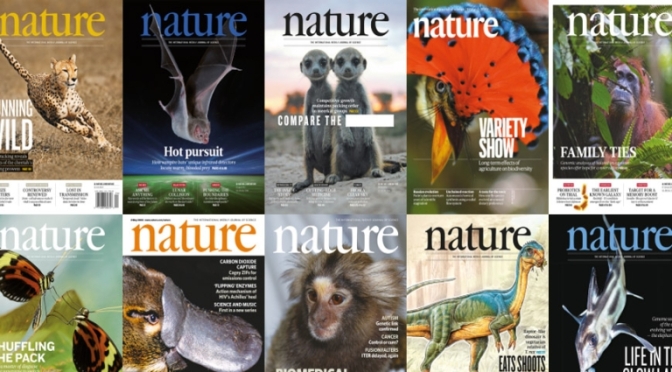
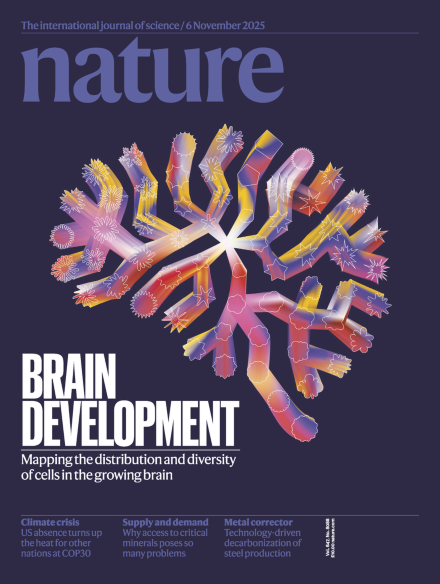
Biologically inspired electronic neurons could boost the efficiency of artificial-intelligence systems.
People who rack up most of their daily steps in walks lasting less than five minutes have a higher risk of cardiovascular disease than do those who amass their steps in big blocks.
Modelling shows how the infant Universe might have stayed warm and dense during its primoridal expansion.
The moisture emitted by forests travels across national borders to provide precipitation to far-away fields.

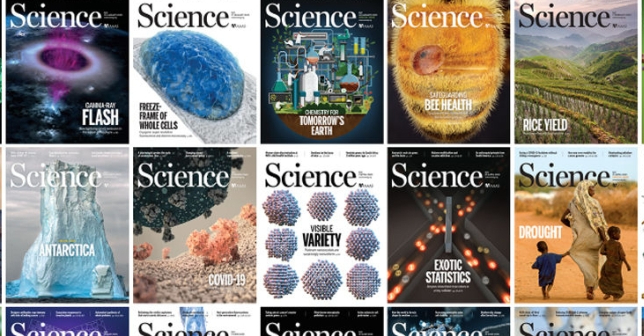
SCIENCE MAGAZINE: The latest issue features ‘Share My Good Mood’ – Positive affective contagion in bumble bees.
Mass distribution increases risk of antibiotic resistance, but benefits vanish when treatment is restricted to babies
Messenger RNA in the shots could act like a “siren” calling immune cells to destroy tumors
Nobel laureate develops new method of making regulatory T cells that could treat autoimmune conditions

SCIENCE MAGAZINE: The latest issue features ‘Advanced Nanoscopy’ – 3D rendering of photochemically sectioned brain tissue.
Museum specimens reveal loss of genetic diversity in marine fishes of the Philippines
“Bold” hypothesis suggests tolerance for lead allowed Homo sapiens to outlive Neanderthals
Spongelike materials called metal-organic frameworks can separate and store gases
Mass layoffs, and subsequent reversals, have added to research spending woes
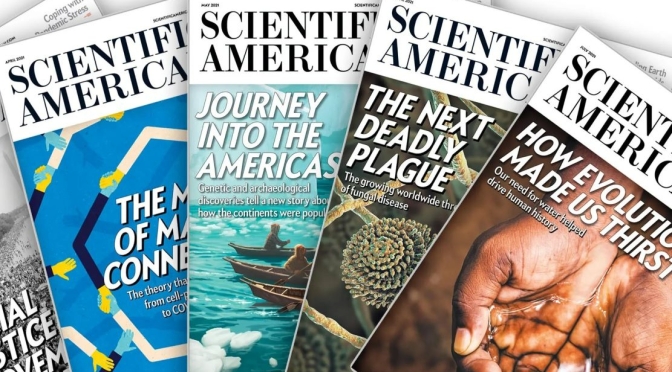
SCIENTIFIC AMERICAN MAGAZINE: The latest issue features ‘Life’s Big Bangs’ – Did complex life emerge more than once?
Controversial evidence hints that complex life might have emerged hundreds of millions of years earlier than previously thought—and possibly more than once
Your brain gets used to wrongdoing. It can also get used to doing good
Experts say the strongest scientific studies identify three compounds that fight disease and inflammation
How a space rock vanished from Africa and showed up for sale across an ocean

SCIENCE MAGAZINE: The latest issue features ‘Eclipsing the Sun’ – A unique cosmic event shows an influence of light on bird behavior.
Three scientists honored for revealing how regulatory T cells prevent autoimmune disease
Breakthrough paved the way to many of today’s budding quantum computers
High-power fiber lasers are used in a range of scientific fields in addition to their standard use for technology. However, increases in laser output power are limited by nonlinear effects that can damage the optical components and reduce the beam quality. Rothe et al. used a spatial wavefront-shaping technique for multimode fiber lasers that mitigates their detrimental processes, thus enabling output power to be increased appreciably while maintaining beam quality.
How an earthquake and a wasp led Charles Darwin to replace divine design with deep time—and why his heresy still defines modern thought.

By Michael Cummins, Editor, October 7, 2025
“There is grandeur in this view of life, with its several powers, having been originally breathed into a few forms or into one; and that, whilst this planet has gone cycling on according to the fixed law of gravity, from so simple a beginning endless forms most beautiful and most wonderful have been, and are being, evolved.”
— Charles Darwin, 1859
The ground still trembled when he reached the ridge. The 1835 Valdivia earthquake had torn through the Chilean coast like a buried god waking. The air smelled of salt and sulfur; the bay below heaved, ships pitching as if caught in thought. Charles Darwin stood among tilted stones and shattered ground, his boots pressing into the risen seabed where the ocean had once lain. Embedded in the rock were seashells—fossil scallops, their curves still delicate after millennia. He traced their outlines with his fingers—relics of a world that once thought time had a purpose. Patience, he realized, was a geological fact.
He wrote to his sister that night by lantern: “I never spent a more horrid night. The ground rocked like a ship at sea… it is a strange thing to stand on solid earth and feel it move beneath one’s feet.” Yet in that movement, he sensed something vaster than terror. The earth’s violence was not an event but a language. What it said was patient, law-bound, godless.
Until then, Darwin’s universe had been built on design. At Cambridge, he had studied William Paley’s Natural Theology, whose argument was simple and seductively complete: every watch implies a watchmaker. The perfection of an eye or a wing was proof enough of God’s benevolent intention. But Lyell’s Principles of Geology, which Darwin carried like scripture on the Beagle, told a different story. The world, Lyell wrote, was not shaped by miracles but by slow, uniform change—the steady grind of rivers, glaciers, and seas over inconceivable ages. Time itself was creative.
To read Lyell was to realize that if time was democratic, creation must be too. The unconformity between Genesis and geology was not just chronological; it was moral. One offered a quick, purposeful week; the other, an infinite, indifferent age. In the amoral continuum of deep time, design no longer had a throne. What the Bible described as a single act, the earth revealed as a process—a slow and unending becoming.
Darwin began to suspect that nature’s grandeur lay not in its perfection but in its persistence. Each fossil was a fragment of a patient argument: the earth was older, stranger, and more self-sufficient than revelation had allowed. The divine clockmaker had not vanished; he had simply been rendered redundant.
In the years that followed, he learned to think like the rocks he collected. His notebooks filled with sketches of strata, lines layered atop one another like sentences revised over decades. His writing itself became geological—each idea a sediment pressed upon the last. Lyell’s slow geology became Darwin’s slow epistemology: truth as accumulation, not epiphany.
Where religion offered revelation—a sudden, vertical descent of certainty—geology proposed something else: truth that moved horizontally, grinding forward one grain at a time. Uniformitarianism wasn’t merely a scientific principle; it was a metaphysical revolution. It replaced the divine hierarchy of time with a temporal democracy, where every moment mattered equally and no instant was sacred.
In this new order, there were no privileged events, no burning bushes, no first mornings. Time did not proceed toward redemption; it meandered, recursive, indifferent. Creation, like sediment, built itself not by command but by contact. For Darwin, this was the first great heresy: that patience could replace Providence.
Yet the deeper he studied life, the more its imperfections troubled him. The neat geometry of Paley’s watch gave way to the cluttered workshop of living forms. Nature, it seemed, was a bricoleur—a tinkerer, not a designer. He catalogued vestigial organs, rudimentary wings, useless bones: the pelvic remnants of snakes, the tailbone of man. Each was a ghost limb of belief, a leftover from a prior form that refused to disappear. Creation, he realized, did not begin anew with each species; it recycled its own mistakes.
The true cruelty was not malice, but indifference’s refusal of perfection. He grieved not for God, but for the elegance of a universe that could have been coherent. Even the ichneumon wasp—its larvae devouring live caterpillars from within—seemed a grotesque inversion of divine beauty. In his Notebook M, his handwriting small and furious, Darwin confessed: “I cannot persuade myself that a beneficent & omnipotent God would have designedly created the Ichneumonidae with the express intention of their feeding within the living bodies of Caterpillars.”
It was not blasphemy but bewilderment. The wasp revealed the fatal inefficiency of creation. Life was not moral; it was functional. The divine engineer had been replaced by a blind experimenter. The problem of evil had become the problem of inefficiency.
As his understanding deepened, Darwin made his most radical shift: from the perfection of species to the variation within them. He began to think in populations rather than forms. The transformation was seismic—a break not only from theology but from philosophy itself. Western thought since Plato had been built on the pursuit of the eidos—the ideal Form behind every imperfect copy. But to Darwin, the ideal was a mirage. The truth of life resided in its variations, in the messy cloud of difference that no archetype could contain.
He traded the eternal Platonic eidos for the empirical bell curve of survival. The species was not a fixed sculpture but a statistical swarm. The true finch, he realized, was not the archetype but the average.
When he returned from the Galápagos, he bred pigeons in his garden, tracing the arc of their beaks, the scatter of colors, the subtle inheritance of form. Watching them mate, he saw how selection—artificial or natural—could, over generations, carve novelty from accident. The sculptor was chance; the chisel, time. Variation was the new theology.
And yet, the transition was not triumph but loss. The world he uncovered was magnificent, but it no longer required meaning. He had stripped creation of its author and found in its place an economy of cause. The universe now ran on autopilot.
The heresy of evolution was not that it dethroned God, but that it rendered him unnecessary. Darwin’s law was not atheism but efficiency—a biological Ockham’s Razor. Among competing explanations for life, the simplest survived. The divine had not been banished; it had been shaved away by economy. Evolution was nature’s most elegant reduction: the minimum hypothesis for the maximum variety.
But the intellectual victory exacted a human toll. As his notebooks filled with diagrams, his body began to revolt. He suffered nausea, fainting, insomnia—an illness no doctor could name. His body seemed to echo the upheavals he described: geology turned inward, the slow, agonizing abrasion of certainty. Each tremor, each bout of sickness, was a rehearsal of the earth’s own restlessness.
At Down House, he wrote and rewrote On the Origin of Species in longhand, pacing the gravel path he called the Sandwalk, circling it in thought as in prayer. His wife Emma, devout and gentle, prayed for his soul as she watched him labor. Theirs was an unspoken dialogue between faith and doubt—the hymn and the hypothesis. If he feared her sorrow more than divine wrath, it was because her faith represented what his discovery had unmade: a world that cared.
His 20-year delay in publishing was not cowardice but compassion. He hesitated to unleash a world without a listener. What if humanity, freed from design, found only loneliness?
In the end, he published not a revelation but a ledger of patience. Origin reads less like prophecy than geology—paragraphs stacked like layers, evidence folded upon itself. He wrote with an ethic of time, each sentence a small act of restraint. He never claimed finality. He proposed a process.
To think like Darwin is to accept that knowledge is not possession but erosion: truth wears down certainty as rivers wear stone. His discovery was less about life than about time—the moral discipline of observation. The grandeur lay not in control but in waiting.
He had learned from the earth itself that revelation was overrated. The ground beneath him had already written the story of creation, slowly and without words. All he had done was translate it.
And yet, the modern world has inverted his lesson. Where Darwin embraced time as teacher, we treat it as an obstacle. We have made speed a virtue. Our machines have inherited his method but abandoned his ethic. They learn through iteration—variation, selection, persistence—but without awe, without waiting.
Evolution, Darwin showed, was blind and purposeless, yet it groped toward beings capable of wonder. Today’s algorithms pursue optimization with dazzling precision, bypassing both wonder and meaning entirely. We have automated the process while jettisoning its humility.
If Darwin had lived to see neural networks, he might have recognized their brilliance—but not their wisdom. He would have asked not what they predict, but what they miss: the silence between iterations, the humility of not knowing.
He taught that patience is not passivity but moral rigor—the willingness to endure uncertainty until the truth reveals itself in its own time. His slow empiricism was a kind of secular faith: to doubt, to record, to return. We, his heirs, have learned only to accelerate.
The worms he studied in his final years became his last philosophy. They moved blindly through soil, digesting history, turning waste into fertility. In their patience lay the quiet grandeur he had once sought in heaven. “It may be doubted whether there are many other animals,” he wrote, “which have played so important a part in the history of the world.”
If angels were symbols of transcendence, the worm was its antithesis—endurance without illusion. Between them lay the moral frontier of modernity: humility.
He left us with a final humility—that progress lies not in the answers we claim, but in the patience we bring to the questions that dissolve the self. The sound of those worms, still shifting in the dark soil beneath us, is the earth thinking—slowly, endlessly, without design.
THIS ESSAY WAS WRITTEN AND EDITED UTILIZING AI
How Hypatia of Alexandria’s murder marked the moment reason fell to zeal—and why her lesson still echoes in an age ruled by algorithms.

By Michael Cummins, Editor, October 5, 2025
In the waning light of Alexandria’s golden age, a woman stood at the threshold of the cosmos. Draped in the robes of a philosopher, Hypatia of Alexandria taught mathematics as if it were music, astronomy as if it were prayer, and philosophy as if it were the architecture of the soul. She wrote no manifestos and led no armies. She taught. She reasoned. And for this—for the audacity of clarity in a world turning toward dogma—she was torn from the world. Her death was not merely a murder; it was a cultural wound, a severing of the classical from the medieval, of inquiry from ideology. The light she guarded—the flickering flame of secular, public reason—was extinguished in the very place conceived to protect it.
To speak of Hypatia is to speak of a city that believed knowledge could civilize the human spirit. Alexandria, founded by Alexander and tended by the Ptolemies, was the ancient world’s neural network, an experiment in global curiosity. Within its Library and Museum—the first great research institute—scholars mapped the heavens, dissected geometry, and debated the soul’s immortality under vaulted ceilings that smelled of parchment and sea salt. It was in this monumental, decaying marble world that Hypatia was born, around 370 CE, to Theon, the Library’s last known scholar. Her father taught her what Euclid and Eratosthenes had discovered, but she learned what they had meant: that geometry was not sterile abstraction but a form of devotion, a way of approaching perfection through reason.
She inherited the lineage of the ancients—the serene logic of Euclid, the restless measurement of Eratosthenes, the astronomical audacity of Ptolemy—and fused them into something both rigorous and spiritual. In late antiquity, knowledge still shimmered with moral purpose. Neoplatonism, the philosophy she championed, held that all things emanated from a single divine source, and that the human mind could ascend toward it through contemplation and mathematics. Numbers were not quantities but metaphors of being; to trace a circle was to imitate eternity. For Hypatia, geometry was not an escape from the world but its transfiguration—each theorem a small proof of cosmic coherence. It was not rebellion but refinement, a path to God that required no priest—and therefore could not be permitted.
Her genius lay in making the abstract visible. She wrote commentaries on Diophantus’s Arithmetica, clarified Ptolemy’s Almagest, and edited Apollonius’s Conics, ensuring future astronomers could still plot the curves of planets and light. Yet her intellect was not confined to parchment. She improved the astrolabe, designed hydroscopes to measure fluid density, and demonstrated that science was not the enemy of spirituality but its instrument. In Hypatia’s hands, philosophy became a navigation system—an attempt to chart truth in a universe governed by reason.
Imagine her in the lecture hall: morning light slanting through the colonnade, dust motes rising like miniature stars. A semicircle of students—Greeks, Egyptians, Romans, Jews, Christians—sit cross-legged at her feet. “You see,” she tells one, “a circle is not only a form—it is an argument for eternity.” Another asks, “And where is the soul in all this?” She pauses, chalk in hand. “In the harmony,” she says, smiling. The air hums with the audacity of free exchange. In an age dividing along creeds, her classroom was a sanctuary of synthesis.
At night, when the city’s noise dimmed and the harbor lanterns shimmered against the water, she would walk the colonnade alone. The scrolls in her study carried the scent of dust and oil. She read by lamplight until her fingers grew black with soot. To her students, she was certainty incarnate; alone, she seemed to understand that clarity provokes envy—that serenity itself is a kind of heresy. Even the stars she charted seemed to dim slightly under the weight of her foresight.
Her authority rested not on birth or ordination but on rational mastery—an unsettling legitimacy that bypassed both patriarchs and priests. She was an unmarried woman commanding reverence in a public space. Her followers were loyal not to a doctrine but to the discipline of thought itself. That was her heresy.
By the early fifth century, the harmony she embodied had begun to collapse. Alexandria had become a city of sharpened edges: pagan temples shuttered, Jewish enclaves under siege, imperial statues toppled and replaced by crosses. The Roman Empire was disintegrating; in its vacuum rose new centers of power, most formidable among them the Church. Bishop Cyril, brilliant and autocratic, sought to consolidate both spiritual and civic control. The imperial prefect Orestes—Hypatia’s friend and intellectual peer—defended the older ideal of the secular city. Between them stood the philosopher, calm and unarmed, the last civil defense against clerical supremacy.
The city had become a mirror of the empire’s exhaustion. Pagan artisans carved crosses beside the fading faces of their old gods; traders whispered prices under the sound of sermons. In the streets, theology replaced law. Orestes issued decrees that no one obeyed; Cyril’s sermons moved armies. The parabalani patrolled the harbor, their tunics stained from tending the sick and, at times, from beating the unbeliever. What began as civic unrest curdled into ritual violence—not just a fight for power, but for the right to define what counted as truth.
The conflict between Hypatia and Cyril was more than political. It was metaphysical. She represented individual, discovered truth; he, collective, inherited truth. Her worldview required no mediator between human reason and the divine. His authority depended on the indispensability of mediation. To Cyril, Neoplatonism’s notion that one could approach God through geometry and contemplation was blasphemy—it made the soul its own priest. The Church could not tolerate such independence.
One March afternoon, the mob found her carriage. They dragged her through the streets to a church—irony as architecture. Inside, beneath mosaics of saints, they stripped her, flayed her with oyster shells, and burned what remained. Socrates Scholasticus, a Christian historian, wrote simply: “Such a deed brought great disgrace upon Cyril and the Church of Alexandria.” It was not a killing; it was an exorcism. By tearing her apart, they sought to purge the city of its final pagan ghost—the living remnant of Athens’ rational soul.
Orestes, her ally, could not avenge her. The Empire, hollowed by decay, turned away. Cyril triumphed, later sanctified as a saint. The rule of law yielded to the rule of zeal. And so, with Hypatia’s death, an epoch ended. The library’s embers cooled, the lamps of the Museum darkened, and Europe entered its long medieval night.
For nearly a thousand years she survived only as rumor. Then the Enlightenment rediscovered her. Gibbon saw in her death the moment “barbarism and religion triumphed.” Voltaire invoked her as evidence that superstition kills what it cannot comprehend. Hypatia’s revival became part of a broader reckoning—a rebellion against inherited authority. To Enlightenment thinkers, she was the prototype of their own project: the reclamation of reason from revelation.
To later feminists, she became something more. Her murder revealed a longer pattern—the way intellectual women are punished not for ignorance but for illumination. Mary Wollstonecraft read her story as an ancestral warning; Simone de Beauvoir as a prelude to every modern silencing of the female intellect. To them, Hypatia was not just the first martyr of reason but its first woman martyr—the proof that wisdom in a woman’s voice has always been political.
Even now, her image flickers at the edge of cultural memory: the philosopher as secular saint, the teacher as threat. She has become the emblem of every rational mind undone by hysteria. Yet her deeper legacy lies not only in her martyrdom but in her method—the belief that the world is comprehensible, and that comprehension is a moral act.
And what, sixteen centuries later, does her story demand of us? We, too, live in an Alexandria of our own making, a world of infinite information and vanishing wisdom. Our libraries are digital, our mobs algorithmic. The algorithm has become the modern parabalani, shredding context and nuance for the sake of engagement. Knowledge no longer burns by fire; it corrodes by speed. We scroll instead of study, react instead of reflect. What once was a civic agora has become a coliseum of certitude.
Somewhere in a dim university office, a woman corrects her students’ proofs by the light of her laptop. She teaches them to think slowly in a world that rewards speed, to doubt the easy answer, to hold silence as rigor. Outside, the din of the feed hums like an approaching crowd. She doesn’t know it, but she’s teaching Hypatia’s lesson: that the mind’s true courage lies not in certainty but in patience.
Her challenge endures. The purpose of philosophy is not to win the argument but to chart the truth, even when the world insists on remaining lost. She reminds us that every age must relearn how to think freely, and that freedom of thought, once lost, returns only through vigilance.
To honor Hypatia is not merely to remember her death but to practice her discipline: to teach, to reason, to listen. The world will always be noisy, half-mad with conviction. Somewhere, in the imagined quiet of that vanished library, a woman still draws circles on marble, tracing the harmonies of a cosmos we have not yet earned. If she could look up now, she would find the same constellations unchanged—Orion still hunting, Cassiopeia still boasting, the curve of the moon unbroken. The geometry she once traced on marble persists in the heavens, indifferent to history’s convulsions. That, perhaps, was her final comfort: that reason, like starlight, travels slowly but never dies. It only waits for another mind, somewhere in the future, to lift its face and see.
THIS ESSAY WAS WRITTEN AND EDITED UTILIZING AI

SCIENCE MAGAZINE: The latest issue features ‘Slipping through the cracks’ – Plants attract bacteria by leaking glutamine from gaps between cells when root barriers break down.




 Boomers Daily