Category Archives: Performing Arts

Classical Music: Tiffany Poon Plays Schumann

DW Classical Music (February 4, 2024): Robert Schumann’s “Kinderszenen” (“Scenes from Childhood”) is one of the most popular piano works of the Romantic period. The highlight of the 13-part piano cycle is the “Träumerei” (Dreaming). The work is considered the epitome of romantic piano compositions.

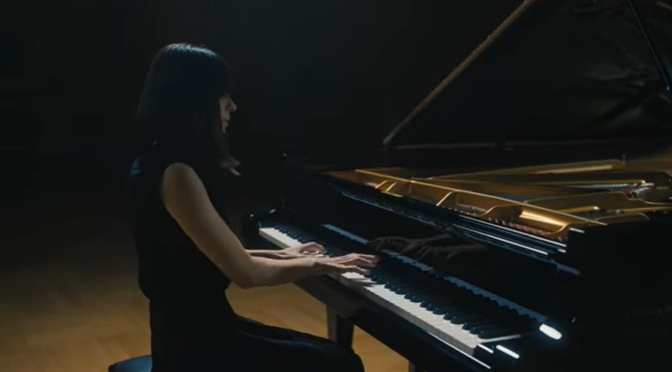
New York pianist, Tiffany Poon, played Robert Schumann’s “Kinderszenen”, Op. 15 at the Dresden Music Festival 2023. The concert took place on June 17, 2023, at the Palais im Großen Garten.

Video timeline: (00:00) Coming on stage (00:21) 1. Von fremden Ländern und Menschen (Of Foreign Lands and Peoples) (02:02) 2. Kuriose Geschichte (A Curious Story) (03:07) 3. Hasche-Mann (Blind Man’s Buff) (03:39) 4. Bittendes Kind (Pleading Child) (04:39) 5. Glückes genug (Happy Enough) (05:17) 6. Wichtige Begebenheit (An Important Event) (06:09) 7. Träumerei (Dreaming) (08:51) 8. Am Kamin (At the Fireside) (09:47) 9. Schumann Ritter vom Steckenpferd (Knight of the Hobbyhorse) (10:32) 10. Fast zu ernst (Almost Too Serious) (12:40) 11. Fürchtenmachen (Frightening) (14:13) 12. Kind im Einschlummern (Child Falling Asleep) (16:16) 13. Der Dichter spricht (The Poet Speaks)

Robert Schumann’s “Kinderszenen” was composed in 1838 and published the following year without a dedication and with the misleading subtitle “Easy Pieces for the Pianoforte.” Unlike the “Album for the Young,” which Schumann had composed for “younger children” in his own words, he did not write the “Kinderszenen” for children, but for adults reflecting on their own childhood.

At first, the cycle was to be titled “Children’s Stories” and preceded or appended to the “Novelettes,” Op. 21. However, Schumann later refrained from doing so. He wanted to have the “Kinderszenen” published as a separate opus. Although the work was not very successful during the composer’s lifetime, it eventually evolved independently and was highly regarded. It had a significant influence on the Romantic program miniature for piano.

Classical: Maria Callas Sings Puccini’s ‘Vissi d’Arte’

Warner Classics (January 12, 2024) – An aria powerfully reminiscent of Maria Callas’s own story, Tosca’s tragic manifesto, “Vissi d’arte” (“I lived for art”), unfolds in this illustrated retelling by Matteo Cozzo.

The story is told through the designer’s unique style, using the collage technique to create unique textures, expressions, and effects.

Listen to stream here

#ClassicalMusic #Opera #Puccini

Classical: Pianist Tiffany Poon Plays Schumann

DW Classical Music (January 7, 2024) – A furious piano piece of the Romantic period. Tiffany Poon plays Robert Schumann’s Davidsbündlertänze, Op. 6 at the Dresden Music Festival 2023. The concert took place in the Palais im Grossen Garten.

Video timeline: (00:00) Coming on stage (00:27) 1. Lebhaft (02:03) 2. Innig (03:36) 3. Etwas hahnbüchen (05:10) 4. Ungeduldig (06:30) 5. Einfach (08:21) 6. Sehr rasch und in sich hinein (10:05) 7. Nicht schnell mit äußerst starker Empfindung (14:07) 8. Frisch (15:14) 9. No tempo indication (16:46) 10. Balladenmäßig sehr rasch (18:15) 11. Einfach (19:51) 12. Mit Humor (20:36) 13. Wild und lustig (23:44) 14. Zart und singend (25:50) 15. Frisch (27:58) 16. Mit gutem Humor (29:22) 17. Wie aus der Ferne (32:56) 18. Nicht schnell

The Davidsbündlertänze, Op. 6, are a two-part piano cycle by Robert Schumann, each consisting of nine character pieces. Schumann wrote 19 pieces, the last of which remains incomplete. The work was composed in the two months following his engagement to Clara Wieck on August 14, 1837. In the first piece, he quotes a motif from the Mazurka No. 5 from her Soirées musicales Op. 6 in the Motto of C. W. He speaks to her of wedding thoughts, which he has incorporated into the pieces. To his friend Carl Montag, however, he spoke of “death dances, St. Vitus’ dances, dances of graces and goblins”.

Schumann’s pseudonyms Florestan and Eusebius also play an important role here. The two characters symbolize his dual role in the fictitious Davidsbund, which also gives this cycle its name. Florestan is the “roaring, exuberant stormtrooper”. Eusebius represents the opposite pole as “the gentle youth who always remains modestly in the background”. In the first edition, the plays are either titled “Florestan and Eusebius” or just one of the two names.

Classical Music: Top New Releases – January 2024

Brilliant Classics (January 3, 2024): New classical music from Tchaikovsky, Schubert, Liszt, Adriana, Shostakovich and more…

Classical Music: Top New Releases – November 2023

Brilliant Classics (November 1, 2023): New classical music from Beethoven, J.S. Bach, Dvorák, Monteverdi and more….

Classical: Solo Guitarist Laura Lootens In Castilla

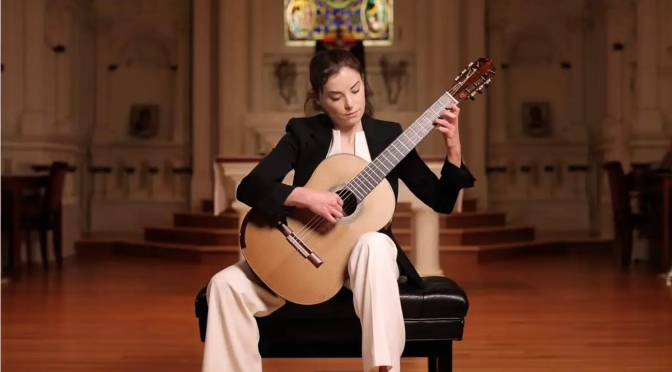
Deutsche Grammophon – DG (October 31, 2023) – Laura Lootens, a winner of the Andrés Segovia Competition in Spain, performs here Castilla, from the Spanish composer Isaac Albéniz’s Suite Española. This work was originally written for piano, but Laura Lootens has arranged it herself for solo guitar.

This piece is a track from Laura Lootens album of works by Albéniz on CAvi music: Laura Lootens – Albéniz: Suite Española No. 1 Op. 47: No. 7, Castilla (arr. for solo guitar) and Laura Lootens / Albéniz: Suite Española Malagueña and Other Works

As a homage to well-known regions and towns of Albéniz’s home country, Spain, it is written in a Romantic, national style, and features typical dance rhythms of its corresponding localities. Born in 1860, Spanish composer Isaac Albéniz was mainly a pianist and wrote primarily for the piano.

More than any other musician, he succeeded in incorporating the Spanish guitar idiom and folklore into his style. Thus, for instance, his works contain allusions to rasgueado, a guitar technique that strums all six strings percussively in rapid succession, as we often hear in flamenco.

So it is no wonder that many of Albéniz’s piano works have also been performed on the guitar.

Album page: https://dgt.link/lootens-albeniz

Video direction: Jure Knez

Classical: Maria Callas Sings ‘O Mio Babbino Caro’

Warner Classics (October 20, 2023) – The voice and artistry of Maria Callas breath new life into the aria “O mio babbino caro”, from Puccini’s opera Gianni Schicchi, in this entrancing illustrated video designed by Matteo Cozzo.

The video opens with Maria stepping onto the stage and kneeling, as the aria is intended to be sung. It then tells the story of this poignant aria through the designer’s unique style, using the collage technique to create unique textures, expressions, and effects.

#ClassicalMusic #Opera #Puccini

Classical Music: Top New Releases – September 2023

Brilliant Classics (September 1, 2023): New classical music from Chopin, Rachmaninoff, Mozart, J.S. Bach and lesser known but still excellent composers.

Classical Music: Top New Releases For August 2023

Brilliant Classics (August 3, 2023): New music variating from the greatest composers of all time to the lesser known but still excellent composers.

  • Beethoven: Complete Chamber Music with Flute
  • Arvo Pärt: Spiegel im Spiegel LP
  • Alter Ego: Music for Flute and Piano by Respighi, Fauré & Franck
  • Duarte: Orchestral and Concertante Works for Guitar, Vol. 2
  • Rebay: Complete Music for Violin and Guitar
  • De Montgeroult: Complete Piano Sonatas
  • Ries: Music for Flute & Piano
  • Ponchielli: Piano Music
  • Fiorillo: 36 Caprices Op.3 for Violin, transcribed for viola by Marco Masciagni
  • Cazzati: Motets

Classical Piano: Alice Sara Ott – Beethoven “Für Elise”

Deutsche Grammophon (July 28, 2023) – Earlier this year, pianist Alice Sara Ott became the face of the Apple Music Classical app when she starred in its launch video, performing Beethoven’s Piano Concerto No. 1, Op. 15 with the Netherlands Radio Philharmonic Orchestra and its Chief Conductor Karina Canellakis.

Beethoven: Für Elise, WoO 59 - YouTube

The recording of it now becomes the headline work in Ott’s latest Deutsche Grammophon album, Beethoven. The pianist has paired it with a series of solo works, including “Für Elise” and the “Moonlight” Sonata.